Buying a house is exciting. Discovering that the roof needs major work after you get the keys is not. The good news is you don’t need to become a roofing expert to ask better questions, spot warning signs, and commission the right checks before committing to a purchase.
A roof inspection during the buying process should answer four questions:
- Is the roof keeping water out?
- Is its structure sound?
- Are there defects that need attention soon?
- And what would those defects mean for your budget and purchase decision?
This guide walks you through the checks in the order most buyers can realistically do them.
Key Takeaways
- View the roof safely from ground level, then examine upper rooms and the attic only where accessible and safe. Never climb onto a roof as part of a house viewing.
- A building survey is the starting point for the whole property; commission a specialist roofing inspection when its findings, access limitations or visible symptoms warrant one.
- Prioritise active leaks, structural movement and unsafe chimney details ahead of cosmetic concerns or an unknown roof age.
- Request a written, itemised scope for significant repairs and use it to make an informed financial decision before signing contracts.
- Don’t assume a roof must be replaced just because it is old, mossy, patched or flat. Condition and evidence matter more than blanket rules.
When Should You Check The Roof During A Dublin House Purchase?
The first viewing is about spotting obvious clues, not diagnosing the roof. If you remain interested, use the second viewing to ask targeted questions and document what you can see.
Once the property is sale agreed, arrange an independent pre-purchase survey promptly and follow up on important roof findings before contracts are signed. The CCPC recommends a structural survey because defects can materially change a home’s purchase cost.
A mortgage valuation serves a different purpose and is not a substitute for a condition survey. Read the CCPC’s guidance on making an offer and obtaining a structural survey.
If a surveyor raises concerns about roof coverings, flashing, timber decay or poor access, ask whether a specialist roofing inspection is appropriate. A structural engineer may also be needed if you have questions about rafters, loading or movement.
Your solicitor should deal with ownership, planning, title and legal documentation rather than relying on a roofer to resolve those matters.
The Roof Inspection Checklist You Can Use At A Viewing
Work from the outside in. Use this checklist to record what you see and what still needs checking. Observations prompt investigation, not proof of a particular defect.
| Area | What To Look For | What To Ask Next |
| Roof shape and ridge | Visible dips, uneven ridge lines, displaced ridges or noticeable changes across slopes | Could suggest settlement, historic alteration, or damaged support; seek a surveyor’s view. |
| Slates and tiles | Missing, slipped, cracked or visibly uneven coverings | Ask whether the issue is localised and whether fixings or underlay also need attention. |
| Chimneys and junctions | Cracked mortar, displaced flashing, staining beneath stack | Failures around junctions can admit rain even when most coverings are sound. |
| Flat roofs and extensions | Blisters, open seams, sagging areas, obvious standing water or poorly detailed edges | Ask for system type, installation history and evidence of previous repair. |
| Gutters and downpipes | Sagging runs, separated joints, staining on walls, outlets discharging in the wrong place | Roof drainage defects may affect fascia, masonry and indoor damp. |
| Attic and top-floor ceilings | Water marks, peeling paint, damp timber, staining near chimneys or roof windows | Check when symptoms occur; rain leakage and condensation can look similar. |
| Roof windows and valleys | Stains around frames, patch repairs, vegetation or visibly failed valleys | These are common water-path junctions requiring close inspection. |
Inspect The Roofline From The Ground
Stand where you have a clear, permitted view from the street or garden and look along the ridge and eaves. A noticeably uneven line deserves attention, especially if accompanied by cracked internal plaster, displaced coverings or signs of an altered roof.
Not every irregularity means failure: older Dublin houses can have long-established variations in their roof geometry. The relevant question is whether the condition is stable, structurally acceptable and watertight.
Look for isolated gaps in slate or tile coverage, widespread slippage, loose ridge details and conspicuous repairs near chimneys or party walls.
One broken tile may be a straightforward repair; repeated failures across a slope can point to fastening, age or workmanship issues. Photographs taken from a safe position can help a surveyor or roofer understand your questions later.
What To Check Inside The House
Ceilings, Chimney Breasts And Top-Floor Rooms
Look carefully at upper-floor ceilings, especially below roof valleys, chimney stacks and roof windows. Brown-edged marks, bubbled paint, peeling wallpaper and damaged plaster are all worth raising.
Ask whether a leak has been investigated and repaired, and request any supporting invoice or report. A dry-looking stain may be old; a freshly decorated ceiling is not automatically evidence of concealment. What matters is whether the explanation fits the inspection findings.
An attic conversion introduces more complex junctions and ventilation details. Check the paperwork for conversion work through your solicitor and independent surveyor.
A neat finished room does not guarantee that the hidden structure, fire precautions and roof insulation were designed appropriately.
Attic Timbers, Underlay And Ventilation
If the attic is safely accessible via a proper hatch and flooring, look from stable, supported positions. Do not step between joists, disturb electrical systems or move stored materials.
Look for staining along rafters or at the underside of the roof, visible deterioration, damp insulation and blocked ventilation paths. Underlay may sag or appear aged without proving a current leak; the surveyor should assess its condition alongside the roof covering and water pathways.
A musty odour and moisture on the underside of roof surfaces can arise from condensation as well as rain entry. Timing provides useful clues: symptoms after wind-driven rain suggest a different pathway from condensation during cold weather with poor ventilation. Don’t assume a simple membrane patch will fix every damp attic.
How To Assess A Flat Roof On An Extension
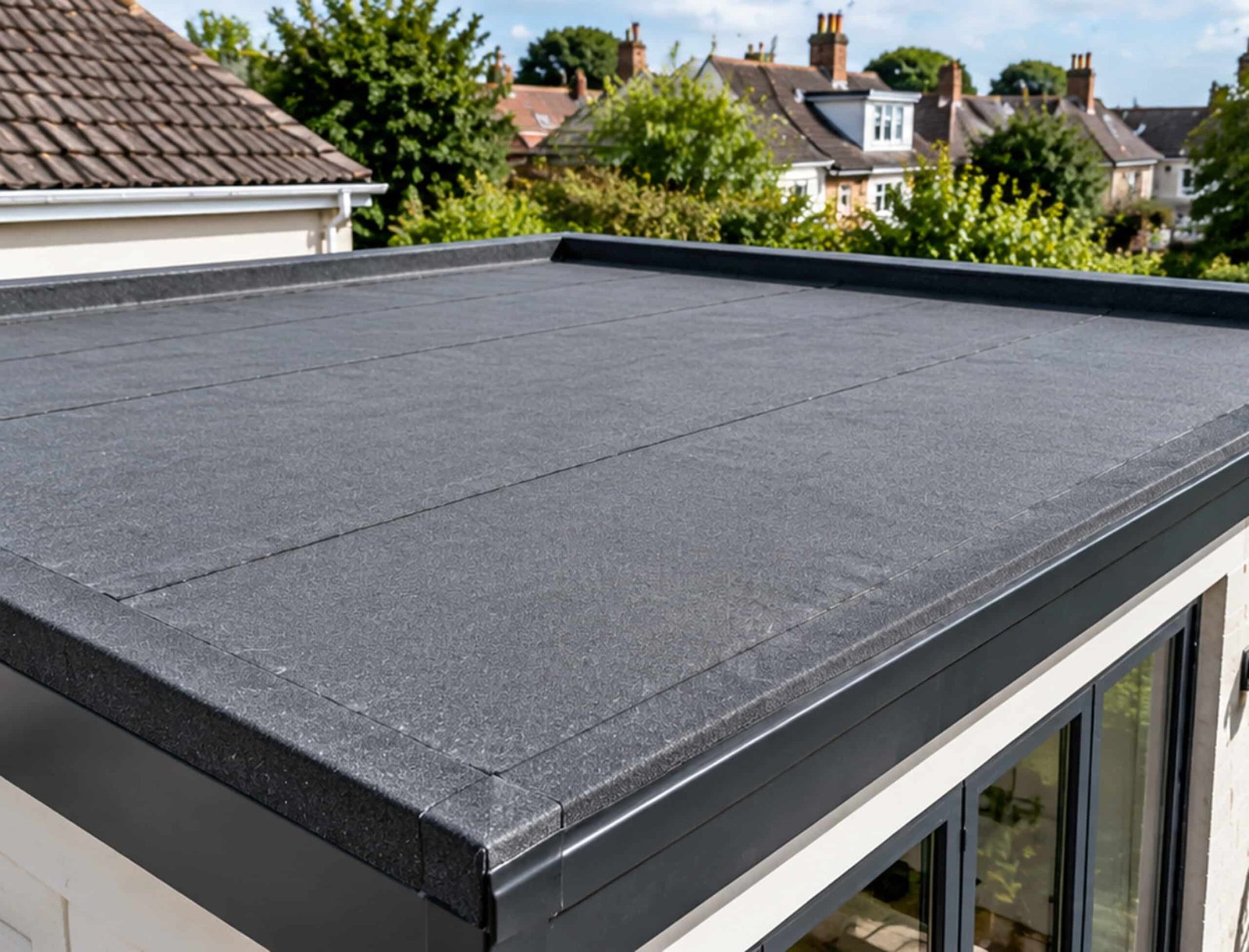
Many Dublin homes have rear extensions, kitchens or garage conversions with flat or low-slope roofs. Ask what covering is installed, such as felt, EPDM or GRP, and when it was last renewed. The system’s condition, drainage, detail quality and history matter more than age alone.
Ask specifically about outlets, upstands, parapets, wall junctions and rooflights. Water can enter at a raised junction and travel under insulation before appearing on an interior ceiling.
Standing water warrants investigation when it’s associated with blocked drainage, excessive deflection, open seams or recurring leaks; it doesn’t mean the entire roof needs replacing.
If you are comparing repair and replacement options, our existing guide to flat-roof repair costs explains the different types of work that affect a quotation. Cost Of Fixing A Flat Roof In Dublin
Check Chimneys, Leadwork And Roof Junctions
Chimneys are an important part of the roof inspection, especially on older terraces and semi-detached homes. Look for leaning or visibly cracked stacks, missing mortar, failed flaunching around pots and poorly finished lead flashing.
A chimney leak can be mistaken for a roof-covering defect, so the repair scope should identify the specific route of moisture rather than simply proposing to coat the area with sealant.
If a chimney is shared with another property, confirm ownership and access implications with your solicitor before authorising work.
Roof valleys, abutments, dormer cheeks and skylights also warrant attention: they join different components, and water doesn’t always appear directly beneath the defect. How Much Does Chimney Repair Cost In Dublin?
What Gutters And Fascias Can Tell You About A Roof
Roof drainage is easy to overlook during a sunny viewing. Check whether gutters are securely supported and properly connected to downpipes, whether joints show staining beneath them, and whether overflow has marked the fascia or adjacent wall.
Repeated water discharge can damage timber and conceal decay behind attractive-looking PVC roofline products.
A roof can have sound coverings but poorly performing drainage. Conversely, one leaking joint does not mean the whole gutter run must be replaced. Ask the specialist to identify the failed component, confirm the falls are correct, and check whether hidden timber is affected. Gutter Replacement Cost Dublin
Questions To Ask The Seller About Roof Work
- When was the roof covering last replaced or substantially repaired? Are invoices or specifications available?
- Has there been any water ingress, storm damage or insurance claim affecting the roof or attic?
- Have chimneys, valleys, roof windows or flat-roof extensions been repaired? What exactly was done?
- Was an extension, dormer or attic conversion carried out, and are the relevant documents available?
- Is any roofing guarantee still applicable, and are its transfer and maintenance conditions recorded?
- Are there known shared-roof, party-wall or access arrangements with neighbours?
A seller may not know every answer. Missing paperwork is not proof of a defect, but it increases the importance of an independent inspection and a realistic budget. Ask your solicitor to examine relevant planning, building-control and ownership questions where they arise.
Should You Rely On A Building Survey Or Commission A Separate Roof Inspection?
Start with a competent independent property survey. The surveyor considers the building as a whole, can identify roof-related warning signs and can recommend further examination.
The inspection may have access limits: some roofs are too high to view closely, lofts may be obstructed and concealed assemblies cannot be confirmed visually. Read the survey’s limitations carefully.
A roofing specialist can then examine a defined concern, explain likely mechanisms and provide a proposed repair scope and cost. That opinion complements, but does not replace, an independent surveyor’s assessment of structural condition.
If movement, significant timber deterioration or added loads are involved, obtain advice from an appropriately qualified engineer.
The CCPC explains that lenders may require further surveys in particular circumstances and that structural checks are worthwhile beyond a lender’s valuation. Read the CCPC’s guidance on structural surveys and mortgages.
How To Turn Inspection Findings Into A Repair Budget
Do not guess a roof replacement budget from the building’s asking price or a single visible defect. Separate findings into three categories: urgent safety or active-leak work; near-term repair or refurbishment; and routine maintenance.
Ask for quotations that identify materials, access method, extent of opening-up, disposal, VAT treatment, potential hidden damage and any exclusions.
A Practical Priority Table
| Priority | Examples | Buying Decision |
| Urgent | Active water entry, loose stack material, suspected structural distress | Escalate to surveyor/engineer or competent roofing specialist before commitment. |
| Near-Term | Failed flashing, multiple slipped coverings, ageing flat-roof junctions | Obtain written scope and cost allowance; discuss impact with solicitor and agent. |
| Monitor | Minor isolated wear or cosmetic discoloration without active symptoms | Record condition and plan periodic inspections; do not assume replacement. |
Ask whether the quote covers a complete repair or only an initial investigation. Some defects cannot be fully scoped without opening an area.
A responsible quotation should explain how it will authorise and price additional discoveries, rather than promise certainty where the roof is concealed. New Roof Cost Ireland.
When Might Roof Findings Change Your Purchase Decision?
A defect becomes a buying issue when it is costly, urgent, difficult to investigate, or affects insurability, safe occupancy or planned alterations.
A repairable leak doesn’t automatically make a property a poor purchase; equally, a recently replaced covering doesn’t automatically remove questions about structure or ventilation.
Use the written survey and specialist findings to consider your total acquisition budget. You might seek more documentation, secure a clearer cost allowance, negotiate a price adjustment or decide the uncertainty is too high.
Your solicitor can advise on the contractual position. A roofing contractor should not promise that a survey report guarantees a price reduction or a seller-funded repair.
Roof Inspection Safety: What Buyers Should Never Do
Do not climb onto a roof, lean out through rooflights, walk across a loft without safe flooring or test suspected fragile materials. Roof defects are not worth a fall.
The Health and Safety Authority requires competent risk assessment and suitable fall-prevention measures for roof work, including protection around fragile coverings. Health And Safety Authority.
A specialist visit may itself be limited by access, weather or site conditions. Ask the inspector what they could and could not examine, whether photographs were taken and what further access would be necessary before a firm conclusion.
A Simple Roof Inspection Checklist Before Signing Contracts
- Compare your viewing photographs with the independent survey findings.
- Confirm whether the attic was inspected and what areas were inaccessible.
- Ask about the age, system and repair history of pitched and flat roof sections.
- Obtain specialist advice for active leakage, movement, failing flashing or widespread covering defects.
- Request a written repair scope for any significant item, including access, VAT and contingencies.
- Clarify extension, conservation, shared chimney and legal documentation questions with the appropriate professional.
- Consider the cost and disruption alongside your deposit, fees and first-year home budget.
- Make sure your final purchase decision reflects the evidence, not generic roof-life estimates.
Frequently Asked Questions
Should I Get a Roof Inspection Before Buying a House in Dublin?
A pre-purchase survey is a sensible first step for the whole property. Arrange a separate roofing assessment if the survey flags a concern, the roof cannot be adequately viewed, or a defect may materially affect your budget.
Is A Mortgage Valuation The Same As A Roof Survey?
No. A valuation primarily assesses the property for lending purposes. It should not be treated as a detailed inspection of roof coverings, junctions, timber and drainage.
Does A 20-Year-Old Flat Roof Need Replacing?
Not automatically. Its system, installation quality, drainage, past repairs, and current condition matter more than age alone. A specialist may recommend a local repair, further investigation or replacement depending on the evidence.
Can A Roof Be Leaking Without A Visible Ceiling Stain?
Yes. Moisture can be trapped within a roof build-up or travel to another area. A ceiling stain can also remain after an old leak has been repaired. Diagnosis needs more than one visible clue.
Does Daylight In The Attic Always Mean A Roof Leak?
No. Light can sometimes be visible at designed ventilation openings or other details. Unexpected gaps in the covering deserve checking, but daylight alone doesn’t prove active water penetration.
What If The Seller Has No Roof Repair Paperwork?
Ask what they know and have the roof assessed independently. Missing paperwork is a reason to check more carefully, not proof that previous work was defective.
Should I Ask For A Price Reduction If The Roof Needs Repairs?
You can discuss the evidence and estimated costs with the selling agent, but whether to negotiate depends on the transaction. Obtain a reliable report and written quotation, and discuss contractual implications with your solicitor.
Can A General Building Survey Miss Roof Problems?
Some defects remain concealed or cannot be examined because of height, weather, unsafe access or roof build-up. Read the survey limitations and commission further specialist investigation when recommended.
Are Mossy Slates Or Tiles Always Damaged?
No. Surface growth can indicate a damp or shaded environment, but it does not establish that the roof covering has failed. The condition of slates, tiles, fixings, drainage and junctions should be assessed separately.
Should I Inspect A Roof Myself With A Ladder?
No. Do not access roofs or unsafe attic areas during a viewing. Use safe ground-level observation and qualified professionals with appropriate access equipment.
What Should A Specialist Roof Report Include?
It should identify areas inspected, access limitations, observable defects, likely causes, recommended next steps, photographs where appropriate, and whether the suggested work is urgent or can be planned.
What Roof Issues Matter Most In Older Dublin Houses?
Pay particular attention to slate fixings, valleys, chimney junctions, past alterations, roof timber condition and ventilation. Older features may also raise conservation or shared-access questions that need separate professional advice.
Need Help Assessing A Roof Before You Buy?
If a survey or viewing has raised concerns about a property’s roof in Dublin, Emergency Roofers Dublin can discuss the visible issue and the right next step.
Tell us the property location, the survey findings and whether you need a repair quotation or a focused roofing assessment.
We can explain what roofing work we can assess and help you understand the likely scope of repairs. For whole-building structural questions, continue to use your independent surveyor or engineer.