A roof that starts leaking again after a repair is frustrating. You have already dealt with the damp patch, arranged for someone to investigate and paid for work that was supposed to stop the water. Then the next spell of heavy rain arrives, and a stain grows on the ceiling again.
It is natural to wonder whether the repair was done badly. Sometimes it was. But a recurring leak can also mean that the first repair dealt with one real defect while a second, less obvious water-entry route was missed.
The useful question is not simply “Why is the roof leaking again?” It is “Where is water entering now, how is it travelling through the roof, and does the new evidence point to the same defect or another one?” Answering that properly matters. Otherwise, it is easy to spend money on successive patches while the real source remains untouched.
Why Can a Roof Leak Again After Repairs?
A leak can return when the original defect was not fully corrected; the repair did not cover the entire affected junction; water is entering at a second location; older surrounding materials have failed; severe wind-driven rain finds a weakness that ordinary rain does not expose; or moisture already inside the roof continues to emerge after the covering has been repaired. Condensation can look similar to a roof leak, especially in a poorly ventilated attic.
The same indoor damp patch can be caused by more than one external defect. Roofs have slopes, laps, cavities, battens, underlays, structural members and wall junctions. Water may travel along several of these before it shows up in a room. The point you can see from indoors is a clue, not a reliable map of the hole outside.
Eight Common Reasons a Roof Still Leaks After a Repair
1. The Repair Fixed a Symptom, Not the Source
A cracked tile above a bedroom ceiling is easy to notice. Replacing it may be appropriate if it is letting rain through the roof covering. But if a chimney abutment, valley or failed underlay lies nearby, the tile might not have been the only route water took to the loft.
If the original inspection focused on the most obvious surface damage and did not trace the moisture pathway, the visible repair may not address the real source.
Ask what evidence connected the repaired defect to the internal leak. Useful evidence includes a description of the water path, the condition of the surrounding materials, close-up photographs and what was ruled out. A quotation that merely says “sealed roof leak” gives little help if the damp returns.
2. Water Is Entering Through a Second Defect
Older roofs can have several small weaknesses at once. A slate may be displaced on one slope while deteriorated flashing lets in water near the chimney on the same elevation. Fixing one does not automatically cure the other. The second defect may remain invisible during light showers and only show itself in wind or prolonged rain.
This is especially relevant where different roof sections meet: a rear extension adjoining an older house, a dormer intersecting a pitched roof, or a flat roof terminating at a parapet. Those transitions deserve careful inspection, not the assumption that there can be only one fault.
3. Flashing or Another Junction Was Not Repaired in Full
Roof flashing keeps water from entering at changes of plane: chimney sides, roof-to-wall junctions, skylights and similar details.
A temporary surface seal might slow a leak, but durable repair may require renewing the underlying apron, stepped flashing, soakers, counterflashing or adjacent defective materials. The right repair varies with the roof design and material.
One common problem is that a bead of sealant is applied where flashing should shed water through formed laps and proper integration with the surrounding roof covering.
Sealant can play a limited supporting role in specified systems, but it shouldn’t be treated as a universal replacement for sound flashing details. For a fuller explanation, see how roof flashing works.
4. Rain Is Tracking Along the Roof Before It Appears Indoors
Water follows gravity, but it also follows the surfaces available to it. It can run along a rafter, behind plasterboard, over an underlay membrane or sideways along a batten before dropping onto a ceiling. That is why a stain beside a chimney does not prove the chimney itself is leaking.
Consider a roof where rain penetrates above a dormer but appears several feet away on an upstairs ceiling. Sealing directly above the ceiling stain would be a poor diagnostic shortcut.
A competent investigation traces the route upstream, checks likely junctions and distinguishes the external entry point from the internal exit point.
5. The Original Repair Did Not Include Hidden Damage
A repair can be limited for a perfectly reasonable reason: rotten decking, damaged battens or soaked insulation might not be visible until the covering is opened.
Once the roof is exposed, the actual scope may be wider than expected. If the repair was completed without resolving damaged supporting materials, water resistance and durability may still be compromised.
The important distinction is between hidden conditions that could not reasonably be established beforehand and omissions that should have been included in the original inspection or work scope.
If additional work is needed, request photographs, a clear explanation and approval of the revised work before costs increase. Our guide to comparing roof-repair quotations explains what to request in writing.
6. The Leak Appears Only During Wind-Driven or Prolonged Rain
Not every rainstorm tests a roof in the same way. Strong wind can push rain sideways into marginally protected laps or exposed junctions that stay dry in calm weather. Several hours of sustained rain can also reveal drainage weaknesses, blocked outlets or details that become overwhelmed when water accumulates.
Record which way the wind was blowing, how long the rain lasted and where the damp appeared. A pattern of leaks during south-westerly winds, for example, may point to a particular elevation—but wind direction is only one clue. The roofer still needs physical evidence to identify the failure.
7. An Older Flat Roof Has More Than One Weak Point
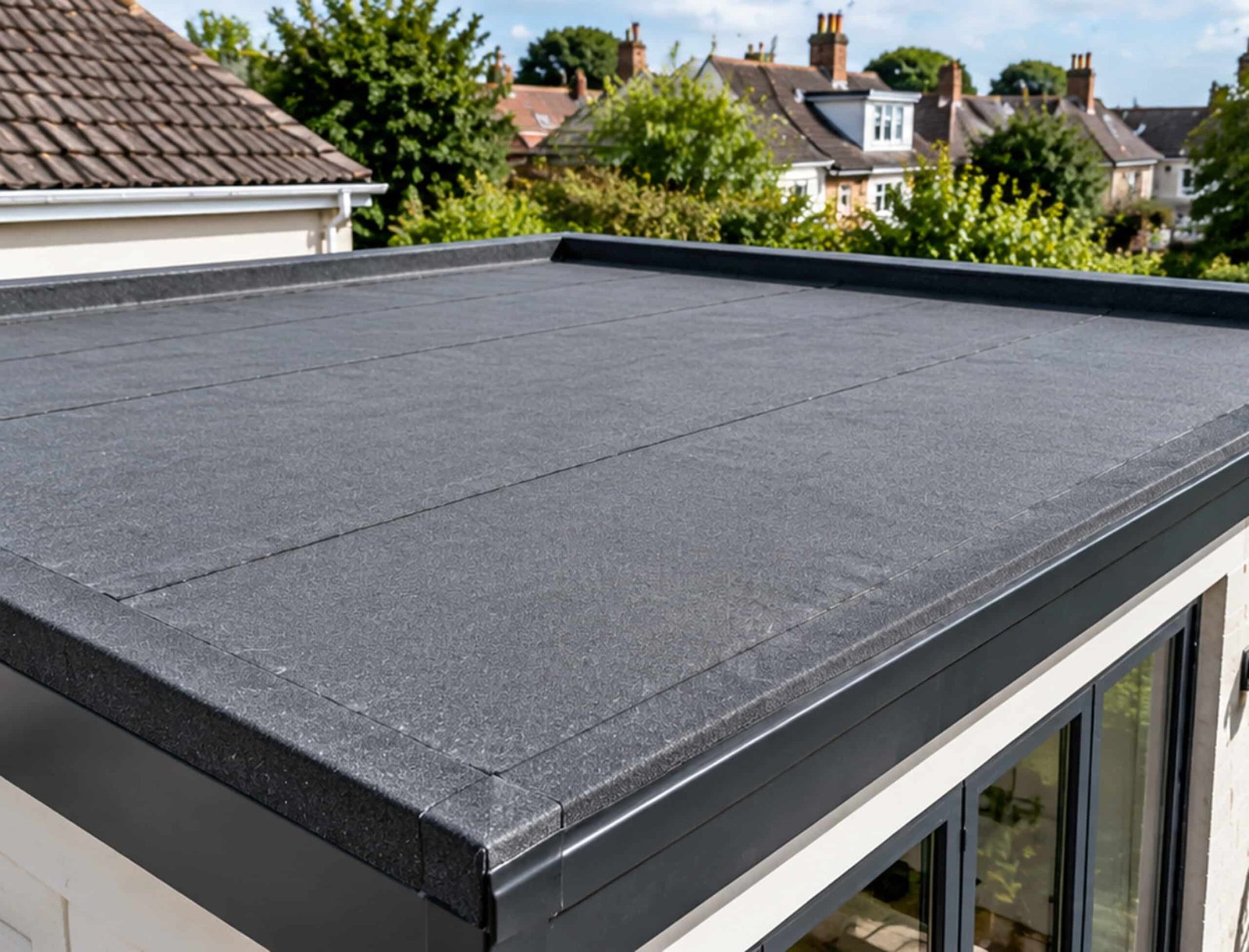
Flat roofs depend on a continuous waterproofing system, sound upstands and effective drainage. Repairing a puncture in the open field of the membrane may be worthwhile, yet a leak can persist if the real weakness sits around an outlet, rooflight, parapet or adjoining wall.
Ageing membranes can also develop several separate defects, making isolated repairs progressively less economical.
A spongy roof surface, widespread blisters, persistent ponding or evidence of wet insulation can indicate problems below the visible layer.
None of those signs automatically proves total replacement is required, but they justify a broader survey before another patch is commissioned. For more context, review flat-roof repair costs and their underlying causes.
8. The Moisture Is Condensation or Residual Water, Not a New Leak
A repaired roof does not instantly dry out the structure beneath it. Damp insulation, timber and plaster can take time to release trapped moisture, depending on ventilation, temperature and how much water entered.
An old stain can also remain visible after the source has been corrected. The key is whether moisture is fresh or increasing, not simply whether a mark still exists.
Attic condensation is another possibility, particularly in colder weather. Warm moist air escaping from the home can meet cold roof surfaces and form droplets.
Guidance from Ireland’s Sustainable Energy Authority of Ireland on ventilation explains how poor ventilation can increase moisture risk. This differs from rainwater penetrating a roof and may require ventilation and air-leakage corrections rather than another waterproofing repair.
What to Check When the Leak Returns
Start with safe, observable evidence. Do not climb onto a roof, lean out of an upper-floor window or enter an attic with unsafe access, compromised flooring or electrical hazards. Photograph the inside stain with a date, note any dripping, and photograph visible exterior damage only from a safe position.
Make a Simple Leak Record
Write down the date and time, rainfall intensity, duration, wind direction if known, exact room and ceiling location, and whether the area was newly wet or merely stained. Mark the stain boundary lightly on a photograph rather than decorating immediately. If safe, photograph accessible loft surfaces from a stable boarded area without disturbing insulation or wiring.
Take a short video where water is actively dripping. Keep earlier repair paperwork, invoices, photographs and messages. This record is valuable even when the same contractor returns promptly, because it narrows the diagnosis and helps establish whether the recurring problem is within the original agreed scope.
Protect the Interior Without Creating Another Hazard
Move possessions away from the affected area to a safe place. Catch drips with a container and protect flooring. Avoid touching wet electrical fittings; if water is close to sockets, lights or the consumer unit, isolate the affected circuit only if you can do so safely and arrange qualified electrical help.
A sagging or bulging ceiling, visibly moving roof structure or substantial water ingress warrants urgent professional attention. Never puncture a ceiling to release water unless an appropriately qualified professional has assessed the situation and instructed you to do so.
Revisit the Exact Repair Scope
Was the work described as a temporary weatherproofing measure, a targeted repair or a broader refurbishment? Did it include the chimney, the wall junction, the surrounding slate or tile courses, and making good any disturbed underlay? A narrow job can be completed correctly without covering every possible nearby defect. That is why a written scope matters when diagnosing a recurring leak.
Chimney Still Leaking After Flashing Repairs?
Chimneys deserve special attention because several independent components can let in rain. A stack can have sound flashing but defective mortar joints, cracked flaunching around the pots, damaged masonry, or water tracking through adjoining roof coverings. The opposite can also happen: a visibly weathered stack may distract attention from failed roof-side flashing.
A thorough assessment considers the chimney’s top, sides and base and the route rainwater follows across the roof. Typical checks include the lead apron and stepped flashing, counterflashing chased into masonry, the back gutter or saddle where relevant, mortar condition, the stack’s weathering details and the adjacent slates or tiles.
Different defects call for different repairs; replacing a cowl will not fix failed flashing, and repointing alone will not repair a cracked apron.
Inside the building, damp around a chimney breast can also be caused by condensation or salts retained in old plaster. Where a flue serves an appliance, any suspected combustion or flue-termination problem needs the right specialist, not speculative roofing alterations. Our chimney repair service covers roof-level repair enquiries; appliance and gas work requires suitably qualified personnel.
How to Tell Whether a Previous Repair Was Unsuccessful
A recurring leak alone does not prove negligence. The fairest starting point is to examine what was agreed, what work was actually completed and what the current evidence shows.
If the original repair was intended to stop water entering at a specific flashing joint and that same joint still admits water, the contractor should be asked to inspect it and explain the result. If a separate valley defect has developed elsewhere, it may be outside the original scope.
Look for completion photographs, an itemised description of the work, product or material details where relevant, and any written guarantee terms. A repair guarantee is not the same as a guarantee that every part of an older roof will remain watertight indefinitely. Nonetheless, take a written workmanship commitment seriously and assess it against the specific work completed.
For disputes, the Competition and Consumer Protection Commission’s guidance on home improvement work explains consumer remedies when services don’t meet the agreed standard. Keep communication factual and in writing, let the contractor review the problem where appropriate, and keep all evidence.
When Another Targeted Repair Makes Sense and When to Consider a Replacement
A second targeted repair may be sensible if the new inspection identifies a defined defect, the surrounding materials remain serviceable, access is straightforward, and the work can be detailed properly. Examples include renewing a faulty short flashing section, correcting one roof outlet detail or replacing a localised group of damaged slates with sound supporting materials.
A wider refurbishment or replacement becomes more relevant when independent defects are widespread, the waterproofing has reached the end of its useful service life, significant hidden materials are damaged, or repeated short-term repairs are becoming expensive relative to a coherent long-term solution. Roof age alone cannot settle the question. Neither can the size of the indoor damp patch.
A good repair-versus-replacement discussion should compare the diagnosed problem, expected scope, disruption, access costs, exclusions and likely durability of each option—not simply “patch versus new roof.” Our roof restoration and replacement guide sets out the wider decision.
Five Questions to Ask Before Paying for More Work
1. What Evidence Shows Where Water Is Entering?
Ask for photographs and a plain-language explanation of how the fault leads to the internal damp. If the answer is uncertain, ask what additional inspection can reduce that uncertainty.
2. Does the New Work Overlap With the Original Repair?
Compare the proposed materials and exact roof area with the first quotation. If the same detail is being repaired again, ask why it failed or why the original repair did not resolve it.
3. What Other Defects Were Checked?
For a pitched roof, that may include adjoining coverings, valleys, chimney details and underlay. For a flat roof, ask about outlets, edges, upstands, penetrations and the condition beneath the membrane.
4. Is This a Temporary Protection Measure or a Lasting Repair?
Emergency protection is valuable, but it should be described as such. Don’t confuse a temporary measure with a completed permanent repair.
5. What Happens if the Leak Persists Again?
Clarify the inspection follow-up, workmanship terms, documentation and what situations would fall outside the quoted work. Agree how additional defects will be reported and authorised.
Frequently Asked Questions
Why Is My Roof Still Leaking After It Was Fixed?
The original defect may not have been fully resolved, a second defect may be letting in water, or moisture may be travelling from another location. Residual moisture and attic condensation can also resemble a recurring leak. A fresh inspection should begin with the repair scope and the conditions in which the leak returns.
Can Water Travel Across a Roof Before Dripping Indoors?
Yes. Water can track along underlay, rafters, battens, masonry or ceiling voids before it appears. That is why a ceiling stain does not necessarily sit directly below the external entry point.
Should I Call the Same Roofer Back if the Leak Returns?
Usually start by notifying the original contractor, describing the new evidence and asking for an inspection, especially when the problem appears within the agreed repair area. Keep the exchange in writing and check any workmanship terms.
Does a Repeat Leak Mean the Repair Was Poorly Done?
Not necessarily. The work may have been incomplete or unsuitable, but a different defect can also cause similar symptoms. Comparing the original agreed scope with a properly documented new diagnosis is more reliable than assuming either explanation.
Can Chimney Flashing Be Repaired and Still Leak?
Yes. A chimney may have additional defects in its masonry, flaunching, back gutter, adjacent roof coverings or another flashing section. The repair must address how rain is entering, not just the most visible component.
Why Does My Roof Leak Only When It Is Windy?
Wind-driven rain can reach exposed laps and junctions that remain dry in calm rain. Wind direction and rainfall duration may help narrow the investigation, but inspection must still establish the defect.
Can a Flat Roof Leak Again After Being Patched?
Yes. A patch may seal one puncture, but an outlet, upstand, parapet or another membrane area may remain defective. Wet decking or insulation may also require a wider repair scope.
How Long Does a Ceiling Stay Damp After a Roof Repair?
Drying time varies with how much water entered, the affected materials, temperature and ventilation. A stain can remain after the leak has stopped, but growing moisture or renewed dripping needs investigation.
Could Condensation Be Mistaken for a Roof Leak?
Yes. Moist indoor air can condense on cold roof surfaces, especially where ventilation or airtightness is inadequate. Moisture patterns, weather conditions, and roof-space conditions help distinguish condensation from rain ingress.
Do I Need a New Roof if Repairs Keep Failing?
Not automatically. Replacement may be appropriate when defects are widespread or repeated repairs no longer offer a durable solution. A defined local defect with otherwise sound surrounding materials may still justify targeted work.
What Should I Photograph When a Roof Leak Returns?
Record the wet area, its position and size, any active drips, the date, weather conditions and any exterior damage visible from a safe place. Keep the original quotation, completion photographs and communications.
What Should I Do if Water Is Near a Ceiling Light?
Keep clear of the affected electrical fitting and seek qualified electrical assistance. Do not handle wet fittings or stand below a bulging ceiling. If there is substantial ingress or structural movement, seek urgent professional help.
Need a Roof Leak Investigated in Dublin?
If your roof is still letting in water after earlier repairs, we can assess the roofing enquiry and discuss the next practical step. At Emergency Roofers Dublin, we deal with roof leak repairs, including the pitched-roof, flat-roof and chimney junction problems covered in this guide.
Tell us what was repaired, when the leak returned and what you have noticed since; photographs and previous repair details are especially useful.
We will focus on understanding the reported problem and discussing an appropriate repair scope, rather than assuming that a new roof is the answer. To arrange an enquiry, use our roof repairs in Dublin service page or call 085 777 9238. If the leak is active, keep away from unsafe roof access and affected electrical fittings while help is arranged.