A conservatory roof can look perfectly serviceable from the garden while making the room almost impossible to enjoy. Some older polycarbonate roofs rattle through a downpour and lose heat quickly; others develop leaks around glazing bars, wall junctions or ageing seals.
Replacing the roof can make a real difference, but choosing the right replacement is more important than simply choosing the lowest price.
As a starting budget, a straightforward polycarbonate replacement may cost a few thousand euros, while a modern glazed roof or insulated solid-roof conversion can cost substantially more.
The condition of the existing supporting structure, the roof shape and the finish you want inside matter just as much as the covering.
This guide explains the main options, price ranges, hidden costs and checks worth making before you commit. It also explains when repairing an existing roof is the better choice.
A conservatory isn’t automatically suitable for a heavier covering, and spending more doesn’t guarantee a warmer room unless the entire construction is properly designed.
Conservatory Roof Replacement Prices at a Glance
The following ranges are practical *planning allowances* for a modest, accessible conservatory where the existing supporting structure is suitable. They are not fixed prices.
A simple roof-only re-sheeting job and a complete insulated conversion with structural alterations are different projects, so compare like with like.
- Polycarbonate replacement: approximately €3,000 – €5,000 for a straightforward small-to-moderate project.
- Replacement glazing: approximately €5,000 – €9,000 where a suitable system and support structure can be reused or adapted.
- Insulated solid-roof conversion: approximately €8,000 – €15,000 or more, depending particularly on structural work, insulation, plastering and rooflights.
These broad allowances align with an Irish published roof-replacement guide, but larger, ornate or structurally deficient conservatories may fall outside them. Do not treat the upper figure as a cap or assume every provider includes VAT, access, disposal and interior finishing. To set an actual budget, measure the roof, identify the covering and agree exactly what the installer will remove and replace.
What Changes the Price Most?
There are six recurring cost drivers.
- First is the actual roof area, which can be larger than the floor plan because of pitch and hips.
- Second is geometry: a rectangular lean-to is easier to set out than an elaborate Victorian roof with multiple facets and joints.
- Third is the new system: polycarbonate panels, modern insulated glazing or a tested lightweight insulated solid assembly.
- Fourth is the condition of the frame and foundations. Sagging glazing bars, decayed timber or poorly anchored supporting elements can change a roof-only quotation into structural work.
- Fifth is access and weather protection: tight side passages, overhead obstructions and the need to protect an occupied house affect labour and equipment.
- Sixth is completion scope: insulated ceiling, plastering, electrics, decorative finishes, rainwater goods and making good at the house wall.
A quotation that says only “new conservatory roof” is not enough. Ask whether it includes the whole roofing system, flashings, edge details, ventilation/condensation strategy, internal finish and disposal of the old covering.
Polycarbonate Conservatory Roof Replacement
Polycarbonate often makes sense when the conservatory is primarily a bright garden room, and the goal is to replace tired, cracked or leaking sheets without converting the space into a fully insulated room.
Multiwall sheets are lightweight and can work with appropriate glazing bars, gaskets and fixings. The manufacturer’s requirements for panel thickness, support spacing, thermal movement and edge sealing are essential: thicker panels alone won’t fix a poorly detailed roof.
Polycarbonate is usually the least expensive of the three principal options, but performance varies. Very old or thin panels can make rain noise more noticeable and may offer limited thermal comfort. A replacement can improve a failing roof without making the room comparable to a properly insulated extension. If you want reliable winter comfort, assess the windows, doors, floor, heating and roof.
Before accepting a re-sheeting quotation, ask if the installer has inspected the glazing-bar seals, end closures and connection to the house. Water can enter at these points even when the panels themselves remain sound.
Glass Conservatory Roof Replacement
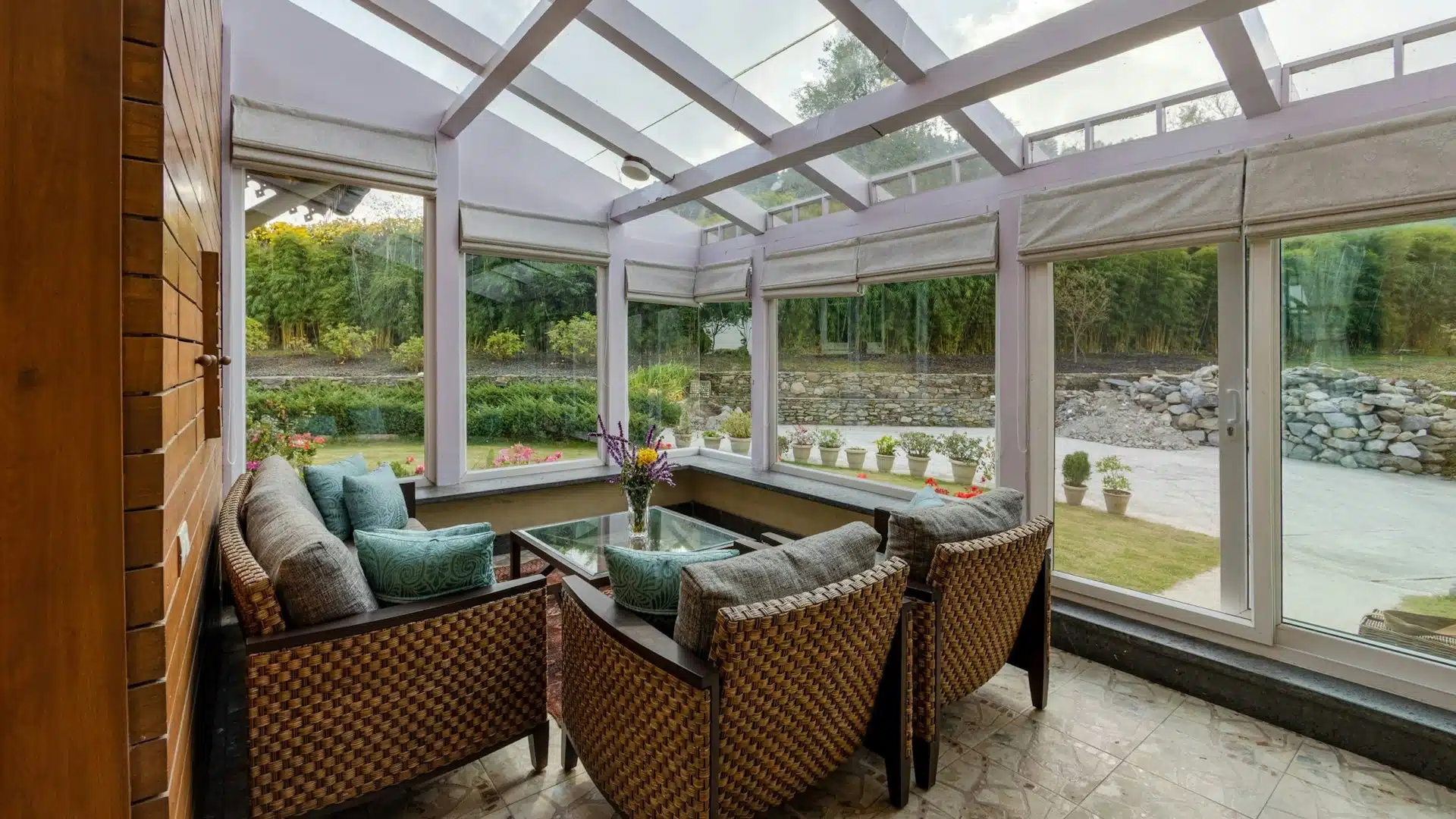
A modern glazed roof is attractive if retaining overhead daylight matters most. The important choice is not simply “glass versus plastic”. You need a glazing system appropriate to the roof pitch, support layout and loading, with suitable safety glazing and an agreed specification for thermal and solar performance.
Some homeowners choose solar-control glazing to limit overheating, particularly for south-facing rooms. That can improve comfort but won’t magically eliminate summer heat: orientation, shading, ventilation and other glazed surfaces still matter. Glazing may reduce perceived rain noise compared with thin older panels, but acoustic performance depends on the whole assembly.
Replacing plastic sheets with glass can increase loading. Ask who has confirmed that the glazing bars, rafters, frame connections and supporting walls can safely take the proposed system. If the existing roof is distorted, a full system replacement may make more sense than inserting new glass into ageing members.
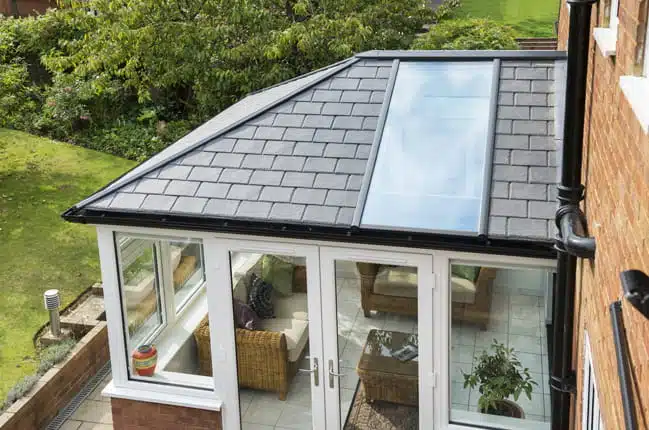
Insulated Solid and Lightweight Tiled Conservatory Roofs
A solid roof can reduce direct solar gain and allow insulation, but the term “lightweight tiled roof” covers several different constructions. A proper proposal should identify the load-bearing structure, roofing underlay, covering, insulation arrangement, internal lining and how condensation will be controlled.
A conservatory frame designed to carry polycarbonate may not suit a solid roof. Additional weight, wind uplift, connection details and the supporting walls or base must be assessed by a competent designer. Even a lightweight external covering does not remove the weight of insulation, decking and internal ceiling finishes.
Solid roofing also reduces natural light reaching the conservatory, and sometimes the adjoining room. Consider rooflights or a glazed section early, before pricing an opaque roof.
Ask to see the proposed roof section and whether the installer will address thermal bridges around the eaves and where the new roof meets the house. A handsome external finish is of limited value if the assembly traps moisture or causes mould around cold junctions.
Repair or Replace the Existing Conservatory Roof?
A leak does not always mean the entire roof has reached the end of its life. If one identifiable junction has failed and the surrounding system remains sound, targeted repair may be appropriate. You can sometimes address loose or deteriorated gaskets, localised flashing defects, failed sealed glazing units and individual damaged panels without replacing everything.
Replacement becomes more persuasive when problems recur across multiple roof sections, the support framework is deteriorating, suitable replacement components are unavailable, or the owner wants a fundamentally different thermal or lighting performance. An older roof may also have widespread problems at sheet ends and glazing bars, making piecemeal work a poor value.
Be wary of a decision made entirely from a photograph. Water seen dripping from a glazing bar may have entered much higher up and travelled along the roof structure.
The correct decision starts with finding the pathway, checking the supporting members and understanding your plans for the room. If the wider house roof is involved, the roof-repair service provides related information.
Structural Checks Before Changing Roof Materials
The most expensive mistake is fitting a roof that the conservatory was never built to support. A roof conversion changes more than a surface covering: it may alter dead load, wind behaviour, bracing and the load transferred through posts, frames and foundations.
A competent professional should assess the proposed design and identify whether structural calculations or additional support are necessary.
Look closely for signs of movement: bowed frames, uneven door gaps, cracking at the house connection, and persistent water entry where roof sections have shifted. These are prompts for investigation, not proof of foundation failure. Ask the installer to identify who is responsible for structural design and what documentation will be provided on completion.
Do not accept a claim that “lightweight” automatically means no structural check is required. The relevant question is whether the whole proposed assembly is appropriate for this *particular* conservatory and its connections.
Planning Permission and Building Regulations in Dublin
Replacing an existing roof is not the same planning question as constructing a new conservatory or changing its use. Some maintenance and like-for-like work may be exempt.
Still, a solid-roof conversion can raise additional questions about the alteration, appearance, structural work and the conditions under which the conservatory was originally permitted. Protected structures and architecturally sensitive properties need particular care.
The Department of Housing’s Building Regulations guidance sets out requirements for structure, fire safety, ventilation and, where applicable, fuel and energy conservation.
The building-control guidance explains the separate compliance framework. A designer or local authority should advise on the specific proposal; a roofing quotation is not a planning determination.
For a project that may change the roof form or room’s status, resolve planning and technical design questions *before* ordering materials. Document the approved design and keep certificates or inspection records supplied with the work.
Thermal Comfort, Overheating and Condensation
Three problems are commonly bundled into the phrase “poor conservatory insulation”: winter heat loss, summer solar gain and condensation. They have different causes and are not always fixed by the same roof product.
- Winter: A better-insulated roof may help retain warmth, but cold glazing, uninsulated floors, draughts and inadequate heating can still make the room uncomfortable.
- Summer: Solar-control glass or an opaque roof can reduce direct roof gain, but west-facing windows and insufficient shading may remain a major heat source. Opening windows alone may not be enough on very hot days.
- Condensation: Moisture accumulating on cold glass, frames or poorly detailed roof junctions needs a full ventilation and thermal-bridge assessment. A solid roof with insulation installed in the wrong location, or with missing vapour-control and ventilation details, can create concealed moisture problems.
Ask for a description of the roof’s thermal design, not just a marketing promise that the room will be comfortable “all year round”. For wider home energy decisions, SEAI’s home-energy guidance offers useful context; do not assume a standalone conservatory replacement qualifies for an SEAI grant.
What Should Be Included in a Conservatory Roof Quotation?
A well-written quote helps avoid disputes and assess value. Look for the existing dimensions and roof configuration; description of what will be stripped out; the proposed manufacturer/system and covering; structural design responsibility; flashings and weatherproofing at the house wall; roof-edge and drainage details; insulation and ceiling finish, where applicable; safe-access method; waste disposal; and a clear explanation of VAT.
It should identify which defects have actually been seen and what happens if hidden decay is uncovered. Ask for a written variation procedure before authorising any extra work. Record approximate start and completion arrangements, staged payments if needed and what the warranty actually covers. Materials and workmanship may have different warranty providers and conditions.
The CCPC’s guidance on building-work disputes recommends agreeing the price, scope, timeframe and payment structure in writing. For complex projects, compare offers by the work specified, not by the final total alone.
Access, Safety, VAT and Other Costs Often Missed
Conservatory roofs frequently sit beside a house wall, over glazing and above a room full of vulnerable finishes. The installer needs a plan to work safely, protect people below, lift new panels and keep the property weather-tight during the changeover.
Never assume a conservatory roof is safe to stand on. The Health and Safety Authority’s roofwork code emphasises suitable access, fall protection and precautions around fragile surfaces.
Ask whether the cost includes temporary weather protection, appropriate scaffolding or platforms, internal dust protection, skips, transport and making good around the wall abutment. If gutters and downpipes need adaptation to the new roof geometry, this should also be in the scope; learn more about gutter replacement.
Irish construction services generally fall under the reduced-rate VAT framework, but materials supplied with services can be more complex. Ask for the total price including applicable VAT and a clear invoice.
Revenue’s construction-services guidance explains the general framework. Don’t compare a VAT-inclusive quote against one that leaves tax unstated.
How Long Does a Conservatory Roof Replacement Take?
A relatively straightforward panel replacement can take less time than a solid-roof conversion that requires structural alterations, weatherproofing, insulation and interior finishing. A small, accessible project may be completed in days; complex work can extend beyond that. Weather, supplier lead times, inspections and plaster drying should all be reflected in the programme.
A more useful question than “How many days does it take?” is “What must happen before the conservatory can safely be used again?” Ask how openings will be secured overnight, whether the room must be emptied, how rain delays will be managed and when interior finishes can begin. Keep any electrical alterations within the agreed scope and use competent trades for the relevant work.
How to Choose Between Polycarbonate, Glass and a Solid Roof
Start with how you want to use the room. If daylight and a modest repair budget matter most, a well-specified polycarbonate system may be perfectly reasonable. If unobstructed views and better glazing performance are your priorities, investigate a modern glass roof and compatible structural support.
If the goal is a quieter, more insulated space, a properly designed solid roof may be worth the higher investment, although it sacrifices overhead light unless rooflights are included.
Next, rule out options the supporting structure cannot safely take. Then compare the *complete* system: weatherproofing, solar control, insulation, structural requirements and interior finish.
Finally, compare quotations on an identical scope. This sequence prevents an attractive material sample from deciding a project before its practical requirements are understood.
If the conservatory is beyond viable repair or the main house junction is defective, it may also be sensible to compare the proposal with broader new-roof or roof-replacement options where appropriate.
Frequently Asked Questions
How Much Does a Conservatory Roof Replacement Cost in Dublin?
For planning, straightforward polycarbonate replacements may be around €3,000–€5,000, modern glazed roofs about €5,000–€9,000 and insulated solid conversions around €8,000–€15,000 or more. The actual figure depends on size, design, structural work, access and finishes.
Can I Replace a Polycarbonate Conservatory Roof With Glass?
Sometimes. The new glazing system and its supports must be suitable for the increased or changed loads. Have the existing roof frame and connections checked before ordering glazing.
Can Any Conservatory Support a Solid Tiled Roof?
No. Existing frames and foundations may not be adequate for the complete new assembly, even if the external tiles are described as lightweight. A competent structural assessment is essential.
Is a Solid Roof Better Than Glass for Insulation?
A correctly designed insulated solid roof can provide better roof-level thermal resistance than many glazed systems. Overall room comfort also depends on windows, floor, ventilation, shading and heating.
Will Replacing the Roof Stop My Conservatory Leaking?
It should address leaks from the replaced roof if the design and installation resolve them correctly. Water can also enter at wall junctions, windows and other defects, which need diagnosis rather than assumption.
Do I Need Planning Permission to Replace a Conservatory Roof?
It depends on the work and property. Like-for-like maintenance and significant alterations are not necessarily treated the same way. Check with the local planning authority or a suitably qualified adviser, particularly for a solid-roof conversion or protected structure.
How Long Will a Conservatory Roof Replacement Take?
Small panel replacement work may take days, while more involved roof conversions can take longer. Structural changes, weather, lead times and internal finishes all affect the programme.
Is It Cheaper to Repair a Conservatory Roof?
Usually, when the defect is genuinely localised and the rest of the roof is in good condition. Widespread deterioration, repeated leaks or a change in the way the room should perform can make replacement more sensible.
What Is the Cheapest Conservatory Roof Material?
Polycarbonate is often the least expensive replacement covering for a compatible, straightforward roof. However, the full installed cost also depends on glazing bars, seals, access and repairs to the supporting structure.
Will a New Conservatory Roof Reduce Noise From Rain?
Some replacement systems can reduce perceived rain noise compared with a thin, ageing polycarbonate roof. The outcome depends on the entire roof build-up, not just the surface material.
Does Conservatory Roof Replacement Qualify for an SEAI Grant?
Do not assume it does. SEAI grants apply to specified eligible measures, applicants and registered contractors. Check the current eligibility rules before budgeting for any grant contribution.
What Should I Check Before Accepting a Conservatory Roof Quote?
Check the full scope, roof system, supporting structure, flashings, insulation, access, waste disposal, VAT, programme, warranty terms and a written process for unexpected additional work.
Get Advice on Conservatory Roof Repairs and Replacement in Dublin
If your conservatory roof is leaking, damaged or due for replacement, Emergency Roofers Dublin can discuss the symptoms, roof arrangement and the type of work you have in mind.
Tell us whether the existing covering is polycarbonate, glass or solid, and whether you have noticed water ingress, movement, poor seals or a persistent comfort problem.
We can help you establish the next practical step and discuss roofing work within our confirmed service scope.
More complex solid-roof conversions may require independent structural or planning expertise before any installation is agreed. For enquiries, use our roofing services page or contact us.