A leaking roof valley often looks like a small issue from the outside but can cause damage far from the entry point. The challenge is knowing whether the problem is a slipped slate, a failed metal joint, a drainage defect or damage hidden beneath the covering.
This guide explains how valleys work, why they fail, what a careful inspection should establish and when a local repair is enough.
What Is a Roof Valley, and Why Does It Matter?
A roof valley is the inward-sloping junction where two pitched roof surfaces meet. Picture the V-shaped line between a house’s main roof and a rear extension: rain falling on both slopes is directed into that one channel.
A valley therefore carries more concentrated runoff than many of the surrounding slates or tiles. When its lining, adjoining coverings or outlet fails, water can find a route beneath the roof long before an obvious hole appears.
Valleys are not automatically weak points. A properly designed valley combines a sound supporting base, compatible weatherproof lining, securely fixed adjacent coverings, correctly formed head and outlet details, and a continuous route for rainwater. Problems develop when one of those parts is damaged, poorly fitted or can’t cope with how water flows across the roof.
On Dublin homes, valleys are common around rear additions, dormers, L-shaped houses, intersecting gables and more complicated roof alterations. Older slate roofs may use traditional metal-lined or concealed details; newer tiled roofs may use metal or proprietary valley systems.
Those differences matter because the correct repair should respect the existing roof construction, not simply cover the visible defect with sealant.
How a Roof Valley Is Built
The Valley Channel and Lining
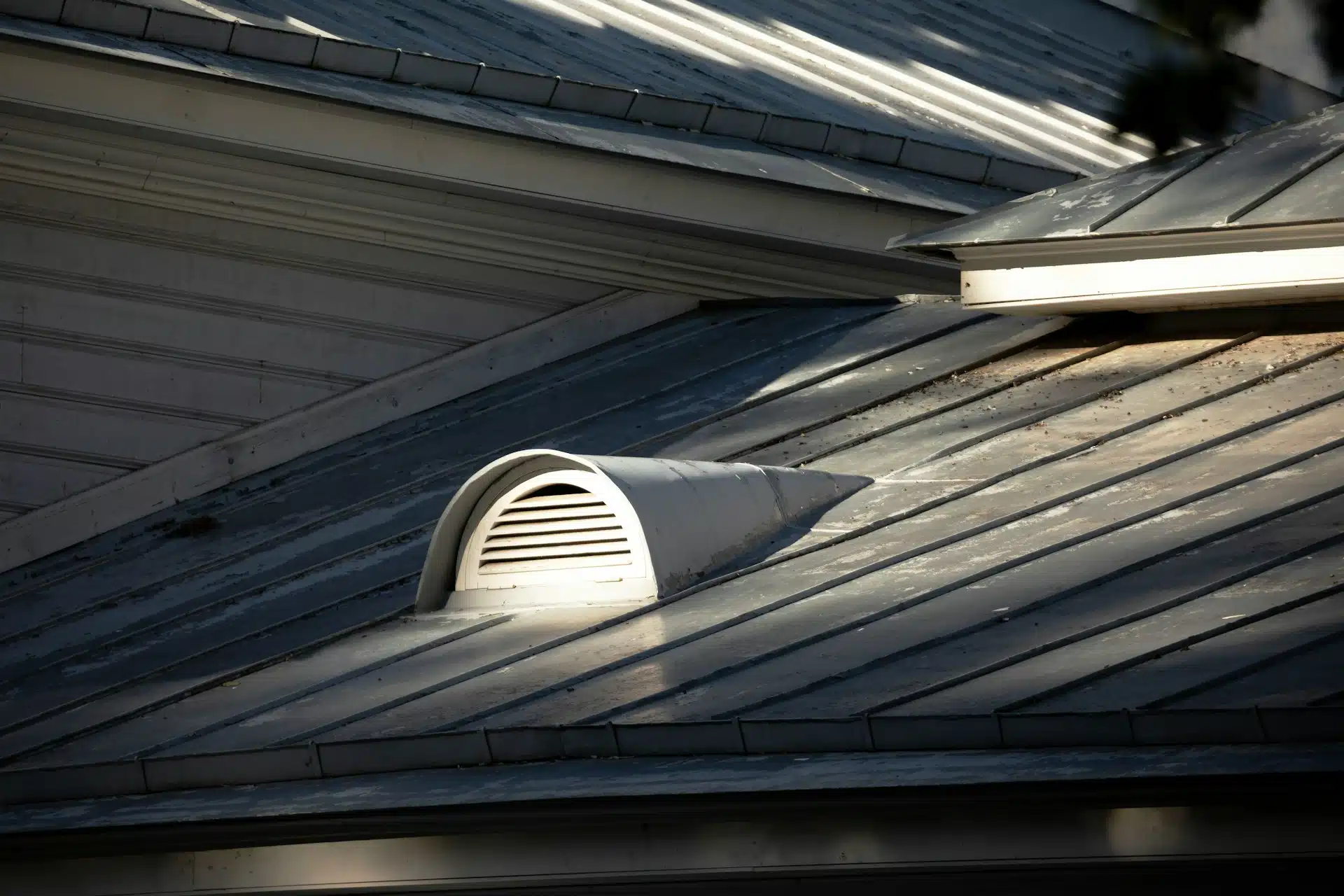
At the centre of the junction, a channel carries water. An open valley leaves part of the metal or proprietary trough visible between the cut roof coverings. A closed, or traditional, valley may appear largely covered by slates or tiles.
Both depend on careful overlap and drainage detailing. Open versus closed is a construction choice, not proof on its own that one roof is safer or better.
The lining may be lead, another suitable non-ferrous sheet metal, or an assessed proprietary system. Material selection depends on the roof design, pitch, exposure, adjoining covering and manufacturer requirements.
The Roof Tile Association material specifications set minimum expectations for exposed lead; the full detail, including support and fixing, is just as important.
Support Beneath the Valley
A valley is not simply a strip of metal laid in a gap. It normally needs properly designed support from boards, battens or another specified substrate.
If the supporting timber becomes wet, distorted or decayed, the lining may lose its intended shape and create pockets where water gathers. Patching the top surface without addressing unsound timber can hide the reason the repair keeps failing.
The Head, Sides and Lower Outlet
The highest point of a valley, where the adjoining slopes meet, needs a properly formed head or saddle detail. At the sides, cut slates or tiles must remain stable and overlap the lining correctly. At the lower end, water must discharge into the intended gutter or drainage route without running behind the fascia or into the eaves.
The NHBC pitched roof technical standards show how valley heads, support, adjacent coverings, and outlets work as an assembly; these details are technical guidance, not a substitute for roof-specific Irish design requirements.
Eight Common Causes of Roof Valley Leaks
1. Cracked, Split or Fatigued Valley Lining
Metal valley linings expand and contract as temperatures change. A poorly supported, incorrectly sized or restrained sheet can experience stress at a lap, fold or fixing point.
Over time, a split or pinhole may allow water into the underlay and roof structure. A hairline opening may be hard to see from the ground, especially when debris or overlapping roof coverings conceal it.
2. Failed Joints or Overlaps
Valley sections must direct water over successive joints, not into them. If a lap has been formed against the direction of flow, is too short for the roof design, or has separated, water can travel beneath the sheet.
The problem may emerge only during prolonged rain or when wind pushes water across the junction. For that reason, a dry-looking valley during a brief inspection does not rule out a defective overlap.
3. Slipped, Broken or Poorly Cut Slates and Tiles
The roof covering either side of a valley is a frequent source of trouble. Narrow cut pieces can loosen if not fixed properly; cracked slates can let water reach the underlay; poorly aligned edges can block the intended channel.
On a slate roof, it may be possible to replace individual damaged pieces while retaining sound surrounding material. The choice depends on the fastening condition, overlap, adjacent valley lining and required access.
4. Debris Restricting the Waterway
Leaves, twigs and accumulated material can impede water flow in a narrow valley. The resulting water may back up towards laps or covering edges, particularly during heavy rainfall. The Heritage Council roof maintenance guidance highlights valley gutters as an often-overlooked source of roof problems.
This does not mean every valley leak is a blockage: once material is displaced, the roof must still be checked for damage that occurred beneath it.
5. Deteriorated Underlay or Hidden Timber
Underlay is a secondary layer of weather protection, not a licence to leave the valley lining defective. Damaged, sagging or poorly detailed underlay may allow water that has escaped the valley to reach battens, rafters, ceilings or insulation.
Wet timber can also affect how the valley is supported. If a leak has been active for some time, a competent inspection needs to look beyond the metal’s surface.
6. Inadequate Fall, Capacity or Outlet Detailing
Valleys must carry runoff from the roof areas draining into them. If a new extension has changed the catchment area, or a roof alteration has introduced a shallow valley with a difficult outlet, the original detail may be inadequate.
Water can overshoot a gutter or collect where the valley flattens near the eaves. Repairs in these situations may require redesigning part of the junction rather than replacing the same lining like for like.
7. Defective Valley Heads and Intersections
The top of a valley may meet a ridge, another roof slope or a complicated arrangement of flashings. A missing or failed saddle can allow rain to enter above otherwise intact valley metal.
Similar problems can arise where valleys meet dormers or rooflights. Trace the wetting pattern to the highest relevant junction before assuming that the leak begins at the first visible stain.
8. Poor Previous Repairs
A bead of sealant across a metal lap, a patch bridging a moving joint, or a replacement slate that blocks the drainage channel may slow a leak without resolving it.
Such repairs sometimes make later diagnosis harder by trapping moisture or concealing the original defect. A lasting repair should restore the drainage path and use support, overlap and secure fixings appropriate to the system.
Signs That a Roof Valley May Be Leaking
A ceiling stain beneath a valley is one clue, but water seldom follows a perfectly vertical route. It may run along the underside of a slate, across underlay, down a rafter or behind plasterboard before becoming visible. An internal stain several feet away from the V-shaped roof junction does not necessarily exonerate the valley.
Common warning signs include recurring dampness near the meeting point of two roof slopes; staining that worsens during heavy rain; damp or darkened timber beneath the junction; displaced cut slates or tiles; daylight or gaps visible from a safe internal vantage point; and water overflowing at the valley’s lower outlet.
A dry-weather stain may remain long after the leak has stopped, so photograph changes over several rain events rather than judging by one moment.
What the Timing of a Leak Can Tell You
If water appears immediately during short, heavy showers, an exposed opening or outlet problem becomes plausible.
If it appears after hours of rain, the issue may involve saturation, a lap backup or an indirect water route. A leak associated with one wind direction may point towards uplift beneath a covering or a vulnerable head detail.
How a Professional Should Investigate a Valley Leak
Start With the Evidence, Not a Repair Product
A useful inspection records where and when moisture appears, how the valley receives runoff, what materials are fitted, and whether recent building alterations have changed drainage.
Photographs of interior staining and the weather conditions can narrow the search. Where safe and practical, visual access from the loft may reveal wet underlay or timber, indicating the direction of water travel.
Inspect the Complete Junction
The investigation should consider the ridge or valley head, the lining’s length and joints, the cut coverings at both edges, the supporting substrate where accessible, and the outlet at the eaves.
Flashings from nearby chimneys, dormers or walls must also be considered. Sometimes the true entry point is above the valley, and the valley merely channels water already beneath the coverings.
State What Could Not Be Seen
A ground or drone photograph can help identify visible defects, but it cannot prove the condition of concealed laps, underside corrosion or timber behind intact materials.
An inspection report should separate observations from hypotheses and state whether lifting nearby slates or tiles is needed before a reliable repair scope can be priced.
Work at height should follow the HSA’s roofwork safety guidance; homeowners should not attempt to walk in or across a suspected defective valley.
Roof Valley Repair Options: From Local Repairs to Reconstruction
Replace Localised Broken Slates or Tiles
When the lining is sound, and the issue is an isolated cracked or displaced covering, refixing or replacing affected slates or tiles with compatible fixings may be enough. The repair must still preserve the designed clear waterway and avoid leaving fragile, undersized cut pieces unsupported.
On traditional slate, the objective is to conserve sound material while reinstating the original weathering arrangement where appropriate.
Repair or Replace a Defective Valley Section
If damage is limited to one accessible length of lining, a properly designed section repair may be feasible. The roofer must examine the adjacent laps, support and fixings so the new work doesn’t just shift the weakness to the next joint.
Sheet-metal movement, material compatibility and the relationship between valley length and expansion detailing are important; a sealant-only patch does not provide the same assurance as rebuilding a failed junction.
Renew the Full Valley Lining
Extensive splitting, repeated leaks, widespread corrosion or unsuitable original detailing may justify removing adjacent roof coverings and installing a new valley system. This allows inspection and correction of the supporting boards, underlay transitions, head flashing and outlet.
The roof covering should then be reinstated with appropriate laps and secure cut-piece fixings. The goal is a functioning water-shedding system, not simply a fresh-looking strip down the centre.
Replace Damaged Valley Boards and Underlay Where Needed
If moisture has softened the supporting boards or damaged adjacent battens, those defects must be addressed before relining. The scope may grow once coverings are lifted; a sensible quotation should explain the known work and how unforeseen concealed damage would be assessed and agreed.
Replacing a whole roof solely because one valley has failed is not generally required, though widespread covering deterioration can change the decision.
Re-Detail an Inadequate Valley or Outlet
Where a recurring leak is caused by an unsuitable roof pitch, undersized channel, incompatible material or awkward discharge, repeating the original detail may repeat the fault.
A redesigned junction can involve revised lining geometry, suitable specialist components or changes to how runoff reaches the rainwater system. Such work needs a roof-specific design and may merit specialist input for complex or heritage buildings.
Lead, GRP and Other Valley Systems: What Is the Difference?
Lead has a long history on traditional roofs and can be formed for complex junctions, but it must be detailed to accommodate movement, supported correctly and installed at appropriate thicknesses.
The Roof Tile Association material specifications identify minimum lead grades for exposed weathering; they do not make every lead valley interchangeable. Existing historic leadwork may also merit a conservation-led assessment.
Proprietary GRP and other manufactured valley troughs can suit specific pitched-roof systems when the product’s independently assessed performance, supported span, pitch, adjacent roof covering and fixing instructions all match the job.
Do not assume they are suitable solely because their purchase price is lower. An unsuitable combination can fail even when the visible trough looks tidy.
Zinc, copper and other metals may be encountered on particular roofs, especially architectural or heritage details. Selection requires consideration of corrosion, run-off effects on adjacent metals, movement, compatibility and project-specific workmanship.
Mixing metals indiscriminately can introduce new problems. Manufacturer specifications and the original roof’s design should guide the choice, not a blanket claim that one material is best for all Dublin houses.
Repair or Replace: How to Decide
A local repair is more defensible when the defect is clearly identified, adjacent coverings and lining are sound, supporting timber is stable, and the underlying geometry works.
Rebuilding more of the valley makes sense when multiple joints have failed, boards are soft, patches have failed repeatedly, or evidence shows water cannot drain correctly. The correct dividing line is evidence, not the apparent size of the stain.
Before approving work, ask for a description of the defect, photographs where available, the extent of coverings to be lifted, the new lining material and system, treatment of the head and outlet, timber contingencies, access arrangements and how weatherproofing will be protected if work runs beyond one day. An unclear quotation can make a small repair seem comparable to a comprehensive rebuild, even when the scopes are fundamentally different.
What Affects Roof Valley Repair Costs in Dublin?
The same valley length can mean very different jobs. Costs vary with roof height and access, valley length and pitch, whether slates or tiles can be lifted and reused, the chosen lining, the condition of supporting timber, the number of junctions, the complexity at the ridge and gutter, and whether scaffolding is required. Work on a protected or architecturally sensitive property can require additional care or permissions.
A low headline figure may cover only sealing an exposed crack, while a higher quotation may include lifting coverings, replacing boards, fitting a complete lining and reinstating the roof.
Compare scope, specifications and exclusions rather than price alone. For broader context, our guide to roof flashing explains why junction detailing matters, while our guide to roof-repair warning signs covers other defects that can accompany valley leaks.
Roof Valleys on Older Dublin Houses
Traditional terraces and period properties may include natural slate, leadwork and unusual junctions added during decades of alterations. Original details can be valuable and repairable, but later patches may introduce incompatible materials or obstruct a valley’s outlet. In a conservation setting, retain sound historic fabric where possible and investigate why the defect occurred before replacing the entire assembly.
The Heritage Council roof maintenance guidance emphasises prompt attention to loose flashings and damaged slates and warns against unsafe roof access. On older roofs, matching the original slate size and coursing is often as important to performance as it is to appearance. Broad conclusions about an individual property should never be drawn from its age alone; condition, earlier repairs and roof geometry determine the proper scope.
Preventing Recurring Valley Problems
After storms or prolonged heavy rain, a visual check from safe ground can reveal displaced slates, a shifted valley edge or rainwater overflowing at the lower junction. From a safely accessible loft, look for fresh staining or damp patches, but avoid exposed wiring and unstable flooring. Keep dated photographs of anything unusual.
The most effective long-term approach is to maintain sound roof coverings, keep the designed drainage route functional, and address small defects before water reaches the timber beneath.
Our roof maintenance advice also covers other roof components worth monitoring. Inspection frequency should reflect exposure, tree cover, roof complexity, age and previous leak history, rather than following an invented universal schedule.
When to Seek Professional Roof Valley Repairs in Dublin
If there is active dripping, spreading ceiling damage, visibly displaced roof coverings or recurring leaks after a previous patch, the roof should be assessed promptly. Keep people away from visibly damaged ceilings, protect possessions from water where safe, and avoid climbing onto the roof or placing ladders in wet or windy conditions.
At Emergency Roofers Dublin, we investigate the source of roof leaks before recommending a repair scope. For valley problems, that means checking the lining, adjacent slates or tiles, head details, supporting materials and drainage outlets, not just the spot where a ceiling stain appears.
We can assess the affected area and explain whether targeted work or more extensive renewal is appropriate. When requesting roof repairs in Dublin, tell us where the leak appears, when it happens and whether there have been previous repairs.
Frequently Asked Questions
What Is the Most Common Cause of a Roof Valley Leak?
No single cause applies to every roof. Failed valley-lining joints, cracked coverings beside the channel, damaged head flashings and restricted drainage are all possibilities. Inspection should identify the entry point before the repair is selected.
Can a Roof Valley Leak Even When the Slates Look Intact?
Yes. The visible slates may be sound while the valley lining, its overlaps, head detail or concealed underlay has failed. Water can also travel from another junction before appearing beneath the valley.
Does a Leaking Roof Valley Always Need Full Replacement?
No. Localised damage can sometimes be repaired while retaining a sound lining and supporting structure. Widespread splitting, deteriorated support or inadequate original design may justify replacing more of the valley.
Can Sealant Fix a Leaking Roof Valley?
Sealant may be used as part of a manufacturer-approved detail in specific circumstances, but applying it over a failed lap, split metal, or unsound support is not a dependable substitute for a properly designed repair.
Why Does My Roof Valley Leak Only in Heavy Rain?
High runoff volume can expose an undersized or obstructed channel, vulnerable overlaps or a poor outlet. Wind may also drive water beneath adjoining coverings. Weather patterns help guide diagnosis but don’t prove a specific defect.
What Is the Difference Between an Open and Closed Roof Valley?
An open valley has a visible water-carrying channel between roof coverings. A closed valley is largely concealed by coverings or traditional detailing. Either can perform well when designed and installed correctly.
Is Lead Better Than a GRP Valley?
Neither is universally best. Lead and proprietary GRP systems have different requirements for pitch, movement, support, fixings and compatible coverings. An appropriate system suits the roof and follows its technical specification.
Can I See Valley Damage From the Ground?
Sometimes. You may see slipped tiles, displaced slates or overflowing water, but small splits, defective laps and decayed boards usually aren’t visible. A ground-level photograph cannot replace inspection of concealed details.
Can a Roof Valley Leak Damage the Attic?
Yes. Water escaping a valley can wet underlay, battens, rafters and insulation before a ceiling stain appears. The extent of any hidden damage should be assessed during the repair.
How Long Does a Roof Valley Repair Take?
It depends on access, weather, how much lifting is required, and whether the lining or timber must be renewed. A local slate repair and a full valley rebuild are different jobs, so a reliable duration follows an inspection and agreed scope.
Should a Roof Valley Be Repaired Before Selling a House?
An active leak or visibly defective valley should be investigated and disclosed appropriately. Written findings, photographs and completed repair records can help buyers understand the condition without implying that a routine roof repair is a structural certification.
What Should a Roof Valley Repair Quote Include?
It should identify the suspected defect, access arrangements, materials and work extent, which slates or tiles will be lifted, treatment of the head and outlet, any concealed-timber contingency and how variations are agreed before additional work proceeds.