Chimney repair in Dublin can cost a few hundred euros for a small, accessible defect, or several thousand euros when a damaged stack needs extensive rebuilding.
The biggest difference isn’t simply the chimney’s size; it is whether the problem lies in the lead flashing, mortar joints, flaunching, individual bricks or the stability of the entire stack.
For most homeowners, a useful starting point is identifying the repair type and what the quote includes. A €450 flashing repair and a €1,400 repointing job are not competing prices for the same work.
They solve different problems. The guide below explains realistic budgeting ranges, the faults behind them, and how to decide whether a repair is enough.
Chimney Repair Costs in Dublin at a Glance
These guide ranges help with budgeting, not an exact prediction of what an individual roof will cost. Safe access arrangements, the extent of damaged masonry, and specifications can change the final total considerably.
| Type of Chimney Work | Indicative Budget Range | What Typically Changes the Price |
| Minor Localised Repointing | €200–€500 | Small areas of failed joints; minimum visit and roof access |
| More Extensive Chimney Repointing | €500–€2,100 | Stack dimensions, joint preparation, mortar type and access |
| Lead Flashing Repair or Renewal | €350–€1,700 | Local patch versus full apron, steps, soakers and back gutter |
| Flashing or Chimney-Top Repair | €200–€900 | Number of pots, safe access and extent of cracking |
| Pot or Cowl Replacement | €150–€500+ | Pot size, fitting requirements and access |
| Partial Stack Rebuild | €1,200–€3,800+ | Number of courses, matching brick, structural stability |
| Extensive or Full Stack Rebuild | €2,000–€5,600+ | Height, scaffold, demolition, reconstruction and detailing |
Why One Chimney Repair Costs €300 and Another Costs €3,000
A chimney is exposed on all sides, and its weak points behave differently. Wind-driven rain can enter through a cracked lead junction even when the brickwork looks sound. On another property, the lead may be intact, but the mortar has worn away across several faces of the stack. A third chimney may have unstable masonry that repointing can’t safely fix.
The Defect Matters More Than the Damp Patch
An upstairs ceiling stain near a chimney breast does not tell you exactly where rain is entering. Water can track beneath slates, behind flashing or through porous masonry before it appears inside. Repairing the most visible crack without checking the surrounding roof may leave the actual entry point untouched.
A useful investigation looks at the condition of leadwork, the back gutter behind the stack, mortar joints, flaunching, chimney pots, neighbouring slates and roof underlay where visible. Where several defects exist, the contractor should distinguish the main cause from damage that may need attention later.
Height and Access Can Change the Quote
A single-storey extension chimney with straightforward access is not comparable to a tall stack on a steep three-storey terrace. Chimney work takes place at height, often near a ridge or roof edge.
The Health and Safety Authority’s HSA roofwork code describes properly designed chimney scaffolds and suitable access as important controls. A responsible quote provides for safe working rather than relying on a ladder just to keep the headline price low.
Older Brickwork May Need Different Mortar
Modern cement-rich mortar is not always appropriate for older, softer brick. In traditional masonry, the joint should work with the historic fabric, allowing moisture movement without damaging the faces of the bricks. Repair work may call for a compatible lime mortar and careful joint preparation. The Heritage Council provides guidance on repairing traditional buildings, while local-authority Historic Brickwork Guidance covers chimney masonry and situations where partial rebuilding is more appropriate than patching.
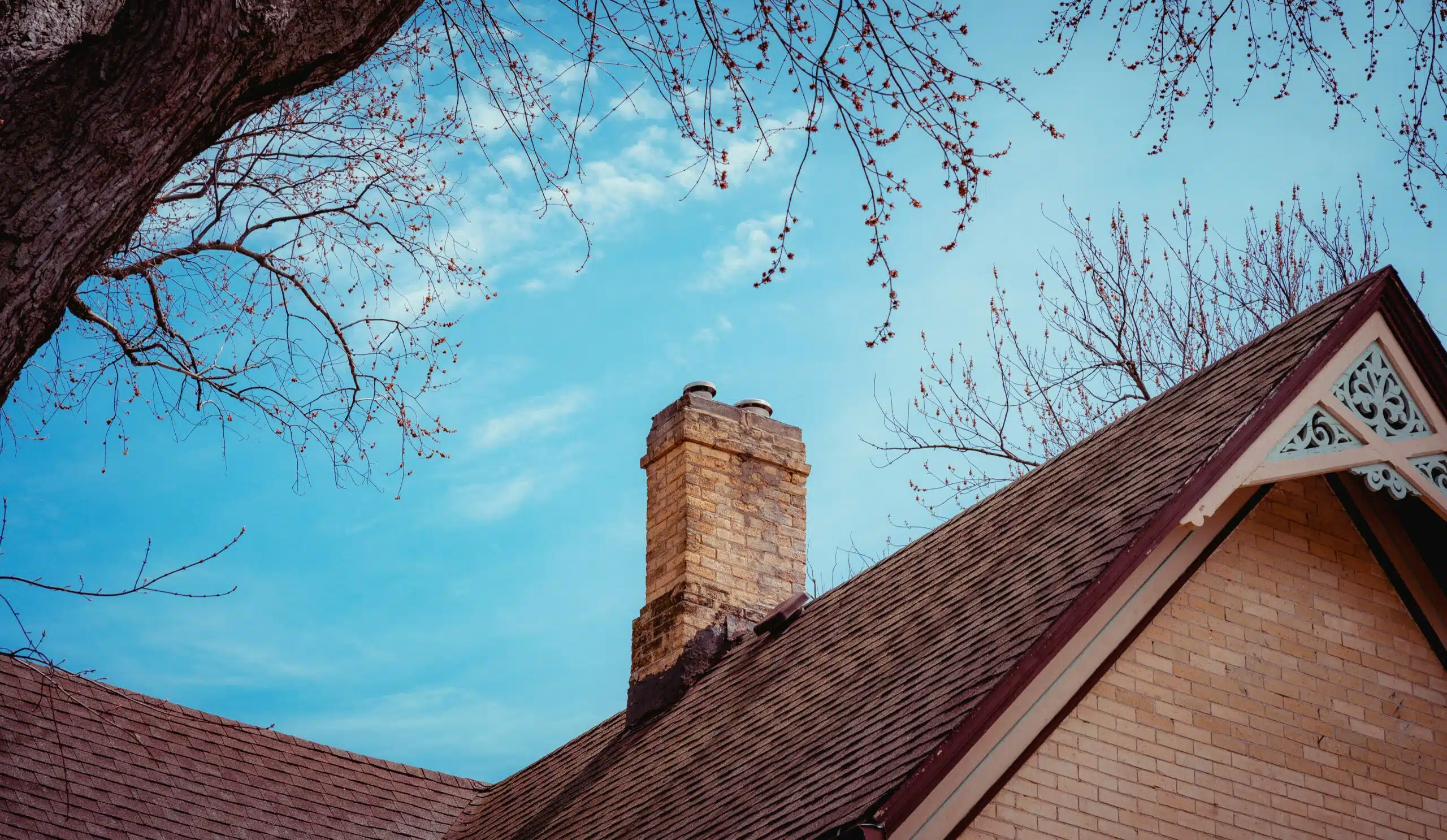
How Much Does Chimney Repointing Cost in Dublin?
As a budgeting guide, a small patch of repointing may fall around €200–€500, while work across much or all of an exposed stack may run from roughly €500 to more than €2,000. The number of joints, depth of decay, correct mortar specification and access arrangements drive the difference.
What Proper Repointing Involves
Repointing isn’t just skimming fresh mortar over old joints. Loose and unsound mortar must be carefully removed to an appropriate depth without damaging the brick edges.
Then prepare the exposed joints and fill them with compatible mortar, finish to the appropriate profile, and protect it as needed while it cures. In older buildings, material compatibility and weather conditions matter especially.
A quotation should specify whether the price covers a few local joints, one face of the stack or every exposed face. “Chimney repointed” on its own is too vague: you need to know whether deteriorated bricks, flaunching and leadwork have also been inspected.
When Repointing Will Not Be Enough
Missing mortar is one thing; loose masonry is another. A bulging or noticeably leaning stack, widespread brick spalling or cracks passing through bricks rather than just joints may indicate a more substantial problem.
Simply filling the joints can disguise rather than correct instability. Movement or loose masonry calls for a proper structural assessment and, if needed, a controlled rebuild.
How Much Do Chimney Flashing Repairs Cost?
Small leadwork repairs may be budgeted in the mid-hundreds. Renewing a larger or more complex flashing arrangement may cost about €1,700 or more when access and associated roof work are substantial. The quote should distinguish a localised adjustment from replacing a complete lead detail.
What the Flashing Actually Does
Flashing forms the weather-resistant junction between the chimney masonry and the sloping roof. Depending on the arrangement, it can include a front apron, side flashings, stepped cover flashings, soakers and a back gutter. Water collecting behind a wide chimney must be properly directed around it. A leak can recur if the repair addresses only the front apron while the back gutter remains defective.
Lead develops movement with temperature changes. The detailing, lengths, fixing and allowance for movement therefore matter as much as the visible finish. A bead of sealant may help temporarily in a limited situation, but it is not a sound substitute for failed leadwork.
When the Problem May Be the Roof Rather Than the Chimney
A broken slate immediately uphill of a stack, defective underlay or poorly formed valley can send water towards the chimney and make the junction look guilty.
The inspection should include the surrounding roof area and the path water is taking. If the leak is not from the masonry or flashing, see the Roof Leak Repairs Dublin service information for the wider roof-leak context.
How Much Does It Cost to Repair Chimney Flashing or Replace a Pot?
Flashing is the sloped weatherproofing material around chimney pots at the top of the stack. Cracks or separation can let moisture into the masonry, and damaged pot bedding can leave a pot insecure. Repair or renewal commonly falls into a few hundred euros, but a larger top, multiple pots or difficult access can increase the price.
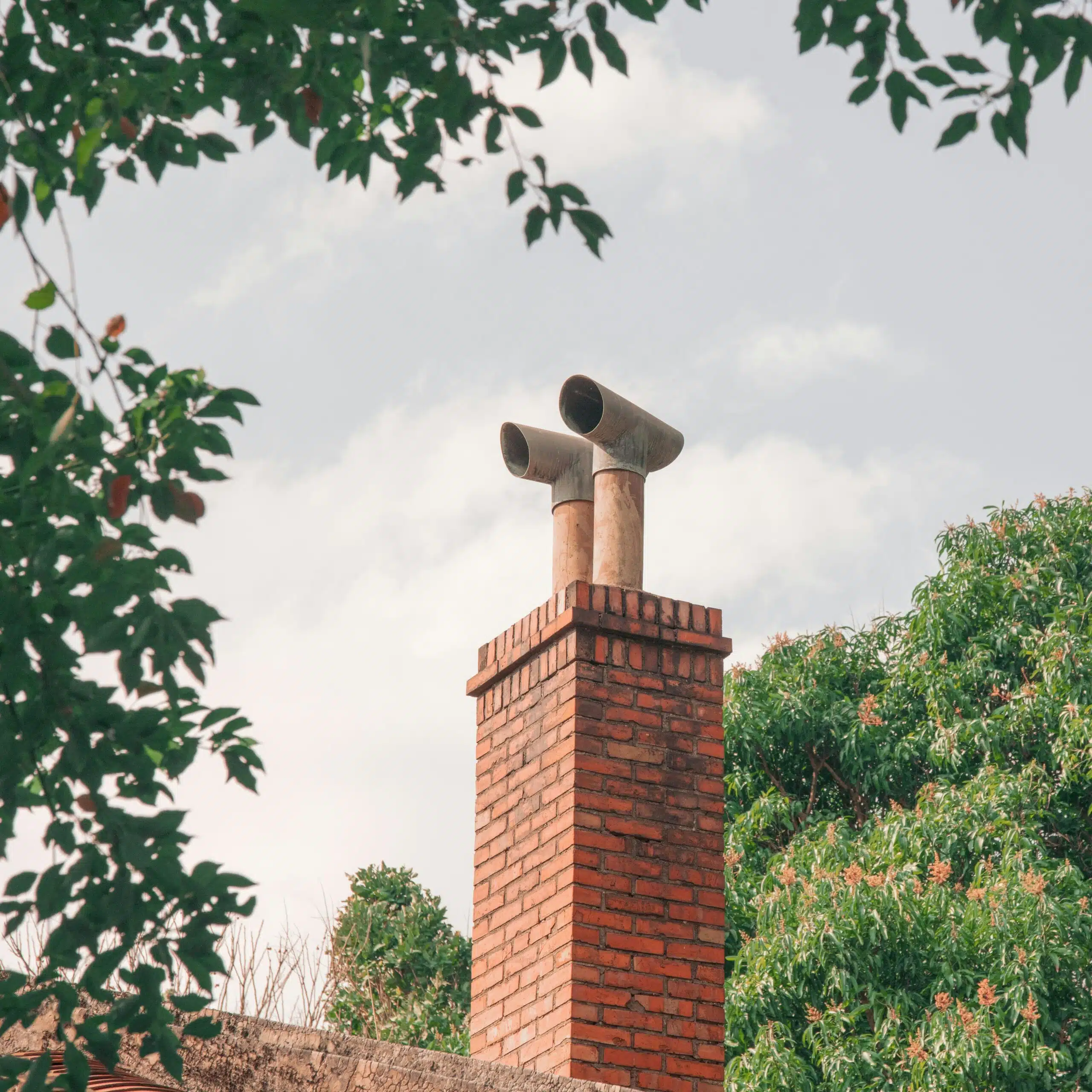
A pot or cowl may be replaced as part of wider repair work. The exact fitting must suit the flue and any connected appliance. Don’t assume a cap or cowl will fix every leak: rain entry through failed masonry, flashing, or flaunching requires a different repair.
If you have an active solid-fuel or gas appliance, appropriately competent specialists should assess any changes affecting its flue.
How Much Does It Cost to Rebuild a Chimney Stack?
A partial rebuild above the roof may cost roughly €1,200–€3,800 or more; extensive rebuilding can exceed €5,000 on complicated roofs or large stacks. A detailed price depends on which courses are unsound, the bricks or stone required, access, temporary support, any heritage constraints and the leadwork that must be reinstated after masonry work.
A rebuild is a fundamentally different scope from cosmetic repointing. It can involve careful dismantling, matching or salvaging brick, reconstructing the stack to a suitable specification, renewing the top weathering and flashing, and ensuring proper inspection. If a chimney is moving or shedding masonry, keep people clear of the area below and obtain professional advice promptly.
Three Worked Examples of How Chimney Repair Quotes Add Up
Example One: A Localised Leak at the Flashing
Imagine a chimney with sound brickwork, a small section of displaced lead and straightforward access. A repair quote could cover safe access, checking adjacent slates, redressing or renewing the defective detail, then inspecting the surrounding junction.
The homeowner should confirm whether this is a limited repair or a full replacement, and what happens if hidden damage is discovered once the area is opened.
Example Two: Mortar Failure Across Two Chimney Faces
A taller chimney may have eroded joints on its windward face and near the top, while the structure remains stable. The main costs here are access, careful raking out and compatible repointing.
The quote should clearly identify how many faces are treated and whether the top flaunching and lead junction need separate attention. Repointing the front face alone will not protect failed mortar around the back.
Example Three: Damaged Brickwork and a Failed Back Gutter
On an older terraced property, a chimney may have several crumbling upper courses together with defective lead behind the stack. This requires more than one trade operation: access, careful removal and reinstatement of masonry, and rebuilding the roof junction.
The total can be considerably higher than either a repointing-only or flashing-only price, but the proper comparison is the cost of the complete remedy, not a cheap patch that leaves two faults in place.
What Should Be Included in a Chimney Repair Quote?
A detailed quotation protects both homeowner and contractor. Before approving the work, compare like with like. An estimate labelled “fix chimney leak” doesn’t say what material will be replaced, how much of the stack will be worked on, or whether the price includes scaffolding.
- The precise defect or defects identified and the proposed repair method.
- The areas included: front, sides, back, top, individual courses or the whole stack.
- The mortar specification for repointing, especially on older brick or stone.
- The lead or alternative flashing specification and which components will be renewed.
- Whether safe access, scaffold, protection and waste disposal are included.
- Any treatment of adjoining slates, tiles, underlay or roof timbers.
- Whether VAT is included, the expected timetable and how variations will be agreed.
- What written workmanship terms apply to the particular chimney repair.
The CCPC advises homeowners to secure written quotations and agreed terms, check the trader and keep records of payments and communications. Where practical, also request photos of the defect and the completed work; they help explain what was found at roof level.
Does the Price Include VAT and Scaffolding?
Do not assume every published figure includes the same items. A repair estimate may exclude scaffolding, especially when a particular access design is assessed separately. VAT should also be stated clearly.
Revenue explains that roofing and other qualifying construction services generally fall under the reduced VAT treatment, but the invoicing position can depend on the nature of the supply. Ask for an inclusive total rather than trying to calculate the final bill from a vague “plus extras” amount.
See Revenue for the official construction-services VAT guidance. A well-structured quote should show the final price and explain any items that cannot yet be fixed until inspection.
Should You Repair or Replace an Old Chimney?
Repair is often sensible where defects are localised, and the underlying stack remains stable. Repointing can restore weather resistance to sound masonry, and properly renewed flashing can stop water entry without replacing otherwise serviceable brickwork. Consider rebuilding where masonry is unstable, badly fractured or deteriorated across a substantial part of the stack.
One useful question is whether the proposed repair addresses the cause and offers a sensible remaining life for the surrounding materials. A cheaper short-term repair can still be appropriate when clearly described as temporary. The problem arises when temporary work is sold as a permanent cure for a failing structure.
What About Older Dublin Homes and Shared Chimneys?
Chimneys on older terraces and period houses can involve softer brick, historic mortar, decorative pots and shared or party-wall arrangements.
Don’t assume a standard modern repair specification is suitable without checking the building fabric. For a protected structure or a property in an architectural conservation area, check with the planning authority before work that may affect protected character.
A chimney serving more than one property also raises questions about ownership, access and agreement. Do not assume that sharing a chimney automatically makes one neighbour solely responsible for a particular repair. Establish the physical defect and the relevant ownership position before committing to substantial work.
The Heritage Council and Historic Brickwork Guidance are particularly helpful for understanding why careful material selection and preserving original features matter on historic Dublin buildings.
What If a Chimney Is Leaking During Heavy Rain?
Start by protecting the room below: move belongings away from damp areas, safely collect dripping water, and avoid using electrical fittings affected by moisture. If a chimney pot is loose or masonry has fallen, keep the area below the stack clear. Do not climb onto a wet roof or lean from an upstairs window to inspect flashing.
Photograph the damage and note when the leak appears. A leak that occurs only in wind-driven rain may indicate a different path from one that happens whenever it rains. This information helps narrow the investigation. If the chimney has suffered sudden storm damage, keep photographs and check your insurance policy before doing any non-essential permanent work that might affect a claim.
Frequently Asked Questions
How Much Does a Small Chimney Repair Cost in Dublin?
A small accessible repair can cost a few hundred euros. For instance, localised repointing or a limited flashing adjustment may fall around €200–€500. The actual price depends on the fault and the access needed to work safely.
How Much Does It Cost to Repoint a Chimney?
Limited repointing may cost around €200–€500, while extensive repointing across a stack can be roughly €500–€2,100 or more. Ask how many joints and faces are included and what mortar is proposed.
Is Chimney Flashing Expensive to Replace?
A small repair can be relatively modest, but extensive replacement of aprons, step flashings, soakers or a back gutter can reach four figures. Access and the number of details needing renewal are important.
Can Repointing Stop a Chimney Leak?
Yes, when failed mortar joints are the water-entry route, and the masonry is otherwise sound. It won’t fix an unrelated flashing defect, broken slate or structural movement.
How Do I Know If My Chimney Needs Rebuilding?
A leaning stack, widespread loose bricks, significant fractures or severe masonry deterioration needs assessment. Repointing alone is not a structural repair for an unstable chimney.
Does Chimney Repair Require Scaffolding?
Many chimney jobs require a suitably designed scaffold or other safe access system because of their height and position. The access method depends on the roof and the task, and should be reflected in the quote.
What Is Chimney Flashing?
Flashing is the sloped weatherproofing material around chimney pots at the top of the stack. It sheds water; cracks or failed bedding may need repair.
Will a New Chimney Cowl Fix a Leak?
Only if the fitting addresses the real cause. A cowl cannot repair cracked mortar, a failed lead junction or damaged flaunching. The right type also depends on the flue and any connected appliance.
Can I Repair a Chimney Myself?
Chimney repairs involve work at height and potentially unstable masonry. Roof access and fall risks make this unsuitable as a routine DIY task; a competent professional should assess the defect.
Are Chimney Repairs Covered by Home Insurance?
Some policies may cover sudden insured events such as storm damage, but deterioration and maintenance issues are often excluded. Review the specific policy and evidence of what caused the damage.
Should I Repair My Chimney Before Replacing My Roof?
It is sensible to assess both together. If scaffolding will be needed for roof replacement, coordinated chimney work may avoid repeated access costs. The sequence should be agreed in the overall specification.
How Do I Compare Two Chimney Repair Quotes?
Check that both quotes address the same defects, mortar and flashing specification, access, waste removal, VAT and written workmanship terms. A lower figure may represent a smaller scope, not better value.
Get a Chimney Repair Quote From Emergency Roofers Dublin
If you have water staining around a chimney, deteriorating mortar, damaged leadwork or a stack that needs more substantial attention, Emergency Roofers Dublin can assess the issue and explain the suitable repair options.
Our Chimney Repairs Dublin service includes repointing, flashing repairs and chimney-stack work, with a written quotation based on your property’s needs.
For leaks involving the surrounding roof, our Roof Repairs Dublin team can also assess the adjoining slates and roof junctions.
Contact Emergency Roofers Dublin with your address and a brief description of the problem to request an inspection and quotation. Don’t decide between repointing, flashing replacement and rebuilding before the roof has been assessed.