A leaking flat roof can start with a small stain over a kitchen extension, a damp patch inside a garage or a drip around a rooflight. The first question is usually cost. The second is whether a repair will actually last.
This guide explains the cost of common flat roof repairs in Dublin, what affects a quotation and when spending more on a proper sectional repair or replacement may be the more economical decision.
For a rough budget, a small flat roof repair can cost around €250 – €600, a more involved local repair around €600 – €1,200, and substantial repair or replacement work around €1,500 – €5,000 or more.
The important question is what the price covers: repairing a sound membrane in one area is very different from replacing damp insulation, decking and waterproofing.
Key Takeaways
- Local repairs can work well where the surrounding roof and deck remain sound.
- Leaks near wall junctions, rooflights and outlets may require more detailed work than a visible split in the membrane.
- Before approving a quote, clarify the roof system, proposed repair, access method, VAT, contingencies and a written guarantee.
- Widespread saturation, repeated failures or deteriorated decking can make a full replacement the better long-term decision.
- Do not walk on a wet, unverified flat roof to investigate it yourself.
How Much Does It Cost to Repair a Flat Roof in Dublin?
Here are typical budgeting ranges for common flat roof repairs and replacements in Dublin, based on the pricing information reviewed for this guide. They provide a useful starting point for planning; the actual cost depends on the defect, roof condition, size, materials and access.
| Work Type | Budget Guide | What Changes the Cost |
| Local membrane patch | €250 – €600 | Condition of the surrounding covering, compatible repair material and access |
| Upstand or failed wall junction | €300 – €800 | Flashing detail, waterproofing height and adjacent wall condition |
| Flat-roof repair, varying scope | €250 – €800 | Material type, area, diagnosis and site setup |
| Garage re-cover/replacement | €1,800 – €3,500 | Size, strip-out, insulation, outlets and substrate |
| Extension re-cover/replacement | €2,500 – €5,000 | Area, levels, edge and rooflight details |
A small split in sound waterproofing can be a straightforward repair. A leak at a wall junction, a failed outlet or a roof with wet decking is a different job. Compare the repair scope alongside the price: a cheap patch that misses the leak can be expensive if the ceiling is damaged again.
What Affects The Cost of Flat Roof Repairs?
The Leak Source Is Not Always Above the Stain
Water can move between membrane layers or along timbers before it shows up indoors. A ceiling mark beside an extension wall might originate from an upstand, a rooflight, an outlet or adjoining masonry. Proper tracing takes longer than applying a patch, but it’s essential to prevent repeat visits.
The pattern of a leak is useful evidence. Note whether it appears after prolonged rainfall, only during wind-driven rain or soon after water collects around an outlet. Photographs taken safely from inside can help document the issue without going onto the roof.
Existing Waterproofing Materials Need Compatible Repairs
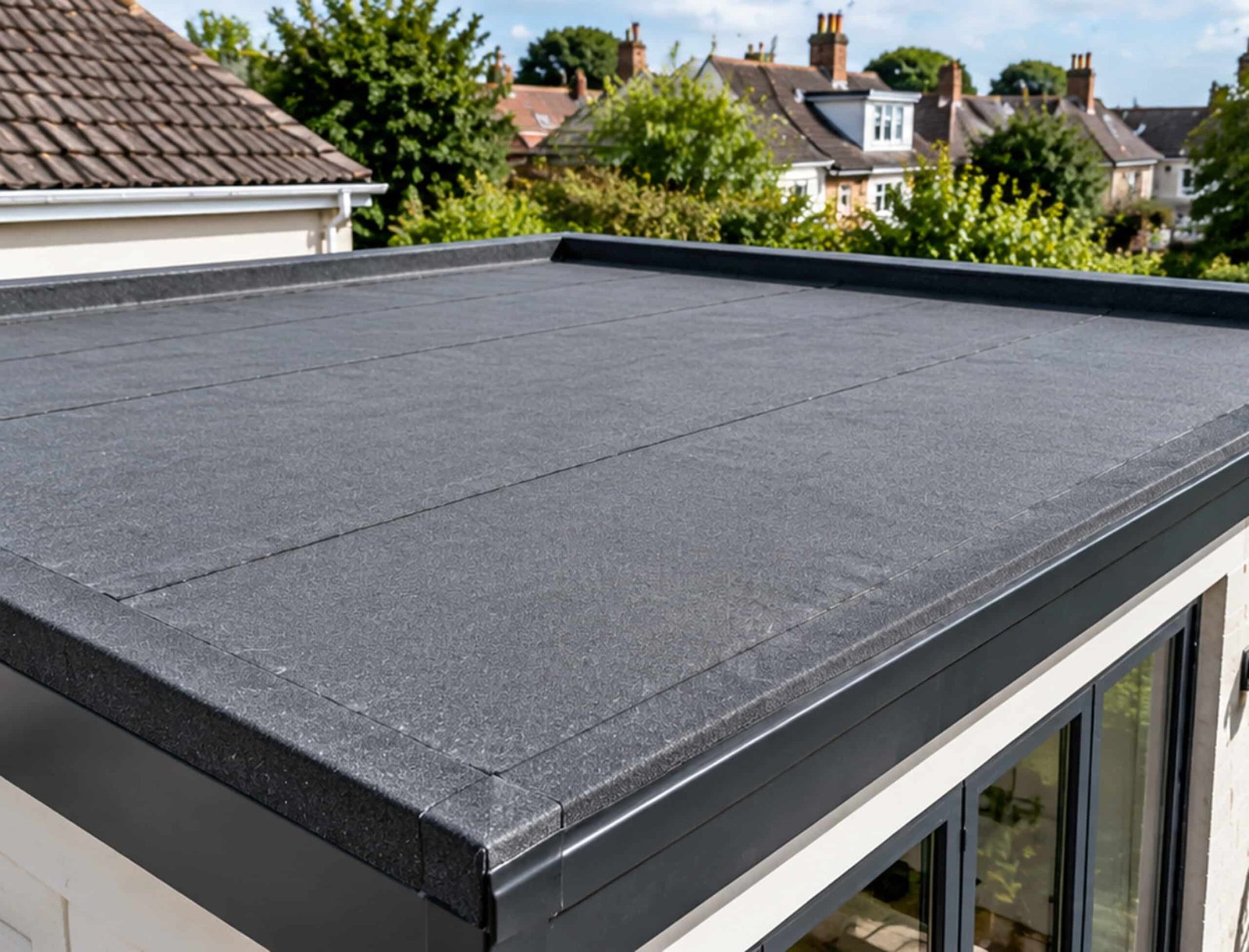
Built-up felt, torch-on bitumen, EPDM rubber and GRP fibreglass use different repair systems. Compatibility, surface condition, weather and curing requirements matter. A universal sealant claim is a warning sign; the correct product and detail should be matched to the existing roof.
Hidden Decking or Insulation Damage Changes the Job
A soft deck, long-standing moisture or wet insulation can change a small surface repair into a partial strip-out. The contractor may need to expose an area before finalising the extent. Your quotation should explain how any unforeseen work will be photographed, priced and authorised.
If you’re upgrading insulation, the SEAI Home Insulation Guide explains how insulation fits into energy upgrades.
Access and Work-at-Height Protection Carry Real Costs
You can’t directly compare the cost of a ground-level garage with a high extension or dormer roof. Edge protection, scaffolding, safe material movement and avoiding fragile rooflights affect the method.
Ireland’s Health and Safety Authority expressly treats flat-roof work as work at height. For guidance on safe access and roofwork, see the Health and Safety Authority’s Code of Practice for Safety in Roofwork.
Edges, Rooflights, Parapets and Outlets Take Time
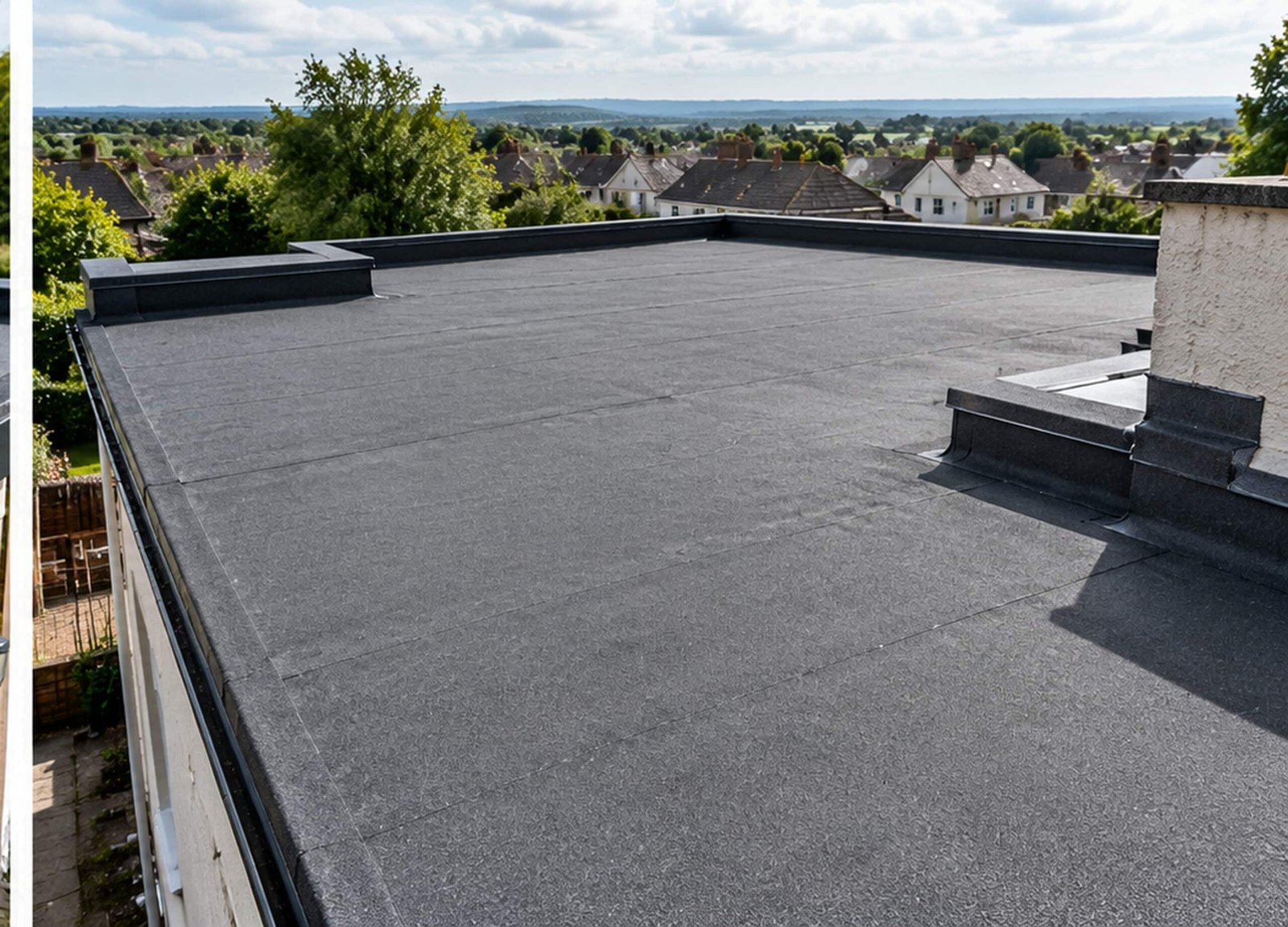
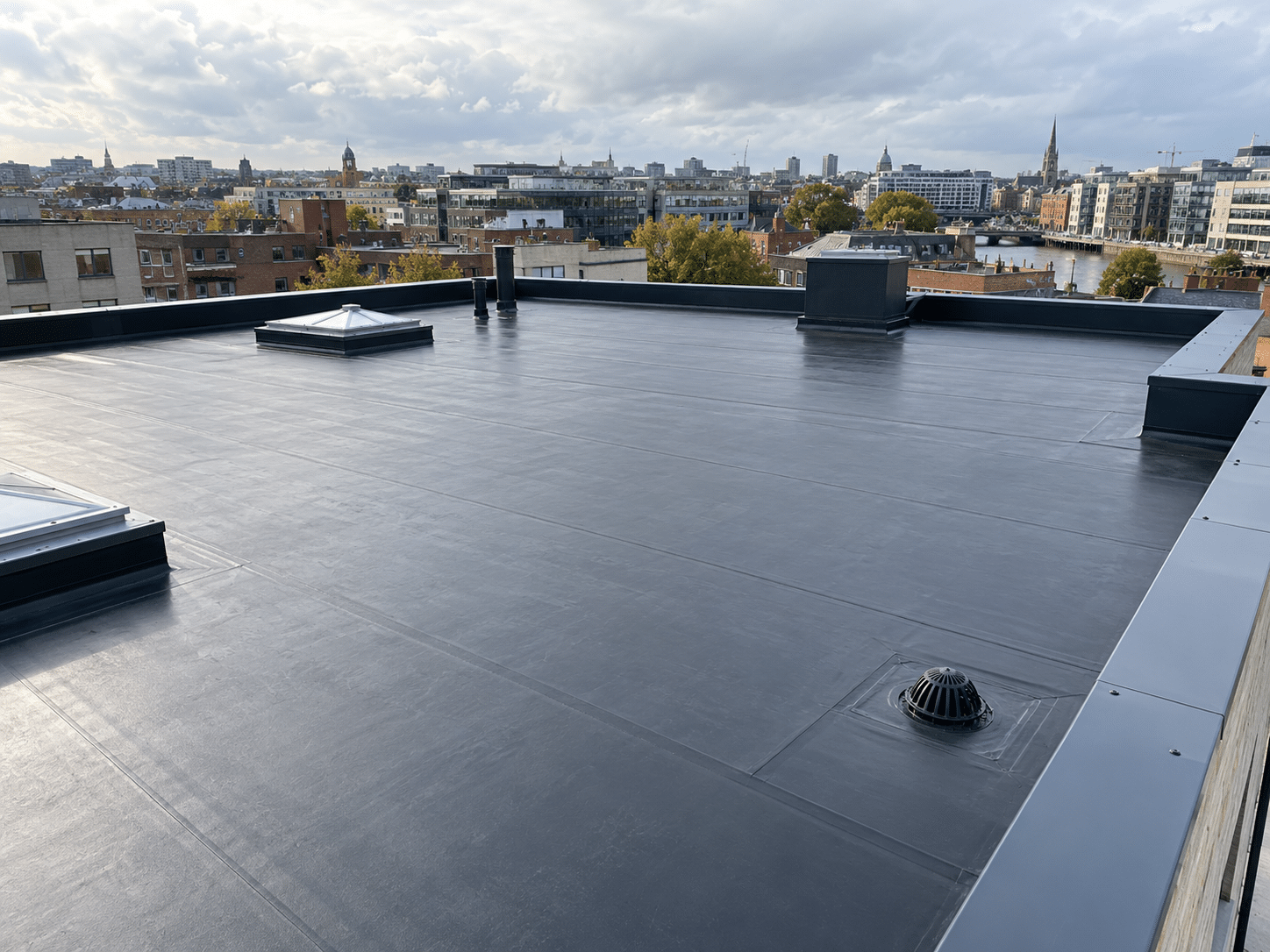
A flat roof consists of much more than its central waterproof sheet. Terminations, vertical upstands and outlets are among the details most likely to make a straightforward-looking repair technically demanding. A price per square metre should never be used alone to judge these jobs.
VAT, Removal and Interior Making-Good May Be Separate
A low headline cost may omit scaffolding, removal of old material, making good damaged ceilings, or VAT. Revenue explains that construction services such as roofing generally attract reduced-rate VAT, subject to transaction-specific rules, including the two-thirds rule in relevant cases. Ask for the applicable tax treatment on the written quote.
For the applicable tax treatment of roofing work, consult Revenue’s Construction Services VAT Guidance.
Common Flat Roof Repairs And What Each One Involves
Repairing a Localised Puncture or Split
Where the surrounding covering is stable, the repair process typically includes identifying the defect, checking adjacent zones, preparing a suitable dry substrate and applying a compatible detail with sound laps or bonds. Ask whether the repair covers just the hole or the whole stressed junction.
Repairing a Failed Upstand or Wall Flashing
A leak at an extension-wall junction can involve deteriorated pointing, insufficient waterproofing height, detached flashing, or the interface between the wall and roof covering. Coating the outside with sealant can conceal rather than resolve the fault. Written specifications should identify the junction being rebuilt.
Replacing a Failed Section of Felt or Membrane
A sectional renewal may be a reasonable intermediate option if most of the roof remains sound. Check how old and new materials join, whether water is trapped beneath existing layers, and what happens at the repair perimeter. A patchwork surface alone does not prove replacement is necessary.
Investigating Ponding Water
Standing water is a symptom, not a diagnosis. Assess whether water drains through the designed outlet, whether the roof deck has moved, and whether the membrane has deteriorated. Persistent ponding or new deflection requires investigation; no single universal number of hours proves every flat roof has failed.
Temporary Emergency Weatherproofing
Temporary measures can limit water intrusion while you plan a permanent repair, especially during active bad weather. The homeowner should understand whether the quote covers a make-safe visit, a durable repair, or both; a temporary cover should never be presented as a permanent waterproofing solution.
Should You Repair or Replace Your Flat Roof?
Repair is often a strong option if the defect is well located, most of the roof is still serviceable, and the decking and insulation have not suffered significant moisture damage. Replacement deserves more attention when leaks appear in unrelated areas, the waterproofing is broadly deteriorated, past repairs repeatedly fail, or the substrate has become structurally unsound.
For larger roof works, consider a new roof installation or replacement. A local repair is normally sensible when the defect can be identified, and the surrounding roof is sound.
Replacing an entire roof solely because one seam has opened can be unnecessary. Repeated patching also offers poor value when water has damaged the underlying deck or failures run across the roof.
Age is useful background, not an automatic replacement trigger. A roof installed carefully and maintained well may perform differently from another roof of the same age. Don’t rely on fixed internet lifespan tables as proof that your roof is finished.
| Finding | Likely Next Step | Important Qualification |
| One isolated puncture, sound surrounding covering | Assess a compatible local repair | Confirm the substrate is dry and stable |
| Recurring leak at a junction | Investigate and reconstruct the detail | Do not automatically coat the full roof |
| Several failures across separate areas | Price sectional renewal and replacement | Compare expected remaining serviceability |
| Soft or saturated deck | Investigate concealed layers and possible replacement | Changes to scope need agreement |
| Persistent ponding with deflection | Check deck, falls and outlet design | Ponding itself does not prove a single cause |
Three Common Flat Roof Problems and What They Mean for Your Quote
Scenario A – A Small Split on a Garage Roof
The roof is accessible, a single split is found, and the neighbouring membrane appears sound. One contractor specifies the membrane-compatible repair and checks the adjoining seams. Another offers an unexplained coating of the full roof. The detailed local repair may be more defensible, even if it sounds less extensive.
Scenario B – A Leak Beside an Extension Wall
An indoor stain appears after wind-driven rain. A patch directly above the ceiling mark may fail because the water enters at the wall upstand further away. A more expensive quotation that includes inspection, flashing work, and a correctly terminated detail may be a fairer comparison. The source of the water must still be established onsite.
Scenario C – Repeated Leaks and a Soft Roof Deck
Several prior patches appear intact, but multiple wet areas and soft decking are evident. The proper comparison may now be between partial renewal and a replacement that addresses the deteriorated deck, insulation and waterproofing. A quote should explain which concealed materials are included and how unexpected damage will be handled.
What to Look For in Your Flat Roof Repair Quote
- Ask where the water is likely entering and which observations support the diagnosis.
- Request identification of the current roofing system and the material to be used for the repair.
- Make sure edges, rooflights, outlets, flashing and upstands are explicitly included or excluded.
- Check the access and safety method, including any scaffolding or edge protection.
- Confirm whether old material removal, rubbish disposal and interior making-good are included.
- Ask whether the quoted total includes VAT, and obtain the invoice with the correct rate.
- Require written approval before any extra work starts if concealed timber or insulation damage is discovered.
- Agree approximate timing, weather dependencies, site protection and how the job will be checked.
- Ask for the exact written guarantee terms and what it covers; don’t rely on a generic lifespan promise.
- Check trading details, proof of suitable insurance and relevant work examples before paying a deposit.
A clear written quotation makes it easier to compare what the work will actually achieve. Two prices may look similar, even though one includes edge details, safe access and waste removal, while the other covers only a superficial patch.
For practical advice on commissioning home improvements, read the CCPC’s Home Improvement Consumer Guidance.
What Homeowners Should Know About Insurance, VAT and Insulation
Does Home Insurance Cover a Leaking Flat Roof?
An insurance outcome depends on your policy wording, the cause of the damage, exclusions, and whether the insurer treats it as sudden insured damage or wear and tear. Report the issue promptly under your policy conditions, keep photographs and invoices, and ask the insurer about inspection requirements before you do any extensive non-emergency work. We cannot promise that any repair will be covered.
How Is VAT Applied to Flat Roof Repairs?
Check whether VAT is included and how it is shown on the final quotation. Roofing work is generally a construction service, but the VAT treatment of the particular work and materials must be applied correctly. A quoted total is only comparable when all included costs are clear.
Can Roof Insulation Be Included During Repair?
If a roof is already being opened up, it may be sensible to assess existing insulation, vapour control and condensation risk at the same time. This is not automatically included in a repair quotation. SEAI provides guidance on energy upgrades and separate eligibility rules for grants: neither a replacement waterproof membrane nor all insulation work automatically qualifies for funding.
What to Do When Your Flat Roof Is Leaking
Protect furniture and valuables, contain drips safely and note when the leak appears. Take photographs from inside or from a safe ground-level position; do not climb onto a wet roof. If water is near electrical fittings, avoid contact and seek appropriate electrical safety advice.
Let the roofing contractor know whether the problem follows heavy rain, wind direction, or has been recurring for months. Never poke holes in ceilings or disturb structural materials to investigate.
If you have an active leak, keep children and pets away from wet ceilings and potential electrical hazards. Do not climb onto the roof or attempt a repair during rain or strong wind. Arrange an assessment once the property is safe.
What Is Included In A Small Patch Repair?
A sound patch typically involves locating the failure, checking the surrounding covering, cleaning and preparing the area, treating the defect with a repair method appropriate to the existing membrane, and examining the surrounding junctions.
The crucial limitation is the condition of the surrounding roof: sticking a patch to brittle felt or an unstable surface rarely solves widespread ageing. If a roof has several unrelated leaks, each repair should be assessed as part of the wider condition.
Why Are Some Repairs Over €1,000?
A higher quote can be reasonable when work involves a larger membrane section, rebuilding a defective upstand, replacing trims, removing saturated insulation, restoring damaged decking, providing scaffolding or difficult waste removal.
These items require additional time and materials and can change the work method. Ask for them to be separated in the written quotation so the difference between investigation, repair, access and provisional concealed work is apparent.
How Roofing Material Changes The Repair
Felt And Torch-On Bitumen Flat Roofs
Bituminous felt systems are common on garages and older extensions. Local splits, seams and blisters may be repairable if the existing membrane remains firmly bonded and stable. Careful preparation and compatible layers matter.
Torch-applied work also introduces fire risks, especially near timber details and occupied buildings, so the roofer must use an appropriate safe system and method. Some older surfaces may be too degraded to accept a lasting isolated repair; sectional renewal can then be the more sensible option.
EPDM Rubber Roofs
EPDM is a flexible synthetic rubber membrane, and its repair products and joining methods differ from those used on felt roofs. Tears, punctures, seam issues and perimeter terminations require compatible primers, tapes or system-specific components.
An unidentified general-purpose sealant is not a substitute for the correct system. The leak may also originate at a rooflight, edge or adjoining construction rather than in the rubber sheet itself.
GRP Fibreglass Roofs
A GRP roof uses reinforced resin and a surface coating. Cracks, impact damage and failures at trims or changes of plane need evaluation of the laminate beneath the visible surface.
A successful repair depends on sound material, moisture condition, preparation and products compatible with the existing system. Simply painting over a crack may not address movement or loss of adhesion underneath.
Single-Ply, Liquid-Applied And Mixed Systems
Some flat roofs use single-ply membranes or liquid-applied waterproofing. A roof may even have several historical layers. Before specifying a repair, identify the actual covering and any previous coatings: the wrong adhesive or sealant can fail or damage the existing system.
Where the system cannot be confidently identified, that uncertainty belongs in the investigation, not hidden in an unqualified repair promise.
Where Flat Roofs Most Often Leak
Wall Junctions And Upstands
The waterproof membrane must connect properly with a wall or raised roof edge. An inadequate upstand, deteriorated counter-flashing, cracked mortar or movement between materials can let water behind the covering.
This is particularly relevant on rear extensions attached to older masonry. Repairing the central flat-roof surface will not stop water coming through an adjacent wall detail.
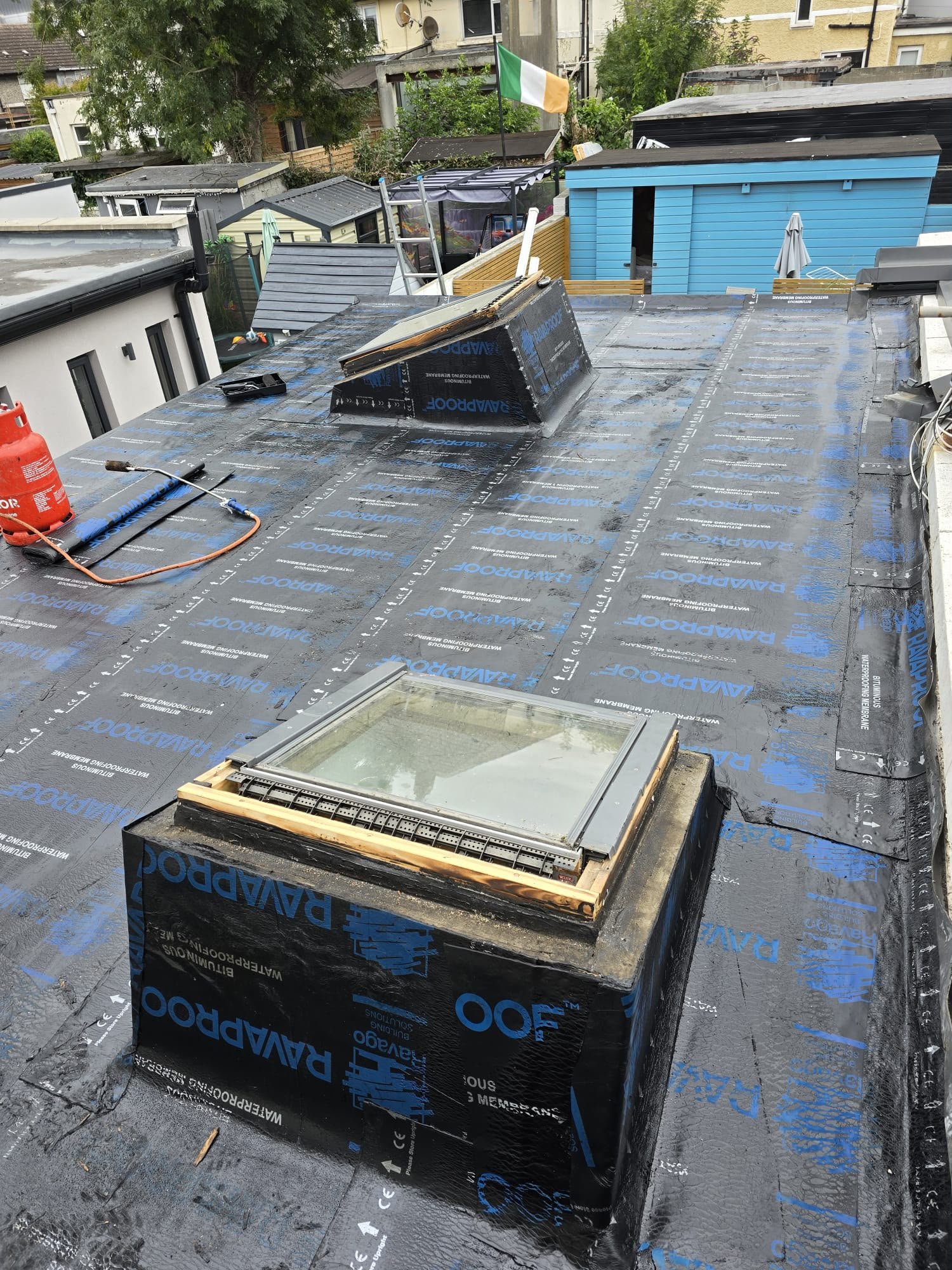
Rooflights, Pipes And Penetrations
Each rooflight, vent pipe or other penetration creates a transition between different materials. Over time, movement, failed seals and poor original detailing can concentrate water at these points.
A ceiling stain beside a skylight does not prove the rooflight glass is leaking. The surrounding upstand, frame and membrane connection all need consideration.
Outlets, Gutters And Ponding
Poor water discharge can expose weak membrane details for longer after rainfall. An outlet may be obstructed, incorrectly positioned or poorly sealed, while local dips can leave standing water elsewhere.
Not every puddle calls for a new roof; what matters is how long it lasts, how deep it is, the roof design, signs of movement and the condition of the waterproofing. A deck that has started to sag deserves different attention from a small isolated area of standing water.
Decking, Insulation And Moisture Under The Membrane
The visible waterproof layer is only part of the build-up. Water trapped beneath it can affect timber or other decking, reduce insulation performance and spread beyond the original defect.
Softness underfoot, repeated blisters, or several leaks may signal concealed deterioration, though none proves the diagnosis on its own. If the roof is opened, photographs and approval of any additional work help avoid disputes over the final bill.
When Is Replacing A Flat Roof Better Value?
Start with how many defects there are and whether they share one cause. One isolated puncture on an otherwise serviceable roof is not the same as repeated leaks at different seams, edges and outlets.
Review the remaining condition of the waterproof covering, the deck, the current insulation, and whether previous repairs have lasted. A roof that needs a new section every winter can cost more over several years than a properly planned replacement; conversely, replacing a sound roof because one flashing has failed wastes money.
A useful comparison asks three questions:
- What would a correctly specified local repair cost?
- How much of the roof is expected to remain reliable afterwards?
- What additional problems would a complete re-cover solve, and what would it leave untouched?
A replacement quote should separately specify whether it includes stripping existing layers, decking, insulation, drainage, upstands, rooflights, trims and interior making-good. Without that detail, the cheapest replacement quote may exclude essential work.
Frequently Asked Questions
How Much Does a Small Flat Roof Repair Cost in Dublin?
A small local repair may cost around €250–€600, as a budgeting guide. A failed wall junction, damaged decking or difficult access can put a job into a higher range. The important distinction is whether the work fixes the actual cause of the leak.
Why Can Two Roofers Quote Very Different Amounts?
They may be pricing different diagnoses or scopes: a small surface patch, rebuilding a wall junction, safe access, new decking, stripping materials or temporary weatherproofing. Request itemised written specifications before comparing totals.
Can a Flat Roof Leak Be Fixed Without Replacing the Entire Roof?
Often, yes, if the leak has a repairable source and the wider waterproofing and substrate remain serviceable. Repeated failures, widespread deterioration and wet decking can make replacement a better option.
Is a Roof Stain Always Directly Below the Leak?
No. Water can travel along roof layers, timber or junctions before it becomes visible on a ceiling. Investigation should include rooflights, outlets, edges and wall connections where relevant.
Can a Roofer Give a Final Price from Photographs?
Photographs help describe the problem and plan an inspection, but may not show wet insulation, compromised decking, concealed junctions or access conditions. A dependable final scope may require an onsite examination.
Does a Flat Roof Repair Need Scaffolding?
Not always. Safe access depends on roof height, edges, fragility, rooflights, surrounding property and the proposed work. The roofing contractor must assess the right precautions rather than promise a specific access method based on a photograph.
How Long Does a Flat Roof Repair Take?
A local repair can be much smaller than a sectional renewal, but timing depends on leak diagnosis, materials, roof condition, access, weather and curing requirements. Ask for a job-specific timeframe in writing.
Does Home Insurance Pay for Flat Roof Repairs?
It depends on your policy, the actual cause and the insurer’s evidence requirements. Sudden insured events and gradual wear may be treated differently. Contact your insurer and keep dated photographs and paperwork.
Is VAT Included in a Flat Roof Repair Quote?
Not necessarily. Ask whether the price includes VAT and request the correct itemised tax treatment. Revenue generally categorises roofing as a construction service, but transaction-specific rules can apply.
Can I Put a Sealant on a Flat Roof Leak Myself?
Avoid climbing onto a roof or undertaking work at height without competence and appropriate controls. A topical product can also hide the source of an unresolved leak. Seek a professional assessment for a durable, compatible repair.
Does Ponding Water Mean I Need a New Flat Roof?
Not by itself. Persistent standing water, poor falls, outlet restrictions and deck movement have different remedies. A contractor should assess whether there is actual deterioration or structural deflection.
What Should I Ask for in a Flat Roof Repair Quote?
Ask for the diagnosed defect, exact repair area and method, membrane system, access provision, cost inclusions, VAT, provisional items, completion expectations and written guarantee terms.
Contact Emergency Roofers Dublin For Your Flat Roof Repairs in Dublin
If your garage, extension, dormer or commercial flat roof is leaking, Emergency Roofers Dublin can assess the problem and explain the options. We work on flat roofing systems and roof leaks across Dublin, from targeted repairs to more substantial roof works.
Share your address, roof type, where the water is appearing, and any previous repair history so we can discuss the next step. Our roof-repair work carries a five-year guarantee under the applicable written terms; ask us to confirm the scope and guarantee on your quotation.