We all know Dublin rain. It’s persistent, it’s relentless, and it has a knack for finding the tiniest gap in a roof and turning it into a major headache. For too many homeowners, it’s a constant battle against damp patches, frustrating leaks, and that sinking feeling every time a storm rolls in. You need more than just a repair; you need a permanent barrier that doesn’t just resist the water but acts like it isn’t even there. EPDM rubber roofing offers exactly that level of unwavering protection. This isn’t a temporary fix; it’s a permanent shield designed to keep your home safe and dry for a lifetime.
Sum and Substance
- Built for Irish Weather: EPDM rubber roofing is engineered to stand up to everything Dublin’s climate can throw at it, from our 750-800mm of annual rainfall to the unpredictable freeze-thaw cycles that can destroy lesser materials.
- An Affordable Investment: The initial installation costs are often lower than other modern systems like TPO and PVC, with a standard 100 sq m roof typically falling between €2,000 and €5,000. It’s a top-tier solution without the scary price tag.
- Flexible and Crack-Proof: The membrane stays remarkably flexible even in temperatures as low as -40°C, which means it won’t crack and split during a cold snap, a common problem with older felt or asphalt roofs.
- Fewer Seams, Fewer Problems: Because it’s installed in large, single sheets, we can dramatically reduce the number of seams. Since seams are the number one cause of leaks in flat roofs, this is a huge advantage.
- Peace of Mind for Decades: You can expect your EPDM roof to last for over 50 years, with virtually no maintenance needed for the first three decades. Imagine not having to worry about your flat roof for the next half-century.
Why EPDM is the Smart Choice for Dublin’s Wet and Windy Weather
Here in Dublin, we get between 750mm and 800mm of rain every single year. You simply can’t afford a roofing material that isn’t built to handle puddles and standing water without breaking down. EPDM (which stands for Ethylene Propylene Diene Monomer) is essentially a seamless, single-ply rubber membrane. Think of it as a custom-fitted, watertight skin for your roof. This single, solid barrier completely eliminates the risk of leaks, mould, and the structural rot that plague so many Irish homes still relying on outdated materials.
Our weather is famously unpredictable. We can get sudden frosts, hailstorms, and surprising heat waves all in the same season. EPDM is designed for this volatility, easily withstanding temperatures from a bitter -40°C all the way up to 150°C. It won’t crack or warp under this thermal shock. This incredible resilience also extends to wind protection. The material is rated to resist powerful wind uplift, meeting Factory Mutual standards of 1-120, a crucial feature for standing strong against severe weather events like Storm Barra.
And of course, your family’s safety is always the top priority. When specific additives are included during manufacturing, this rubber roofing achieves a Class A fire resistance rating. So, you not only get a completely weatherproof flat roof that protects you from the 100+ rainy days we see each year, but you also add a vital layer of fire safety to your home.
The Real Cost of EPDM Roofing for a Dublin Property
Let’s be honest, the budget is a huge factor in any home renovation decision. When you look at the numbers, EPDM stands out as one of the most cost-effective and sensible flat roofing systems available in Dublin. You save money right away on materials and labour compared to more complex alternatives. The real, long-term savings, however, are where it truly shines. Over the years, you’ll spend far less on repairs and even see a reduction in your energy bills.
Many older Dublin properties need structural reinforcement to support the weight of modern, heavy roofs. EPDM is incredibly lightweight, at approximately 0.5lbs per square foot. This dramatically reduces, and often eliminates, the need for expensive structural work. You get a world-class, durable roof without putting a heavy load on your home.
Upfront Installation Costs
A professional installation in Dublin generally costs between €5 and €12 per square metre. For a standard 100 sq m flat roof, think of a large extension or a double garage, the total cost, including all labour and materials, is usually between €2,000 and €5,000. This price point is often 20-30% cheaper than getting a TPO or PVC system installed.
Looking at the breakdown, the material itself costs between €3 and €6 per square metre. Labour typically adds €2 to €6 per square metre, depending on how complex your roof is. This clear and accessible pricing structure makes rubber roofing a fantastic option for extensions, garages, and full main roof replacements.
Long-Term Value and Energy Savings
Having a roof that lasts 30 to 50 years completely changes your financial planning for your home. You simply won’t have to think about replacement costs for decades to come. An EPDM roof requires almost no maintenance for the first 25 to 30 years. This incredible reliability removes the annoying and recurring cost of patching and repairing that is so common with old felt roofs.
You’ll also see an improvement in your home’s energy efficiency. If you opt for a white EPDM membrane, it will reflect sunlight, which can help reduce your cooling needs in the summer. The standard black EPDM absorbs solar heat, which gives you a little boost in reducing heating bills during our chilly winters. Over the life of the roof, you can reasonably expect to see energy savings of 10-30%.
What is EPDM?
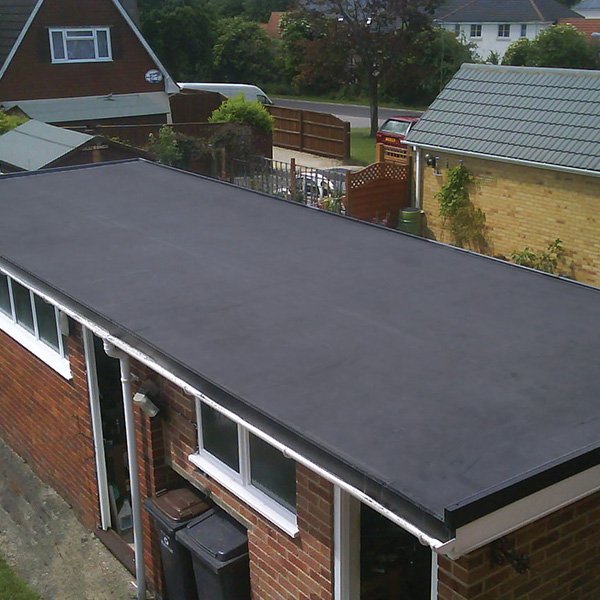
So, what exactly is this material? EPDM is a synthetic rubber compound specifically engineered for single-ply roofing. The magic is in how it’s installed: usually as one continuous, large sheet. This method drastically cuts down on the number of seams, and since seams are where most leaks start, you’re eliminating the problem at the source. According to the experts at American WeatherStar, this seamless design is one of the main reasons it has become so successful for homes.
Its defining feature, however, is its incredible flexibility. The membrane can stretch up to 300% of its size without tearing. Every home in Dublin shifts and moves slightly with temperature changes and natural settling. Rigid roofing materials like asphalt can crack under this constant, subtle stress. EPDM moves and flexes right along with your building, effortlessly accommodating these tiny shifts without ever compromising its integrity.
The material is also remarkably lightweight. A standard 60-mil thickness membrane weighs just 0.5lbs per square foot. To put that in perspective, traditional asphalt shingles weigh around 2.3lbs per square foot. This huge difference matters for the long-term health of your timber roof deck and reduces the overall stress on your home’s structure.
How EPDM Compares to Other Flat Roofing Materials in Ireland
When choosing a new roof, you have to compare how different materials perform in our unique local conditions. Some materials that work wonders in a dry, hot climate will fail miserably in our damp, cold one. In Ireland, EPDM consistently outperforms its competitors in both longevity and weather resistance.
EPDM vs. TPO Roofing
TPO (Thermoplastic Polyolefin) is another popular choice, but it has some significant weaknesses in our climate. TPO membranes have a tendency to become brittle in cold temperatures. Once a material becomes brittle, it’s far more likely to crack. EPDM, on the other hand, remains flexible and resilient no matter how deep the freeze gets.
Longevity is another key difference. EPDM has a proven track record, with a service life of up to 50 years. As noted by Economy Restoration, TPO typically lasts about 20-30 years. That means you would likely have to replace a TPO roof twice in the same amount of time that one EPDM roof continues to perform perfectly.
EPDM vs. Traditional Felt or Asphalt Roofing
Old-fashioned felt roofing is built up in multiple layers, which creates numerous seams all over your roof. Over time, as the building expands and contracts, these seams inevitably begin to lift and separate, creating easy entry points for water. EPDM’s single-ply system almost completely removes this vulnerability.
Asphalt is not only heavy but also degrades under UV light from the sun. It typically lasts about 20 years before it needs a full replacement. EPDM is much lighter, putting less strain on your extension or garage. It also naturally resists UV radiation, which prevents the alligatoring effect, that cracked, scaly surface you often see on old bitumen roofs.
Professional EPDM Installation by Emergency Roofers Dublin
Even the best material in the world is only as good as the people who install it. A correct, professional installation is what ensures you get the full 50-year lifespan from your roof. Our expert team at Emergency Roofers Dublin can complete most residential projects in just one to two days, minimising the disruption to your daily life.
We use modern, cold-applied adhesives for our installations. This method completely eliminates the serious fire risk associated with old-school torch-down felt roofing. You can have peace of mind knowing there are no open flames being used on your roof. And because EPDM stays flexible down to -40°C, we can install it year-round. There’s no need to wait for a summer heatwave to get your home secured.
Our Installation Methods
First, we carefully assess your roof to determine the best attachment method. For most homes, especially in areas exposed to high winds, a fully adhered system is ideal. This involves using a powerful bonding adhesive to glue the membrane directly to the roof substrate, creating an incredibly strong, unified surface.
For specific types of timber decks, a mechanically fastened system using screws and plates might be a more robust option. For other structures, ballasted systems use a layer of gravel or pavers to hold the loose-laid membrane securely in place. We use extra-wide rolls of up to 6 metres to minimise seams even further. Our team is experienced in handling everything from simple flat roofs on homes to more complex commercial buildings and tricky areas around chimneys and skylights.
Maintaining Your EPDM Roof for Maximum Longevity
While EPDM is very much a fit and forget solution, a little bit of sensible care can extend its life even further. We generally recommend a professional inspection every 10 to 15 years, just to give it a health check. This quick check-up ensures that all the flashings and edge details remain perfectly secure.
Routine maintenance on your part is incredibly simple. Just try to keep the surface clear of heavy debris like fallen branches or thick piles of leaves. Make sure your gutters are clean and flowing freely so water doesn’t back up onto the roof surface. The good news is that EPDM naturally resists the growth of moss and algae, saving you from hours of scrubbing.
Of course, accidents can happen. If a falling branch or a dislodged slate from a neighbour’s roof happens to puncture the membrane, the repair is refreshingly straightforward. A patch is applied using a special primer and a pressure-sensitive piece of EPDM. This simple process restores the roof’s full waterproofing integrity almost immediately. The experts at Horch Roofing also highlight that special restoration coatings can be applied to extend the life of an even older EPDM roof, costing 50% less than a total replacement. At Emergency Roofers Dublin, we can integrate these quick inspections with our regular gutter and chimney services to keep your entire roofing system in perfect health.
Final Word
Your home is your most important asset, and it deserves protection that you can truly rely on. EPDM roofing provides a proven, incredibly durable, and cost-effective barrier against Dublin’s demanding weather. It’s the solution that ends the frustrating cycle of leaks, repairs, and worry. For a seamless, professional installation that will secure your property for decades to come, trust the experts who know it best. Contact Emergency Roofers Dublin today to schedule your consultation and give your home the lasting protection of the best flat roofing solution on the market.
Commonly Asked Questions
The cost for a professionally installed EPDM roof in Dublin typically falls between €5 and €12 per square metre. So, for a standard 100 square metre flat roof, homeowners should budget somewhere between €2,000 and €5,000 in total. This price can be influenced by the thickness of the membrane you choose (45 mil vs. 60 mil) and how complex your roof layout is.
Data from Economy Restoration shows that EPDM is generally more affordable upfront than other modern options like TPO or PVC. Its real value becomes even clearer over time, as you avoid the endless cycle of repairs common with older felt roofs. Investing in a professional installation is key, as it ensures your warranty remains valid and the material performs flawlessly for its entire lifespan.
When installed correctly, you can fully expect an EPDM rubber roof to last between 30 and 50 years, and sometimes even longer. This incredible longevity comes from the chemical stability of the Ethylene Propylene Diene Monomer itself, which is highly resistant to the UV radiation and ozone that break down other materials over time.
According to EPDM Roofs, field studies have shown membranes performing exceptionally well even after decades of real-world exposure. In the Irish climate, this robust resistance to weathering is absolutely critical. While a felt roof might start to fail after just 15 years due to the constant expansion and contraction, EPDM remains flexible and intact, making it a true generational investment for your property.
Yes, EPDM is superior to traditional felt in almost every way. Its biggest advantage is that it's a single-ply membrane, meaning it doesn't have the dozens of seams that are the primary failure points in felt systems. Felt roofs use bitumen, which inevitably becomes brittle and cracks over time, especially with our fluctuating temperatures.
The team at Bob Behrends Roofing points out that EPDM's natural flexibility prevents the kind of cracking that is unavoidable with asphalt-based products. What's more, installing EPDM doesn't require heat or open flames (torch-down), making the process much safer for your home. The lightweight nature of the rubber also places far less stress on the timber structure underneath compared to the heavy layers of felt and chippings.
Absolutely. Repairing EPDM is simple, inexpensive, and incredibly effective. If the membrane ever gets a puncture from storm debris or a dropped tool, a roofer can quickly clean the area and apply a pressure-sensitive EPDM patch. This patch chemically bonds with the original roof, creating a seamless seal that restores its total waterproof integrity.
As Horch Roofing highlights, EPDM is one of the easiest roofing materials to restore. Unlike some other plastics that can't be patched effectively once they've aged, EPDM retains its ability to form a strong bond throughout its life. This excellent repairability means that a minor accident never has to turn into a major expense like a full roof replacement.
This is a common question. A rubber roof is generally quieter than a metal roof but could be slightly noisier than a heavy asphalt roof if it's installed directly over a timber deck without any insulation. However, virtually all modern EPDM installations in Dublin include a layer of high-density insulation board placed underneath the rubber.
This insulation acts as a very effective sound dampener, significantly muffling the sound of rain. As Distinctive Roofing suggests, the difference in sound levels between EPDM and traditional materials is negligible when proper insulation is part of the system. The rubber material itself also absorbs some of the impact energy from raindrops, reducing the tinny sound you might associate with harder surfaces.
Yes, you can certainly walk on an EPDM roof for occasional maintenance tasks like cleaning out your gutters or inspecting a chimney. The rubber is very durable and resistant to abrasion. However, it is not designed to be used as a patio or balcony surface with regular, heavy foot traffic unless specific protective walkway pads are installed.
Holcim Elevate (formerly Firestone) recommends using these dedicated walkway pads if you know you'll need regular access. This protects the membrane from being punctured by sharp stones that might get stuck in the treads of your boots. For occasional access, just take care to wear soft-soled shoes and make sure there's no debris under your feet.
EPDM is widely considered to be an eco-friendly roofing choice. It has a low embodied energy number compared to many other roofing materials, and at the end of its very long life, it is 100% recyclable.
The EPDM Roofing Association (ERA) emphasizes that its 50-year lifespan dramatically reduces landfill waste compared to roofs that need to be torn off and replaced every 15-20 years. Additionally, the material is inert, meaning it doesn't leach toxic chemicals into rainwater runoff. This makes it a safe choice for homes with rainwater harvesting systems, which are becoming more popular in Irish gardens.
EPDM is exceptionally resistant to high winds. When fully adhered, there are systems available that can withstand uplift forces of up to 120 mph. Because it's installed in large, seamless sheets, there are very few edges for the wind to get under and start peeling the material back.
According to Factory Mutual standards, EPDM systems can be engineered to meet the most severe wind uplift requirements. Here in Dublin, where storms like Barra can bring incredibly intense gusts, a fully adhered EPDM system provides a level of security that tiled or loosely laid felt roofs often cannot match.
Yes, the colour does have an impact on the thermal performance of your roof. The standard black EPDM absorbs heat from the sun. In Dublin's climate, this can actually be a benefit during the winter, as it can help to slightly warm the building structure and reduce heating costs. White EPDM, on the other hand, reflects sunlight, which helps to keep the building cooler in the summer.
As C-Port explains, while white membranes are a game-changer for energy efficiency in hot climates, the standard black membrane is often the preferred and more practical choice in cooler climates like Ireland. That said, white EPDM can also reduce thermal shock on the roof structure itself by maintaining a more constant temperature year-round.
Emergency Roofers Dublin is the premier choice for professional EPDM installation. We are specialists who understand the unique challenges of our local weather. We use only high-grade materials and safe, cold-applied adhesives. Our team is expertly trained to handle the specific, detailed work required for Irish architecture, such as properly sealing around chimney flashings and parapet walls.
While some general contractors might offer roofing as a side service, choosing dedicated specialists like us ensures that every seam (if there are any) and every edge is sealed perfectly. Proper installation is the single biggest factor in making sure you get the full 50-year lifespan promised by EPDM manufacturers.
For a typical residential flat roof, a full installation by the Emergency Roofers Dublin team takes between one and two days. The use of large rolls allows us to cover the main roof area very quickly.
As Ramon Roofing notes, the speed of installation is a major benefit of EPDM. It helps to reduce labour costs and minimises the amount of time your home is exposed to the elements during the work. Roofs that are more complex, with multiple skylights, vents, or unusual shapes, may take slightly longer, but the process is still significantly faster than laying individual tiles or building up a multi-layer felt system.
EPDM is the ideal material for garages and home extensions, largely thanks to its lightweight nature and superior durability. These structures often have lighter timber frames than the main house, so the low weight of EPDM (just 0.5lbs per sq ft) is a huge advantage as it reduces the structural strain.
American WeatherStar also points out that the smooth, clean aesthetic of an EPDM roof is very low-profile and blends in beautifully with modern residential designs. It offers premium, long-term protection for these often-overlooked spaces, ensuring your car, tools, or stored belongings remain perfectly dry without the high cost and complexity of building a pitched roof.