Irish winters don’t pull their punches. When you hear the heating click on in your Dublin semi-d or a classic Victorian terrace in Rathmines, the very last thing you want is for all that precious warmth to escape right through the ceiling. It’s strange, then, that so many homeowners pour their attention into windows or wall insulation, completely forgetting about the huge surface area directly over their heads. Your roof is the primary shield against our wild Atlantic weather, but it’s also a vital part of your home’s thermal envelope. Choosing the right material and colour isn’t just about looks; it directly impacts your energy bills, the lifespan of your home’s structure, and its future value.
Main Points
- Material Matters More Than Colour: Here in Dublin’s temperate climate, the insulation value and air-tightness of your roofing system are far more important than the specific shade of your tiles.
- Longevity is the True Efficiency: Natural slate delivers the best long-term performance, with a remarkable lifespan that can stretch beyond 100 years.
- Metal is a Modern Marvel: For extensions and contemporary homes, a light-grey standing-seam metal roof is a brilliant choice, offering high solar reflectivity and outstanding durability.
- Ventilation is Absolutely Vital: Even the highest-quality materials will fail if your roof can’t breathe. Proper airflow is essential to prevent condensation and the structural rot that follows.
The Best Material & Colour Combinations for Maximum Roof Efficiency in Dublin
Achieving real efficiency in Ireland is a balancing act. It’s about rejecting a bit of excess heat in summer, but more importantly, it’s about shielding your insulation from relentless moisture and wind. Drawing on data from trusted local suppliers like HP Roofing, we see that certain pairings perform exceptionally well across the county.
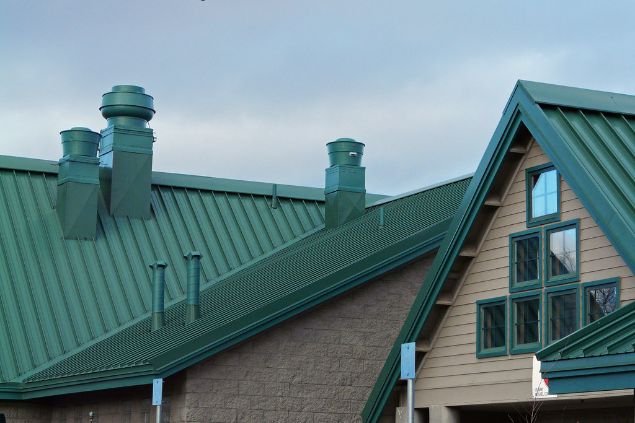
A light-grey standing-seam metal roof is a standout choice for modern homes and rear extensions. Metal is naturally good at reflecting the sun’s rays, and when it’s finished in a light grey, it stops your attic space from overheating during those rare but welcome hot spells. This material shines when used in a warm roof system, where the insulation is placed directly beneath the metal, completely eliminating any gaps for heat to escape.
For the beautiful period properties and many new builds that define Dublin, mid-grey natural slate is still the gold standard. Its efficiency comes from its sheer density and incredible longevity. Slate is completely waterproof and has a natural thermal mass, which helps regulate temperature. And while it’s darker than metal, a mid-grey slate won’t absorb too much heat in our climate and does a much better job of hiding the grime of city life than lighter options.
Light terracotta concrete or clay tiles are a wonderfully practical solution for many suburban estates. These tiles possess a significant thermal mass, which helps keep your indoor temperatures stable by slowing down heat transfer. The lighter terracotta shades are better at reflecting sunlight compared to the standard charcoal concrete tiles. When you pair this with a modern breathable membrane underneath, this kind of roof handles Dublin’s humidity with ease.
For those not quite ready for a full roof replacement, cool roof coatings are a clever upgrade. Applying a special reflective coating to your existing dark roof can significantly lower its surface temperature. While it’s not a replacement for good insulation, it’s a cost-effective method for boosting the performance of an older roof.
Comparing Dublin’s Most Efficient Roofing Materials
When choosing a material, you have to weigh the upfront cost against how long the roof will actually protect your home. A cheap roof that needs to be replaced in 20 years is really twice as expensive as a durable one that lasts for decades.
Natural Slate Roofing
This is the undisputed champion of long-term value. With a lifespan that often exceeds 100 years, a slate roof is an investment that will likely outlast your time in the home. It’s impermeable to water and highly resistant to fire. While the initial material cost is high, the fact that it requires virtually no maintenance and significantly boosts your property’s resale value makes it incredibly efficient over its long life.
Metal Roofing (Steel, Aluminium, Zinc, Copper)
Metal is quickly gaining popularity in Dublin for its impressive energy credentials. Modern systems can be expected to last well over 30 years, with some manufacturers even offering warranties of up to 50 years. A properly installed steel roof can withstand wind speeds of over 180 km/h, a comforting feature during our fierce winter storms. Its ability to reflect solar heat reduces cooling needs in summer, though honestly, weatherproofing for winter is the bigger priority here in Ireland.
Clay and Concrete Tiles
These tiles are the reliable workhorses of Dublin roofing. They provide excellent sound insulation from rain and have a high thermal mass. This mass means they absorb heat during the day and release it slowly through the night, helping to smooth out any sudden temperature spikes. They’re available in a wide range of lighter colours to help with reflectivity, but they are heavier and need a strong roof structure to support them.
Asphalt & Fibreglass Shingles
Shingles are an economical option that can be installed quickly. The newer cool roof versions have reflective granules mixed in to reduce heat absorption. However, they generally come with shorter guarantees, typically around 30 years. You won’t see them on many main roofs in Ireland, but they’re a common sight on garden rooms and sheds.
Synthetic & Composite Shingles
For homeowners who love the look of slate but not the weight or the price tag, composite shingles are a fantastic alternative. They are lightweight, remarkably durable, and do an excellent job of mimicking natural textures. They can last up to 50 years with very little maintenance, offering a perfect middle ground between asphalt and natural stone.
Roof Replacement Cost vs. Lifespan
The gap between the initial price on the quote and the true cost over a roof’s lifetime is enormous. A roof is a major capital expense; what you’re really paying for is decades of service. While your energy savings are mainly driven by good insulation and air-tightness, the durability of the roof covering itself determines how soon you’ll have to face that big expense all over again.
Typical Installed Roofing Costs in Dublin
The following numbers are intended as guideline estimates for the Dublin area. The final price will always fluctuate based on factors like ease of access, the complexity of your roof’s shape, and waste disposal fees. It’s crucial to get a site-specific quote from a team like Emergency Roofers Dublin for an accurate figure. Costs are generally measured per square (which is about 9.3 m²).
- Asphalt/Fibreglass Shingles: €90–€100 per square.
- Concrete Tiles: €150–€620 per square.
- Metal Roofing: €230–€540 per square.
- Composite Shingles: €300–€600 per square.
- Clay Tiles: €350–€800 per square.
- Natural Slate: €500–€1,800 per square.
Calculating Long-Term Value
Let’s make a simple comparison. An asphalt shingle roof might cost you €100 per square, but you’ll likely need to replace it in 30 years. A metal roof might be €200 per square, but it will last for 50 years. Over a 60-year period, you would have to buy two complete shingle roofs (and pay for inflation on labour and materials for the second one) versus just over one cycle for the metal roof. When you also consider that the metal roof’s superior wind resistance will save you money on minor storm repairs, the premium material often proves to be the cheaper option per year of service.
Does Roof Colour Really Matter in Dublin's Climate?
In scorching hot climates, white roofs are often mandatory to prevent buildings from turning into ovens. Here in Dublin, the story is a bit different. Our climate is mild and damp. As the experts at Perfect Roofing will tell you, while light-coloured roofs do reflect more sunlight, the impact on your heating bill is far less dramatic here than it would be in Spain or California.
How Insulation Impacts the Effect of Roof Colour
Here’s the key: if your attic insulation is up to modern standards, the colour of your roof tiles will have a negligible effect on the temperature of your living room. Good insulation creates a powerful barrier between your home’s interior and the temperature of the roof’s outer surface. For a well-insulated Dublin semi-D, the difference in attic temperature on a summer day between a light grey metal roof and a dark grey concrete one is surprisingly small.
In fact, darker roofs can offer a tiny benefit during our cooler months by absorbing a little bit of winter solar energy, though this is often cancelled out by our short daylight hours. For most urban Dublin homes, mid-tones like grey, slate grey, or light terracotta strike the perfect balance. They do a better job of hiding city dust than stark white roofs, fit in with local planning aesthetics, and avoid the extreme heat absorption of jet-black materials during summer.
What Roof Efficiency Means for a Dublin Home
In Ireland, efficiency is all about defence. An efficient roof is one that keeps the rain out, stays firmly attached during a gale, and holds the heat in. Professionals like FTH Solutions emphasize that true efficiency translates to lower energy bills, a long lifespan, and minimal maintenance headaches.
Key performance factors include technical terms like U-values (a measure of thermal resistance) and compliance with NZEB (Near Zero Energy Building) standards. In Irish conditions, premium materials often end up having lower lifetime costs simply because they don’t fail prematurely. A roof that starts leaking destroys the efficiency of the insulation beneath it. And wet insulation is useless insulation. Therefore, the most efficient material is often the one that stays completely watertight for the longest time, which points you right back to high-quality slate and metal.
The Hidden Keys to an Efficient Roof System
You could buy the most expensive, beautiful slate in the world, but if the installation is sloppy, your energy bills will stay stubbornly high. The technical details of the installation are where efficiency is truly won or lost.
The Critical Role of Ventilation and Airflow
A roof has to breathe. Without proper ridge vents or soffit vents, the warm, moist air generated in your home (from cooking, showers, and even breathing) gets trapped in the attic. It then condenses on cold surfaces, leading to mould and rotting timbers. Remember, dry insulation is efficient insulation. Roof battens play a clever dual role here; they not only anchor the tiles in place but also create a crucial air gap that allows for airflow and helps reflect radiant heat away from the felt layer below.
Warm Roof vs. Cold Roof Construction
A cold roof is the traditional setup, with insulation laid at the ceiling level, leaving the attic space itself cold. A warm roof, on the other hand, places the insulation right up against the roof deck, between or above the rafters, keeping the entire roof structure warm. Warm roof installations are far better at reducing heat loss and are the preferred method for modern, energy-conscious upgrades. A professional like Emergency Roofers Dublin can assess your older cold roof to determine if converting it to a warm roof system is feasible, which can bring your home much closer to modern NZEB standards.
Choosing the Right Efficient Roof for Your Dublin Property Type
There is no one-size-fits-all solution for roofing. Your home’s location and its architectural style will dictate the technical requirements for the job.
For Coastal or Exposed Homes Near Dublin Bay
If your home is in Howth, Dún Laoghaire, or Clontarf, the wind is your main adversary. You need materials with excellent wind uplift resistance and the ability to fend off corrosion from the salty air. Natural slate is heavy and sits securely against the wind. High-quality coated metal (specifically marine grade) is also a superb choice as it won’t crack under pressure. If you choose clay or concrete tiles, they must be specifically rated for high wind exposure and clipped down correctly.
For Period & Heritage Properties in Central Dublin
Living in a conservation area means your choices are often restricted. The general rule is to replace like for like. Natural slate or top-tier synthetic slate alternatives are the go-to options here. These materials will satisfy the planning officers while still allowing you to install modern breathable membranes and insulation upgrades underneath to dramatically improve the building’s thermal performance.
For Suburban Estates, Semi-Ds, and Extensions
In these areas, budget and practicality often take the lead. Concrete tiles or modern metal roofing systems offer the best balance of performance and cost. They are cost-effective, more than durable enough for a sheltered location, and can integrate seamlessly with the existing look of the streetscape.
Efficient Solutions for Flat Roofs in Dublin
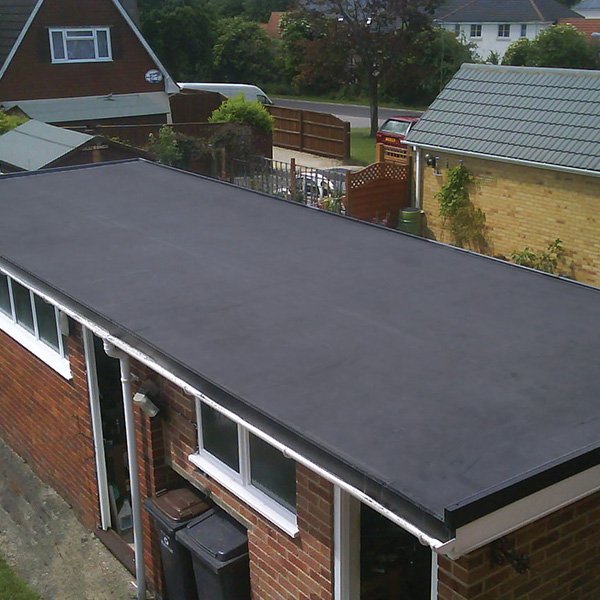
Flat roofs on extensions and dormers are notorious for causing problems if they’re done on the cheap. For these roofs, efficiency depends heavily on the insulation build-up (known as a warm deck) rather than just the final waterproof layer.
EPDM Rubber Roofing
EPDM is a single-ply synthetic rubber membrane that is incredibly durable. It stands up brilliantly to UV radiation, which can degrade other materials over time. Its flexibility allows it to expand and contract with temperature changes without cracking. It requires very little maintenance and is perfect for creating a completely watertight seal on modern extensions.
Modified Bitumen
This is the modern, high-tech evolution of the traditional felt roof. Reinforced with polyester or fibreglass, modified bitumen is exceptionally tough and has a long, proven track record of handling Irish weather. It offers great puncture resistance, which is important if you ever need to walk on the roof for maintenance, and can often be repaired in sections instead of requiring a full replacement.
Sustainability & Your Roof
True sustainability is the ultimate form of efficiency. It asks the important question: what is the cost of this choice to our planet?
Slate
Slate is a natural stone. It needs to be processed, but it doesn’t require chemical synthesis. Its 100+ year lifespan makes it inherently sustainable because you won’t need to manufacture a replacement for generations to come.
Metal
Materials like steel, aluminium, and copper are energy-intensive to produce initially, but they are 100% recyclable at the end of their long lives. Copper is particularly noteworthy; it can last up to 80 years and develops a beautiful protective patina, contributing to lower CO₂ emissions over its full lifecycle compared to replacing asphalt shingles three times in the same period.
How Emergency Roofers Dublin Delivers a Truly Efficient Roof
Upgrading your roof is a complex project that demands local expertise. At Emergency Roofers Dublin, we believe in looking at the whole system, not just the tiles on top.
Our process begins with a thorough assessment of your current material, insulation levels, and ventilation to pinpoint exactly where you’re losing heat. We then recommend materials that are perfectly suited to your specific location in Dublin, whether that’s a wind-battered coastal home or a sheltered suburban one. We also examine the support systems. We upgrade gutters and rainwater systems because effective drainage is crucial for protecting your walls and foundation from damp. We carefully inspect chimneys and flashing, sealing up the common weak points that often go unnoticed until they cause serious damage.
If you’re ready to stop heating the Dublin sky and start seeing real savings on your energy bills, get in touch with us for a comprehensive roof inspection.
Final Word
Choosing a new roof in Dublin is a major financial decision, and it’s one you want to get right. True efficiency isn’t just about a U-value on a product spec sheet; it’s a combination of robust waterproofing, wind resistance, and long-term durability. Whether you choose the century-long endurance of natural slate or the sleek, modern precision of metal, the real key lies in professional installation and proper ventilation. A truly efficient roof protects your home, your comfort, and your wallet for decades to come.
Commonly Asked Questions
Both metal and natural slate are top performers. Metal roofing systems (using zinc, copper, or steel) are great at reflecting solar radiation and cool down fast, while natural slate offers immense thermal mass and an incredible lifespan. Ultimately, durability equals efficiency. According to the team at HP Roofing, materials that can withstand Dublin’s wind and rain for decades without failing are the real winners. They prevent moisture from getting in, and since wet insulation can't retain heat, the most waterproof material is effectively the most energy-efficient over the long run. It's best to choose based on lifecycle cost. While asphalt is cheaper upfront, a well-installed metal or slate roof will protect your home's thermal envelope far better over 50+ years, leading to lower heating demands and fewer repair bills.
They can help, but insulation matters a lot more. Lighter colours do reflect sunlight, which can reduce attic temperatures in the summer. However, in Dublin’s mild climate, the heat gain is rarely as severe as it is in hotter countries. You also have to find a balance for winter. As Perfect Roofing notes, while reflective roofs are good for summer, darker roofs can help absorb a small amount of heat during the winter. In a well-insulated home, the roof's colour has a very minor impact on the internal temperature compared to the quality and depth of your insulation. For these reasons, it's often best to opt for mid-tones. A mid-grey or terracotta provides a good aesthetic balance that hides dirt well while avoiding the extreme heat absorption of black tiles.
The costs vary widely depending on the material. Asphalt shingles represent the entry-level option at around €90–€100 per square (approx 9.3m²), while premium natural slate can range anywhere from €500 to €1,800 per square depending on its quality. The complexity of your roof adds to the price. Steep pitches, dormer windows, and intricate valleys all increase the labour costs. Scaffolding and waste disposal in Dublin are also significant factors in the final quote. It's best to view it as an investment. Spending more on a highly durable material like slate or high-grade metal significantly reduces the cost per year of the roof. A cheap roof that has to be replaced twice will always cost more in the long run than a quality roof installed once.
Slate is the undisputed longevity king. A natural slate roof can easily last for over 100 years. It’s essentially a piece of rock; it doesn't degrade under UV light or from constant moisture. Metal is a strong runner-up. Modern zinc or coated steel roofs typically have a lifespan of 30 to 50 years. They are incredibly robust but can eventually succumb to corrosion if their protective coatings fail or if they are located very close to the sea without a proper marine-grade finish. It's also worth noting that slate adds heritage value. Because of its incredible lifespan, a slate roof often adds more to the resale value of a property, whereas a metal roof is valued for its low maintenance and clean, modern aesthetic.
Yes, absolutely. Upgrade your insulation first. Adding attic insulation to bring it up to the recommended 300mm is the single most effective step you can take. FTH Solutions highlights this as the primary way to stop heat loss. Secondly, improve your ventilation. Installing breathable membranes or adding extra vents prevents dampness from building up in the insulation, ensuring it performs as it should. Finally, you can apply cool roof coatings. Specialised reflective paints can be applied to existing tiles or flat roofs to reflect more sunlight, which can also extend the life of the material by reducing thermal shock.
The name refers to where the insulation is placed. In a warm roof, the insulation is placed directly above the roof rafters, close to the roof covering. In a traditional cold roof, the insulation is laid between the ceiling joists, leaving the attic space cold. Warm roofs are better at reducing condensation. By keeping the entire roof structure warm, the risk of condensation forming on the timbers is eliminated. This is crucial for preventing rot and maintaining healthy air quality in your home. They are essential for new builds and major renovations. For new extensions or significant refurbishments, a warm roof is often required to meet the latest NZEB (Near Zero Energy Building) standards.
EPDM Rubber is widely considered the modern standard. It's a single sheet of synthetic rubber that is glued down, creating a seamless, flexible, and tough surface that can last for 50+ years. Fibreglass (GRP) is strong but can be rigid. Glass Reinforced Plastic provides a great-looking, hard-wearing finish, but it can be prone to cracking if the roof deck underneath moves or settles, which can be a risk in some timber-framed extensions. Modified Bitumen (Torch-on Felt) is very reliable. Modern torch-on felt is a world away from the old pour-and-roll types. It’s thick, tough, and relatively easy to repair, making it a solid and often budget-conscious choice.
Natural Slate has very low embodied energy. It is quarried and cut to shape, not manufactured with chemicals. Its 100-year life means far less waste is sent to landfills over time. Metal is highly recyclable. Zinc, copper, and steel can be recycled almost infinitely. A copper roof is often made from recycled material to begin with and is 100% recyclable at the end of its long life. By contrast, concrete tiles have a higher carbon footprint due to the CO2 produced during cement production, though they are very durable. Asphalt shingles generally have the shortest life and are difficult to recycle, making them the least eco-friendly option.
It's absolutely critical for insulation performance. If insulation gets damp, it conducts heat rather than blocking it, making it almost useless. Good ventilation ensures your insulation stays dry and effective. It also prevents summer overheating by allowing the superheated air that builds up in your attic to escape, reducing the heat load on your home during warm spells. Most importantly, it protects the structure of your home. As BuildMe advises, without proper ventilation, structural timbers will eventually rot. Repairing a rotted roof structure is a massive expense that would wipe out any energy savings you might have made.
The SEAI Grants primarily focus on insulation. The Sustainable Energy Authority of Ireland (SEAI) offers generous grants for upgrading your attic insulation, which is a key component of the roofing system. However, a full roof replacement is rarely covered directly. The grants are designed to cover the energy-saving upgrade itself (like insulation or solar panels) rather than the roof covering, unless the replacement is part of a larger deep retrofit program. It's important to check the current schemes, as they change over time. Always check the official SEAI website or consult with a registered contractor before you commit to any work.
Look for uneven snow melt in winter. If snow or frost melts quickly in patches on your roof while it's still covering your neighbour's, that's a sure sign that heat is escaping through your tiles in those spots. Check for drafts and dampness in the attic. If your attic feels breezy or has a musty smell, it's likely your air-tightness has been compromised. And of course, monitor your energy bills. A sudden spike in your heating costs that can't be explained by a change in weather or your habits often points to insulation failure or a hidden roof leak.
Yes, definitely. It increases curb appeal instantly. A new roof can completely transform the look of a house from the outside. Eire Roofing suggests it's one of the most impactful exterior upgrades you can make. It also improves your BER Rating. Upgrading the roof's insulation as part of the replacement project will improve your home's Building Energy Rating (BER), which is a key selling point for buyers in the Dublin market. Most of all, it removes buyer anxiety. Homebuyers are terrified of potential roof problems. Presenting them with a new roof and a warranty removes a major barrier to a sale and can justify a higher asking price.