Most of us in Dublin love the ritual of lighting a fire. You strike a match, watch the flames begin to dance, and settle in to enjoy the warmth, never really questioning where all the smoke disappears to. You simply trust that the dangerous fumes just vanish up that familiar brick stack on your roof. But it’s not magic. Those fumes travel through a specially designed channel that acts as the very lungs of your home. This channel works tirelessly, battling against the constant Irish wind and rain, yet it stays completely hidden from sight until a problem arises. Knowing what it is and how it works is the difference between having a safe, cozy home and living in a potential disaster zone.
Core Insights
- Your flue is the vital inner channel that safely escorts toxic gases outside; the chimney is merely the protective outer structure.
- Tragically, leaks from damaged flues contribute to 20-50 carbon monoxide deaths in Ireland each year.
- Many older Dublin houses feature a single, large chimney stack that cleverly houses multiple flues inside.
- Our damp Irish weather can speed up flue damage, which makes having a proper cap and cowl absolutely essential.
- Class 1 masonry flues are standard in homes built before the 1960s, but they almost always require relining to be safe today.
- Getting your flue inspected annually is non-negotiable for keeping your home insurance valid and preventing a devastating fire.
Why a Damaged Chimney Flue in Your Dublin Home Can Be a Silent Killer
At its core, a chimney flue has one critical job: to safely guide hazardous byproducts of combustion, like flue gases and carbon monoxide, up and out of your home. When a flue is compromised, these gases can seep back into your living spaces, creating a serious threat to your family’s health. It’s crucial to remember that the flue is the essential inner passageway, not the brick structure you see from the street. It is your family’s first and most important line of defence against house fires and carbon monoxide poisoning, containing the fire’s intense heat and shielding the chimney’s masonry from corrosive fumes.
You can’t see or smell carbon monoxide, which is what makes it such a persistent and terrifying threat in Irish homes. According to the HSE, this silent killer is responsible for 20-50 deaths in Ireland every year. Your flue is the containment system designed to keep this deadly gas out of your home. If that system cracks or fails, the gas has a direct route into your bedrooms and living room. Flues have to be tough enough to handle temperatures that can soar to 1,000°C from a traditional Irish wood or coal fire. When the lining develops even a small crack, that intense heat can transfer to the wooden timbers in your roof, creating a fire hazard long before you would ever see or smell smoke.
Chimney vs. Flue
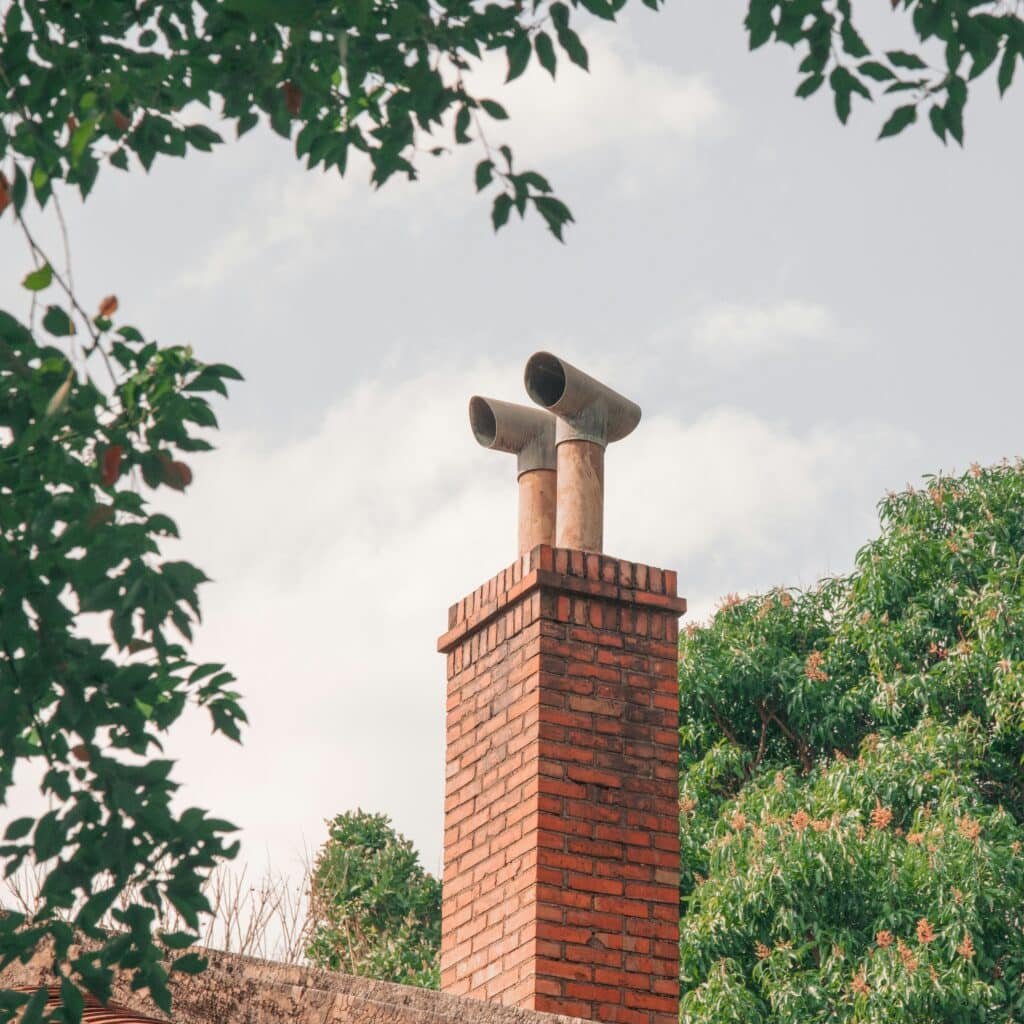
It’s common for homeowners to use the words chimney and flue as if they mean the same thing, but they are two very different parts of a single system. The chimney is the entire structure you see on your roof: the brick stack, the cap, the crown, and the flashing. The flue, on the other hand, is the dedicated, smooth internal channel or pipe running up the inside of that structure. A great way to think about it is to picture your chimney as the body of a car and the flue as its exhaust pipe. You can have a beautiful brick stack that looks perfect from the outside, while the flue inside is dangerously crumbling.
In many of Dublin’s older homes, especially the beautiful Victorian and Edwardian properties in areas like Rathmines or Clontarf, it’s quite common for one large chimney stack to contain several separate flues. You might find three or four distinct channels inside a single terraced house chimney, each one serving a different fireplace or appliance on a different floor. This knowledge is vital when it comes to repairs. In Dublin’s damp climate, an unlined or damaged flue can decay two to three times faster than it would in a drier region. If ignored, this accelerated damage can lead to average repair bills of €2,000 to €5,000.
Key Components of Your Chimney System
To work properly, your flue relies on several other parts working together in harmony.
- The Flue Liner: This is the protective inner skin of your flue, usually made of clay, metal, or a cast-in-place material. It’s designed to contain intense heat and stop the acidic byproducts of combustion from eating away at the chimney’s mortar.
- The Chimney Damper: This is a movable metal plate located at the base of the flue, just above the fireplace. When you open it, smoke can escape. When you close it, it stops those notorious Dublin drafts and prevents your expensive heated air from rushing out. Using it correctly can easily save you €50 to €100 a year on your heating bills.
- The Smoke Shelf and Chamber: Found just above the damper, this cleverly designed area helps funnel smoke smoothly up into the flue. Its main job is to prevent downdrafts, caused by swirling Irish winds, from pushing smoke back down into your sitting room.
- The Chimney Crown and Cap: The crown is the concrete slab on top of your chimney stack that seals the gap between the flue and the masonry, keeping water out. The cap is the cover over the flue opening itself, which keeps out rain, debris, and animals. With Dublin getting an average of 750mm of rain each year, these barriers are absolutely critical.
How Your Chimney Flue Works With Dublin's Weather
Your flue operates on a simple principle known as natural draft or the stack effect. When you light a fire, the air and smoke inside the flue become very hot, making them much lighter than the cooler, denser air outside. This pressure difference creates a natural upward pull, drawing the smoke out of your house while simultaneously pulling fresh oxygen into the fireplace to keep the fire burning. For this to happen efficiently in a typical Dublin home, the chimney usually needs to be at least four to six metres tall.
A clear, properly sized flue is essential for this process to work. It’s estimated that around 40% of all chimney service calls in Dublin are related to poor draft, often caused by blockages or an incorrectly sized flue. If the flue is too cold or damp, a common problem here, the smoke will cool and sink. With over 200 rainy days a year in Ireland, a chimney cap isn’t a luxury; it’s a necessity to prevent water from getting inside the flue. A wet flue will cool the smoke, kill the draft, and send those fumes spilling back into your room.
Types of Chimney Flues Found in Dublin Properties
Different eras of Dublin architecture feature distinct flue systems. Knowing what’s behind your chimney breast can help you understand what kind of maintenance it needs and what potential upgrade costs you might be looking at.
Class 1 Flues (Traditional Masonry)
You’ll find these in the vast majority of pre-1960s Dublin properties, making up about 80% of the city’s older housing stock. These flues were built from brick or stone and were originally lined with a layer of lime mortar, a technique called parging. They were designed for open fires burning wood and traditional bituminous coal. Over the decades, these mortar linings inevitably crack, degrade, and fall away, leaving the bare brick exposed to dangerously high temperatures. Relining a Class 1 flue in Dublin typically costs between €1,500 and €3,000, but it’s an essential investment to bring an older home up to modern safety standards.
Clay Tile Flues
Within many Class 1 chimneys, you’ll find clay tiles used as a liner. These are essentially interlocking sections of terracotta or clay. These liners are incredibly durable and can withstand temperatures up to 1,000°C. Their weakness, however, is that they are brittle. They can crack from the shock of a chimney fire, the natural settling of a house, or sudden temperature changes. They typically have a lifespan of 20 to 30 years before cracks begin to compromise their safety.
Class 2 Flues (Prefabricated Metal)
These are common in more modern homes and are also a popular solution for relining older chimneys, particularly when installing a stove. They are usually double or triple-walled stainless steel pipes. They can improve the efficiency of your draft by 20% to 30% compared to an old, deteriorating Class 1 flue. This boost in efficiency is a huge advantage in Dublin’s windy conditions, where keeping a steady draw can be a real challenge. Installing a new Class 2 flue is often more affordable than trying to restore old masonry, with costs ranging from €800 to €1,500.
Precast Concrete and Pumice Flues
These systems gained popularity in homes built during the 1970s and 80s. They are constructed using precast blocks that interlock to form the flue passage. They provide excellent insulation and are very durable, which helps keep the flue gases hot and moving upwards quickly. However, it’s still crucial during inspections to check the joints between the blocks for any potential gas leaks.
Critical Chimney Flue Maintenance and Safety Inspections
When it comes to your chimney flue, regular maintenance isn’t just a good idea, it’s non-negotiable for the safety of your home and family. An annual sweep and inspection is vital to prevent the buildup of creosote, a highly flammable, tar-like substance that coats the inside of your flue. Creosote can ignite at just 250°C, causing a violent chimney fire that can crack liners and spread to your attic and the rest of your home. A clean flue not only prevents fires but also allows air to travel smoothly, which can improve your fire’s efficiency by 15% to 20%.
Furthermore, for most home insurance policies in Ireland, providing proof of an annual chimney sweep is a mandatory requirement. If you have a fire and can’t show that you’ve properly maintained your flue, your insurer could refuse to pay out your claim. A professional chimney sweep and inspection in Dublin will typically cost between €150 and €300. This service includes checking for cracks, blockages, and creosote buildup, ensuring your flue is safe to use and protecting your family from CO leaks. This is a crucial service we offer at Emergency Roofers Dublin, often bundled with roofing and guttering inspections.
Your chimney is much more than just a stack of bricks; it’s a complex system that needs regular care. Neglecting the flue puts both your property and your family at serious risk. If you have any reason to suspect your flue is damaged, or if it has been more than a year since its last inspection, please don’t light that fire tonight. Get in touch with Emergency Roofers Dublin. We provide the comprehensive inspections and expert repairs you need to keep your home warm, your family safe, and your air clean.
Commonly Asked Questions
Think of the flue as the open passageway itself, and the liner as the protective material that creates and shields that passageway.
- The Flue: This is the empty space or channel that smoke travels through. In very old chimneys, this might just be the inside of the raw brickwork.
- The Liner: This is the protective skin inserted into that space, made of clay, metal, or concrete, to safely contain the heat and gases.
You should always make sure your flue has a liner that's in good condition. Using an unlined flue in your Dublin home dramatically increases the risk of a house fire and dangerous gas leaks.
You absolutely must have your chimney flue cleaned at least once a year. If you burn wood frequently, you should do it more often.
The standard advice for smokeless fuel is once annually. For wood and bituminous coal, which produce more soot, cleaning twice a year is a much safer bet.
In our damp climate, soot and creosote can build up surprisingly fast. This buildup not only restricts the chimney's draw but also significantly increases the risk of a chimney fire.
The best time to schedule your cleaning is in late summer or early autumn, just before the cold weather sets in, to ensure you're safe all winter long.
The cost can vary depending on the material, but you can generally expect relining to fall somewhere between €800 and €3,000.
A modern stainless steel liner (Class 2) typically costs between €800 and €1,500. Restoring a traditional masonry flue (Class 1) is a more involved job, so it costs more, usually from €1,500 to €3,000.
The final price will depend on things like the height of your chimney, how difficult it is to access, and the extent of any existing damage.
Think of this as a 20-year investment in your home's safety. A cheap, quick patch job often fails within a few years, ending up costing you much more in the long run.
No, you should never, ever use a fireplace if you know or suspect the flue is cracked.
A crack acts as an escape route for intense heat, which can get into your walls and attic and ignite the timber framing of your house. It's also an open door for carbon monoxide to leak into your living space.
Flues need to be completely airtight to create a proper draft. A crack breaks that seal, disrupting the upward pull and causing smoke to spill back into your room.
If you suspect a crack, stop using the fire immediately and call a professional to conduct a CCTV camera inspection to see the extent of the damage.
Smoke puffing back into the room and strange, unpleasant odours from the fireplace are the most obvious warning signs.
Keep an eye out for soot falling back down into the fireplace, damp patches appearing on the chimney breast, or a white, powdery staining (called efflorescence) on the outside brickwork.
If you find that your fires are suddenly difficult to light or they seem to burn sluggishly, it’s a strong sign that the draft is being restricted by a blockage or damage inside the flue.
Don't ignore these signals. They are your home's early warning system for a problem that could lead to carbon monoxide poisoning or a house fire.
Yes, absolutely. Given Dublin's amount of rainfall, a chimney cap is one of the most essential parts of your chimney system.
A cap stops rainwater from pouring down your flue, where it can mix with soot to create a corrosive acid that eats away at the mortar and damages the liner.
It also prevents birds and other animals from nesting in your chimney, which is a very common cause of dangerous blockages, especially in the spring.
Installing a cap is a simple, low-cost upgrade that can add years to the life of your flue liner and help you avoid thousands in expensive water damage repairs.
Your insurance company will almost certainly require proof of regular maintenance if you ever need to make a claim related to a fire.
Most insurance policies have a clause stating that chimneys must be swept annually by a certified professional.
If you have a chimney fire and can't provide a certificate from a sweep, the insurer may argue that the fire was due to negligence on your part and could refuse your claim.
Always keep the receipts and certificates from your chimney sweep in a safe place. They are your proof that you’ve done your part to keep your home safe.
For a wood-burning stove, a Class 2 flexible stainless steel liner is the industry standard and the best choice.
These liners have smooth, insulated walls that keep the gases hot and rising quickly, which helps your stove run much more efficiently.
Because they are installed as one continuous tube, there are no joints or seams that could potentially leak gas, unlike older clay or masonry liners.
They can be easily lowered down an existing chimney, making them the most practical and least disruptive option for retrofitting older Dublin homes for a stove.
Yes, it's very common. A single brick chimney stack on the roof often houses several flues inside it.
Think of the visible brick stack as just a casing. Inside that casing, you might find two, three, or even four separate channels, each one a flue.
Every fireplace or appliance in your house needs its own dedicated flue to work safely and correctly. They can never share a flue.
This means you have to inspect and maintain each flue individually. Just because the sitting room fire works perfectly doesn't mean the flue for the upstairs bedroom is safe.
Creosote is a sticky, tar-like residue that is a natural byproduct of burning wood and gets deposited on the walls of your flue.
It forms when hot smoke rises and creates condensation on the cooler inner walls of the flue, solidifying into a black, crusty, and highly flammable substance.
Creosote can catch fire at temperatures as low as 250°C. These fires burn incredibly hot and fast, and can easily destroy your chimney structure.
The only effective way to remove glazed creosote is with a mechanical sweeping by a professional. Chimney cleaning logs can help a little, but they are no substitute for a proper physical cleaning.
In our climate, you can expect a clay flue liner to last somewhere between 20 and 30 years.
While they are excellent at resisting high temperatures, they are quite brittle and vulnerable to cracking from the house settling over time or from sudden thermal shock.
The mortar joints between the clay tiles are usually the first part to fail, as they get eroded by the acidic flue gases over the years.
If your home was built in the 1980s or earlier and still has its original clay liner, it is almost certainly due for a professional inspection, and likely, a replacement.
A damper is essentially a valve that lets you control the airflow into and out of your chimney.
It allows you to seal off the flue when the fireplace isn't in use, which stops your warm indoor air from escaping up the chimney and prevents cold drafts from coming down.
It is critical that the damper is fully open whenever a fire is burning to allow all the smoke to exit safely.
A good, properly sealing damper can make a real difference to your energy bills by stopping your chimney from acting like a giant vacuum, sucking the heat out of your home.