That dreaded drip… drip… drip… onto your landing carpet is a gut-wrenching way to discover your roof has finally given up. Most of us Dublin homeowners tend to ignore the tiles over our heads until a storm brutally exposes a weakness, instantly turning what could have been a planned renovation into an urgent, stressful financial crisis. To plan your budget properly, you need solid, clear figures, not just vague, back-of-an-envelope estimates. The cost of roofing in 2025 is a true reflection of rising material prices and a shortage of skilled tradespeople, but one thing never changes: a secure roof is the single most critical investment you can make to protect your home and its value.
Key Takeaways
- What a Full Project Costs: For a typical 3‑bed semi‑detached home in Dublin, you should budget for somewhere between €9,000 and €15,000 for a completely new roof.
- The Price Per Square Metre: Fully installed, concrete tiles will generally set you back €70 to €100 per m², while the more traditional clay tiles come in at between €80 and €120 per m².
- The Dublin Premium: Be prepared to pay about 10–20% more here in the capital compared to the national average. This is down to higher costs for labour and logistics.
- How Long Your Materials Will Last: You can expect concrete tiles to last 40–60 years, while a natural slate roof can last for over 100 years.
- Don’t Forget About Waste: You’ll always need to budget for an extra 5–10% of tiles to cover the necessary cuts and any accidental breakages during the job.
The Average Cost to Tile a Roof in Dublin
When you’re trying to budget for a new roof, it’s easy to get lost in the cost of a single tile, but what really matters is the total installed price. Looking ahead to 2025, the all-in, fully installed cost for a tiled roof in Dublin usually lands somewhere between €70 and €100 per square metre if you opt for concrete tiles. If you prefer the classic look and feel of clay, the price naturally climbs to the €80–€120 per square metre range. So, for the owners of a standard 3‑bed semi, the kind of house you see all over the county, a complete roof replacement will typically range from €9,000 to €15,000.
Where you live in Dublin really does make a difference to these figures. Roofing projects within the city and the M50 corridor generally run 10–20% more expensive than the national Irish average. This premium simply reflects the higher day-to-day operational costs for contractors working in the city. And when you’re calculating how many tiles you’ll need, you can’t just measure the floor area of your house. You have to account for an extra 5–10% worth of tiles to allow for waste from all the necessary cuts around features like hips and valleys. These per-metre prices, often referenced by sources like Roof Cost Calculator Ireland, should cover everything: the tiles themselves, the breathable underlay, treated timber battens, skilled labour, and all the essential accessories. Here at Emergency Roofers Dublin, we provide firm, site-specific quotes per square metre, but only after we’ve visited your home for a physical survey to see exactly what’s involved.
Comparing Dublin Roof Tile Prices
More than anything else, the type of tile you choose will shape your final bill. For Dublin homeowners who are focused on functionality and keeping a close eye on the budget, concrete tiles are still the most cost-effective choice. Clay tiles cost a bit more, but they offer a beautiful finish that perfectly suits more traditional homes and also boast a longer lifespan. At the very top end is natural slate; it demands the biggest upfront investment but rewards you with durability that is simply unmatched.
The cost hierarchy in the Irish market is quite clear. It starts with concrete tiles as the practical, entry-level standard. Moving up the ladder, you have large-format clay tiles, followed by man-made imitation slate. Natural Spanish slate represents a significant jump in price, while the prestigious Welsh Bangor slate remains the ultimate, most expensive roofing material you can buy.
Concrete Roof Tiles
There’s a reason you see concrete tiles on so many homes; they dominate the market because they make so much sense. In Dublin, the installed cost for concrete roof tiles sits comfortably between €70 and €100 per m², giving you a solid defense against the wild Irish weather with a typical lifespan of 40–60 years. You might be surprised at how low the material-only cost is. Tiles from the big Irish-market brands like Mannok and Roadstone often cost just €1.40–€1.60 per tile. For example, a Mannok Rathmore Roof Tile has a unit price of about €1.51 before VAT.
Given that you need around 10–12 tiles to cover a square metre, the actual material cost is often only €15–€20 per m². The vast majority of your quote is paying for the skilled roofer, the timber battens, high-performance underlay, fixings, and getting rid of all the old materials. This makes concrete the go-to, pragmatic choice for modern housing estates where a uniform look and cost-efficiency are more important than historical aesthetics.
Clay Roof Tiles
Clay tiles have a natural warmth and character that concrete just can’t quite replicate. For a fully installed clay tile roof in Dublin, you’re looking at a range of €80 to €120 per m². They also tend to outlast their concrete counterparts, with a lifespan of 50–70 years. This impressive durability makes them a very popular choice for period properties in areas like Rathmines or Clontarf, where planning regulations often insist on traditional materials to preserve the area’s character.
The individual tiles themselves are certainly pricier. Certain profiles, like the Imerys Beauvoise, can cost around €3.95 for a single tile. That price difference really starts to add up when you’re covering an entire roof. On a standard 90 m² roof, choosing clay over concrete could easily add another €2,700 to your total project cost. For many homeowners, though, this premium is a worthwhile investment for the enhanced kerb appeal and the lovely way that clay weathers and improves with age.
Slate vs. Tiles
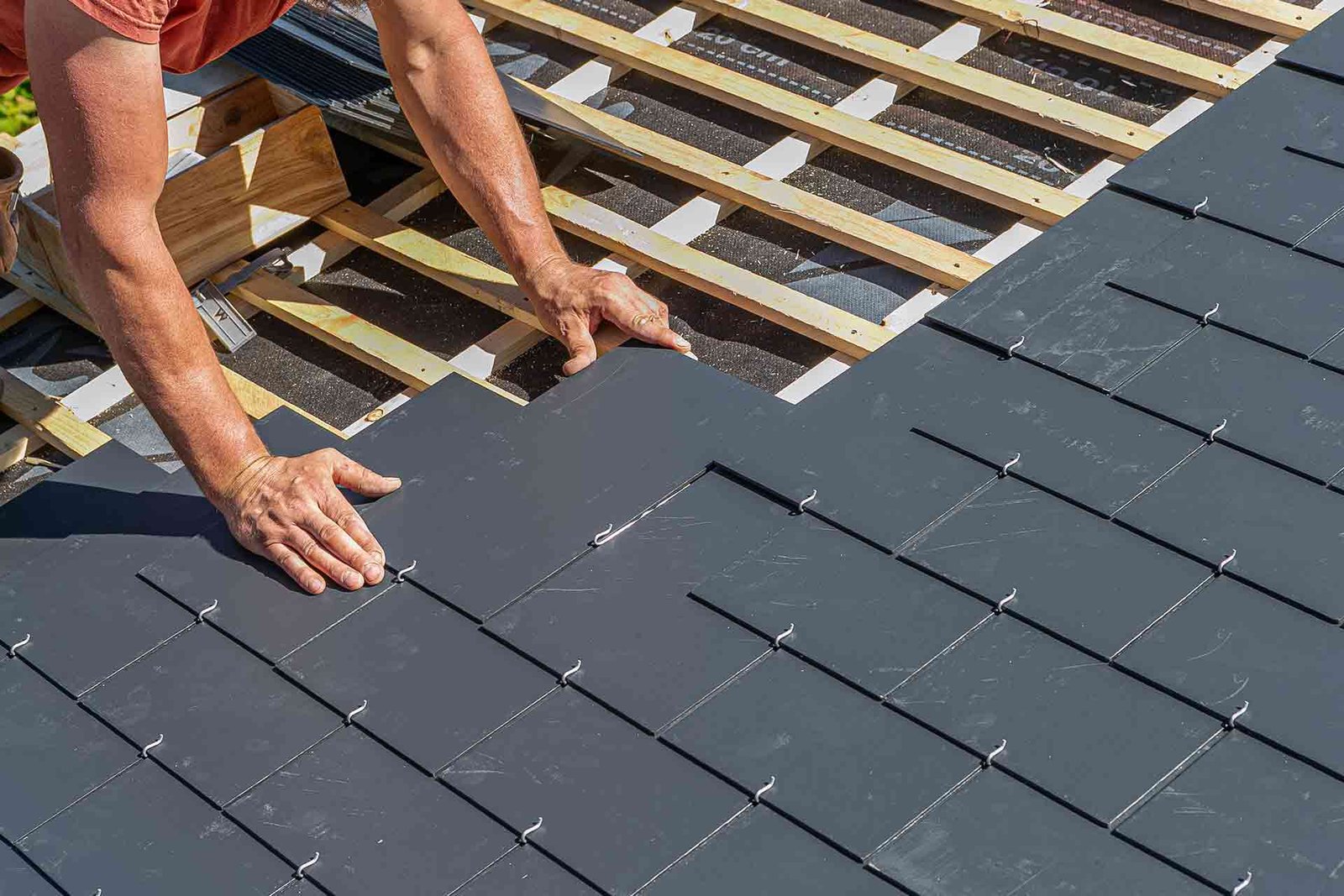
When it comes to longevity, nothing beats natural slate. A properly installed natural slate roof will last for 75–100 years, and often much longer; it’s not uncommon for them to outlive the people who had them installed. As you’d expect, it’s also the most expensive option, costing between €110–€140 per m² fully installed. For those who love the look of slate but can’t quite stretch to the price tag, synthetic or fibre-cement slate offers a great compromise. These materials cost between €80 and €110 per m² and will typically give you a lifespan of 40–60 years.
In the Dublin landscape, tiled roofs are the perfect fit for most modern homes and post-war estates. Slate is really best suited for period houses, beautiful Georgian builds, or high-value properties where preserving the original aesthetic is absolutely essential for resale value. While the upfront cost difference between slate and tile is significant, if you break it down by the cost per year of ownership, the gap between these materials starts to look much smaller.
What Factors Influence Your Final Roof Tile Price?
The price per square metre is just the starting point. Your final quote will always depend on the unique variables of your own home. The size and steepness (or pitch) of your roof, for example, determine how difficult the job will be. A steeper pitch means more safety equipment is needed and the work naturally goes slower. Access to the property is another huge logistical factor in Dublin. Putting up scaffolding on a narrow street in Stoneybatter or along a terraced row in Phibsborough often requires special permits and complex setups, which drives up costs compared to a semi-detached house in Lucan with a wide-open driveway.
Labour is a massive slice of the final bill. In Dublin, a skilled roofer’s day rate is currently hovering around €200–€300. This labour cost is a big reason for that 10–20% price premium we see in the capital compared to more rural parts of Ireland. On top of that, building regulations now demand much better thermal performance. This means you’ll likely need to upgrade your insulation to meet the current standards, which will add to the immediate cost, although this work might qualify for SEAI grants that can help offset some of that expense.
Calculating the Long-Term Value
It’s the old saying, “buy cheap, buy twice,” and it’s especially true for roofing. While the higher upfront cost for materials like slate might feel painful right now, working out the cost per year of service reveals its true value. Let’s say a €9,000 concrete tile roof lasts you 45 years. That works out to a cost of exactly €200 per year for the peace of mind it provides.
Now, let’s contrast that with slate. A €13,000 slate roof that lasts for 80 years costs you only €162 per year. Suddenly, the expensive roof is actually cheaper in the long run. This simple calculation shows how durable, high-quality coverings pay for themselves over the decades, especially in our harsh Irish climate, where the wind and rain are constantly testing cheaper materials. Flat roofs, by comparison, have much shorter lifespans of 15–40 years, often needing to be replaced so frequently that their long-term expense can be double that of a pitched roof.
Save Money by Bundling Gutter and Chimney Work
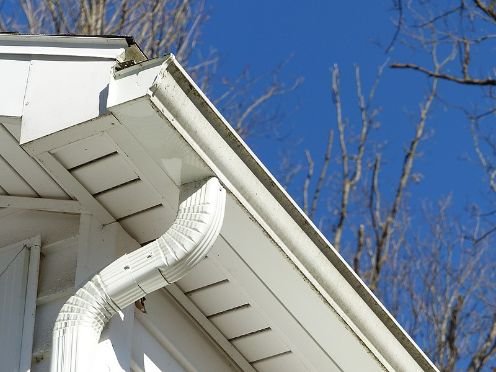
Here’s a smart tip that can save you a bundle: the scaffolding is a major fixed cost, so you only want to pay for it once. When you’re getting your roof tiles replaced, it is by far the most cost-effective time to also replace your gutters, downpipes, fascia, and soffits. The access is already there, paid for, and ready to go. Tackling any chimney issues at the same time is just as sensible. Repointing old brickwork or replacing worn lead flashing requires the exact same scaffolding access as the tiling work.
Bundling all these services together with your re-roofing project saves a significant amount of money. You completely avoid the cost and hassle of hiring and putting up another set of scaffolding two years from now when your old gutters finally give out. It also minimises the disruption to your daily life and ensures the entire water management system of your home—roof, gutters, and drains—is designed to work together as a single, perfectly watertight unit. Here at Emergency Roofers Dublin, we specialise in these comprehensive packages to give you the best possible value.
How Emergency Roofers Dublin Provides a Clear, Itemised Quote
Vague roofing quotes are a recipe for stress and disputes. That’s why our process starts with a thorough, on-site inspection of your roof, gutters, and chimney. We don’t believe in guesswork; we measure everything precisely. We’ll sit down with you and discuss all the material options, providing you with up-to-date per square metre prices that reflect the real costs in the market today.
You’ll then receive a written, fully itemised quotation from us. This document clearly breaks down exactly what’s included: the stripping and responsible disposal of your old tiles, the installation of new, high-quality breathable underlay, all the necessary flashings, ridge details, and specific warranties covering both the materials and our workmanship. We factor in the realities of Dublin pricing right from the start, ensuring the figure you see on the page is the figure you’ll pay. No nasty surprises.
Emergency Roofers Dublin is your local expert for complete roofing, guttering, and chimney solutions. We don’t give you vague estimates; we provide detailed, transparent quotes that are tailored to your specific Dublin property. Contact us today to secure your home’s future with a roof that’s truly built to last.
Frequently Asked Questions
For a complete new roof on a standard 3-bed semi in Dublin, you're typically looking at a cost between €9,000 and €15,000. This price range assumes you're using standard concrete tiles and covers all labour, materials, and waste disposal.
The price can swing depending on the specific conditions of your house and the materials you choose. As noted by sources like Roof Cost Calculator Ireland, Dublin prices have a premium due to higher labour rates and logistical hurdles. A straightforward job with easy access will be at the lower end of that scale, while projects that need complex scaffolding or premium clay tiles will push the cost up toward the €15,000 mark.
This is a significant investment, which is why a proper, site-specific survey is essential. Generic online calculators can't see the condition of the timber structure underneath your tiles or factor in any insulation upgrades required by today's regulations. You should always get a fixed-price quote to avoid any unexpected costs after the work has started.
Concrete tiles are, without a doubt, the most affordable roofing material you can get in Ireland. They offer the lowest price per square metre, not just for the tiles themselves but for the full installation.
Big brands like Roadstone and Mannok produce these tiles right here in Ireland, which helps keep transport costs down. As pointed out by publications like Selfbuild.ie, the mass production of concrete tiles creates economies of scale that natural materials like slate just can't compete with. A single concrete tile can cost as little as €1.40–€1.60, which keeps the material-only cost per square metre exceptionally low.
But even though they're the budget option, modern concrete tiles are incredibly durable and do their job well. They provide a reliable lifespan of 40–60 years, making them a very sensible choice for homeowners who are focused on immediate cost-efficiency without compromising on essential protection from the weather.
While clay tiles do come with a higher price tag, they deliver a superior look and colour that lasts. They are generally considered worth it for period homes or any property where visual character and kerb appeal are a top priority.
The cost difference is real; opting for clay instead of concrete can add about €2,700 to the total cost of an average 90 m² roof. However, as experts at places like Roof Wise point out, clay tiles have a longer lifespan (50–70 years) and hold onto their rich colour beautifully. Concrete tiles, on the other hand, tend to fade to a dull grey over time.
For your home's resale value and for meeting heritage guidelines, clay is the strategic choice. If you live in a designated conservation area or a neighbourhood with a distinct architectural style, making that extra investment in clay can help you avoid planning headaches and maintain your property's long-term market value.
You can consistently expect roofing projects in Dublin to be about 10–20% more expensive than in rural parts of Ireland. This Dublin premium is just a standard market reality, driven by the higher cost of doing business in the capital.
Labour rates are the main reason. As detailed in industry reports, skilled roofers in Dublin can command day rates of €200–€300, which is noticeably higher than the national average. On top of that, logistical costs like parking permits, skip hire, and scaffolding licenses in dense urban areas add overheads that contractors in the countryside simply don't have to deal with.
So, when you're budgeting, as a Dublin homeowner, you need to remember to adjust any national average figures upwards. If a guide suggests a job costs €8,000 nationally, a Dublin-based project is likely to start closer to €9,500 or €10,000 for the exact same work.
In our unique Irish climate, you can expect concrete roof tiles to typically last between 40 and 60 years. They are specifically engineered to stand up to the constant freeze-thaw cycles and the heavy rainfall that we're so used to.
Over the decades, the surface of the tile will naturally weather. According to the manufacturers at Roadstone, while the tile's structural integrity will remain sound for decades, the cosmetic finish might start to look a bit worn after 30 years as the surface pigment gradually erodes. You're also more likely to see moss growth on the rougher surface of concrete tiles compared to smooth slate.
A little bit of regular maintenance can help extend this lifespan. Simply keeping valleys clear of debris and removing any heavy moss buildup will ensure the tiles can do their job properly for their full expected life. Replacing a concrete roof is a generational task, not something you should have to do frequently.
Yes, when a contractor gives you a supply and fit price per square metre (for example, €70–€100), that figure should generally include both the labour and all the main materials. Think of it as an all-in rate for the main roof area itself.
This rate typically covers the tiles, the underlay, the timber battens, and the roofer's wages. However, it is absolutely crucial to confirm this with your specific contractor. As suppliers like Goodwins will tell you, the material only price is a world away from the final installed price. The tiles themselves might only cost €15/m², but the installed price is four to five times that because of all the labour and other essential materials involved.
Also, be aware that per metre rates often don't include the high, site-specific fixed costs. Things like scaffolding, skip hire, and any necessary insulation upgrades are usually listed as separate line items on a professional, detailed quotation.
You usually can't get a grant just for replacing your roof tiles, but you can often access grants for the roof insulation that's done at the same time as the work. The SEAI (Sustainable Energy Authority of Ireland) offers valuable support for these kinds of energy-saving upgrades.
So, if your re-roofing project includes upgrading your attic insulation or installing insulation at the rafter level to improve your home's BER rating, you may well qualify for funding. As construction experts at Corebuild note, meeting current building regulations often means you have to do these insulation upgrades during a roof renewal anyway.
It's well worth investigating the SEAI grants before you start any work. Combining a necessary roof replacement with a grant-aided insulation upgrade is the smartest way to help offset the high capital cost of the entire project.
Absolutely, yes. Replacing your gutters while the roof is being replaced is significantly cheaper than doing it as a separate job down the line. The main saving comes from sharing the access costs.
Scaffolding is a major expense in itself, often costing over €1,000 for a semi-detached house. By using the scaffolding that's already been put up for the roofers, you completely eliminate the need to pay for it all over again a year or two later just to do the guttering.
What's more, the process of installing a new roof often disturbs old, brittle gutters. Replacing them at the same time ensures that your eaves are sealed properly and that rainwater is managed efficiently from day one, which in turn protects your brand new fascia and soffits.
Besides your choice of tile, the two biggest things that will influence the price are the complexity of your roof's shape and how easy it is to access your property. A roof with lots of hips, valleys, dormer windows, or skylights needs a lot more skilled labour and detailed lead work than a simple, straight-up-and-down dual-pitch roof.
Access issues in Dublin can dramatically change the price. A terraced house with no side access means all materials have to be carried through the house or lifted over with a crane, which adds to labour hours and equipment costs. The condition of your existing timber rafters also plays a big part; if the roofer discovers rot once the old tiles are stripped off, those essential structural repairs will add to the final bill.
You should always budget for an additional 5–10% of tile area to cover waste. This is an industry-standard practice that ensures the roofer has enough materials to finish the job without having to stop and re-order.
Every time a tile is cut to fit around a chimney, a valley, or the verge of the roof, it creates unusable off-cuts. On a complicated roof with lots of different angles, the waste factor will be closer to 10%. On a simple gable-to-gable roof, it might be as low as 5%.
Ordering the exact square meterage of your roof is a classic mistake. If you run short of tiles, it causes delays and you risk getting a new batch where the colour doesn't perfectly match the tiles that are already on your roof.
A natural slate roof is the longest-lasting roofing option you can choose, with an impressive average lifespan of 75 to 100 years, and often even more. High-quality slates, like the famous Welsh Bangor Blue, have been known to last well over a century.
This incredible longevity is thanks to the stone's naturally low water absorption and its resistance to our freeze-thaw weather cycles. Unlike concrete, natural slate won't fade or break down structurally under UV light. While suppliers like TJ O'Mahony offer various grades of slate, even a standard natural slate will far outperform any manufactured alternative.
While the initial investment is high, a slate roof is very often a once-in-a-lifetime purchase. It adds permanent, lasting value to your property and requires very little maintenance compared to other roof coverings.
Initially, yes, a flat roof is generally cheaper to install than a pitched, tiled roof. This is mainly because it has a smaller surface area and the structural work is simpler. However, comparing them on upfront cost alone can be very misleading when you think about long-term value.
Flat roofing materials like torch-on felt or fibreglass are less labour-intensive to put down than laying hundreds of individual tiles. The catch is that the lifespan of a flat roof is significantly shorter, typically lasting only 15 to 40 years, depending on the system used.
Over a 60-year period, you might find yourself paying to replace a flat roof two or even three times, whereas a good tiled roof would still be in its prime. So, while the initial quote for a flat roof is lower, its lifetime cost is often much higher.
Your roof is your home's first line of defense against the relentless Irish elements. If you're starting to notice leaks, have seen slipped tiles, or you just know in your gut that your roof has passed its prime, waiting will only make the problem more expensive to fix.