That moment you hand over the final payment for a new roof should be one of pure relief. You’re counting on decades of solid protection against the moody Dublin elements. But for far too many homeowners, that feeling of security disappears in just a few short months. Water getting in, loose tiles, and draughts simply shouldn’t happen on a brand-new project. These aren’t just bad luck or a sign of a bad storm; they point to real flaws in the workmanship. Spotting these defects early is the key to stopping minor headaches from turning into major structural disasters.
Important Notes
- Those stains on your ceiling? They’re often the first clue, showing up long before you can see a problem from the outside.
- If the lines of your tiles look wavy or uneven, it’s a tell-tale sign of a rushed job or that the surface underneath wasn’t prepared right.
- Seeing missing tiles on a new roof is a major red flag that they weren’t nailed down properly or the wrong fixings were used.
- The flashing around chimneys is a common failure point on Dublin homes, so it’s a key area to check.
- Be wary of installers who put new materials over an old roof; it often hides rot and almost always voids the new material’s warranty.
- If you see water pooling on your flat roof for more than two days, it’s a clear sign the slope is wrong.
- Sometimes, poor ventilation can cause condensation in your attic that looks and feels just like a leak.
Ceiling Stains and Damp Patches
From the kerb, your roof might look absolutely perfect, but the inside of your house often tells the real story first. Water is sneaky; it always finds the easiest way in. Those yellow or brown rings on your ceiling aren’t just an eyesore; they are alarms screaming that something is wrong. These stains, along with bubbling plaster or peeling paint, are clear signs that the waterproof seal on your roof has broken down somewhere.
And please, don’t ignore any musty smells in your upstairs rooms. That damp odour often arrives before you can see any water at all. If you start to notice sagging ceilings or cracks in the plasterboard, it means the leak has probably been going on long enough to weaken the wooden joists. A properly installed roof should be able to take on a classic Atlantic storm without letting a drop of water in. Any leak inside your home needs an explanation. If you’re seeing stains in several different places or across multiple rooms, you’re likely dealing with a systemic installation problem, not just a single slipped slate.
We always recommend that you document every single stain. Take pictures with a timestamp on them. This evidence is incredibly helpful for us at Emergency Roofers Dublin to figure out just how serious the failure is. Catching these signs right away can keep repair costs down to a few hundred euros. Ignoring them gives water the time it needs to rot structural timbers, which can send repair bills soaring into the thousands.
Telltale Signs of Rushed Work From the Street
Do yourself a favour: walk across the road and take a long, honest look at your roofline. A quality installation looks clean, with straight lines and a consistent, uniform appearance. If the roof just looks messy or has noticeable undulations, you can bet the work hidden underneath is just as careless.
Wavy Lines, Dips, and Sagging
A new roof should look flat, solid, and straight. If you see uneven rows of tiles or slates, it usually means the roofer rushed the job or didn’t bother to prepare the roof deck correctly. Wavy lines might catch your eye for being ugly, but they also signal that the fixings are loose and likely to fail when the wind picks up. If you notice strange variations in colour or alignment, it often suggests the roofer mixed different batches of materials, a classic sign of poor planning.
Sagging is even more serious. A dip in your roofline can mean the rafters are spaced too far apart, the timbers underneath are rotting, or the insulation has become heavy with water. A properly installed pitched roof in Ireland should last for 20 to 30 years. If you’re seeing sagging or waves within the first one to five years, you have a defective installation on your hands.
Missing, Cracked, or Broken Tiles Shortly After a New Installation
Tiles shouldn’t be falling off your roof. If you find broken pieces in your driveway or can see obvious gaps up on the roof soon after the job was finished, the fixings are wrong. It’s likely the roofer used too few nails, put them in the wrong place, or just messed up the layout entirely.
Irish weather is tough, we all know that, but a well-built roof is designed to handle it. If your roof is less than ten years old and you find yourself having to replace tiles after every winter storm, that isn’t normal wear and tear. It’s a failure of the installation itself. At Emergency Roofers Dublin, we frequently find that under-nailing is one of the main reasons for these early failures.
Poorly Finished Edges, Chimneys, and Flashing
The places where your roof meets a wall or your chimney are the trickiest parts of the job. Unfortunately, they’re also where lazy roofers tend to cut corners. Think of flashing as the essential waterproof seal. If you look up and see flashing around your chimney that’s exposed, bent, or just gobbed with caulk, that barrier is going to fail.
Missing drip edge flashing along the eaves is another common shortcut. Without this simple metal strip, water can track back up under the roof edge, get behind the gutter, and soak into your fascia board. This causes rot that you won’t see until the wood is literally crumbling away. Roofing inspections all across Ireland consistently name bad flashing as one of the top three causes of leaks.
Here’s a good test: check your chimney breast inside your attic or bedroom during a heavy rainstorm. Any damp patches there are proof positive that the flashing on the outside isn’t doing its job. Emergency Roofers Dublin specialises in tracking down and fixing these specific flashing faults to make your roof’s waterproofing system whole again.
Shortcuts That Compromise Your Roof's Integrity
The most costly and frustrating mistakes are often the ones you can’t even see, buried beneath the beautiful new slates. Some contractors try to save money on materials and their own time by skipping crucial layers that you wouldn’t know are missing until it’s too late. These shortcuts can dramatically shorten the life of your new roof.
Skipping the Underlayment
The underlayment, which you might know as roofing felt, is your home’s second line of defence against the rain. Here in Dublin, where the wind often drives rain sideways, it’s possible for a little water to get past the outer tiles. The underlayment is there to catch that moisture and guide it safely down into the gutters.
Some roofers skip this vital layer to save a few hours. Without it, your home has absolutely zero protection if even a single tile cracks or shifts. Leaving out the underlayment can shave decades off a roof’s expected 20 to 30-year lifespan. If you have a relatively new roof that’s leaking in several places, but the tiles all look fine, a missing underlayment is a very likely culprit.
Roofing Over Old Layers
Doing a full rip and replace of a roof is hard work. To come in with a lower quote, some roofers will suggest just laying new shingles or tiles right on top of the old ones. This might save you €1,000 to €2,000 upfront, but trust us, it’s a terrible false economy.
This method traps heat and moisture between the layers, essentially cooking your new shingles from below. More importantly, it means the roofer never gets to see and inspect the wooden deck underneath. You could be nailing a brand-new roof onto rotting wood. A professional and honest quote from Emergency Roofers Dublin will always include the cost of stripping off all the old material so we can properly inspect the timbers, insulation, and ventilation.
Overflowing Gutters and Damp Attics
It’s important to remember that a roof is more than just tiles. It’s a whole system that includes gutters and airflow, all working together. When one part of that system isn’t right, it often means the installer didn’t fully understand how all these pieces need to interact.
When Gutter Problems Point to a Bad Roofing Job
Your gutters are not supposed to hold water; they’re designed to channel it away from your house immediately. If you notice your gutters are constantly overflowing, it could be that the roofer didn’t set the slope correctly or failed to properly connect the roof edge with the guttering system.
Look for water stains running down your exterior walls or gutters that are visibly sagging under the weight of trapped water. After a typical Dublin downpour, the whole system should drain out within a few minutes. If it’s still full hours later, it needs to be inspected. While a simple cleaning might cost between €150 and €300, fixing the underlying installation errors that are causing the overflow is a bigger but necessary job to prevent serious damage to your walls.
Condensation and Mold in the Attic
A roof needs to be able to breathe. If a roofer seals up a house too tightly without installing proper vents, all the moisture from daily life, cooking, showering, even breathing, gets trapped in the attic. This warm, moist air hits the cold underside of the roof and turns into condensation, which then drips down onto your insulation and joists, perfectly mimicking a roof leak.
You might notice a persistent musty smell or find that your insulation feels damp to the touch. In cold weather, condensation tends to cover large areas, while a leak is usually more localised. A properly vented attic should feel roughly the same temperature as the air outside. Make sure your roofer can tell you exactly what type of vents they’re installing and how many you need to meet current building standards.
Technical Mistakes and Specific Roof Types
Not all roofs are the same, and different materials can fail in very specific ways when they’re not handled with expertise. Whether you have a traditional pitched roof or a modern flat roof on an extension, technical mistakes leave behind their own unique clues.
Common Pitched Roof Errors and What to Look For
Sometimes, it’s about simple geometry. A common mistake is using a roofing material on a slope that’s too shallow for it, which allows wind-driven rain to creep up underneath. Missing starter strips at the eaves is another one; this leaves the very first row of tiles exposed and vulnerable to being lifted off by strong winds.
Improper overhangs can cause water to completely miss the gutter and run straight down your fascia boards. Poorly fitted insulation is another frequent issue we see, causing thermal bridging where heat escapes through gaps, which in turn drives up your heating bills. Check that the first row of tiles lines up neatly with your gutter and that the ridge line running along the very top is perfectly straight.
Flat Roof Failures
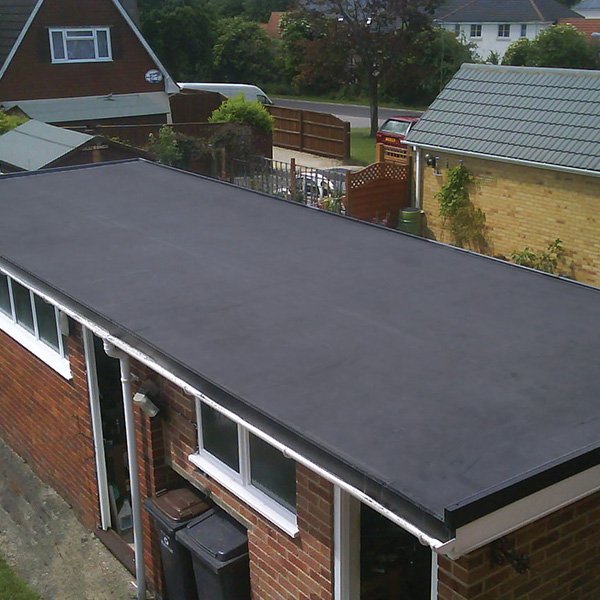
Fibreglass (GRP) roofs are a popular choice for Dublin extensions, but they demand very precise installation conditions. If the resin isn’t mixed correctly or if it’s applied to a damp deck, the roof is destined to fail.
- Ponding: Any standing water should be gone within 48 hours. If puddles are still sitting there after two days, it means the structure has sagged or the gradient is simply wrong.
- Blistering: If you see bubbles appearing on the surface within 3 to 5 years, it’s a sign of trapped moisture or that the fibreglass didn’t bond properly to the surface below. A correctly installed GRP roof should last 20+ years without issue.
- Cracking: Hearing loud cracking noises or seeing visible splits often means the roofer didn’t include expansion joints, leaving the roof with no way to handle the natural expansion and contraction from changing temperatures.
Protecting Your Dublin Property
Our Irish climate doesn’t mess around, and it will quickly find any weakness in a roof. The combination of heavy rain, high winds, and moss growth can speed up the decay of shoddy work. Moss, in particular, acts like a sponge, holding moisture against your tiles and then cracking them when it freezes and expands.
We strongly advise taking a visual check of your roof and gutters at least once a year. Just stand back from your house and look for the signs we’ve talked about here. A professional inspection every two to three years will give you a much more detailed assessment. Catching a loose piece of flashing now might cost a few hundred euros to fix. Waiting until your ceiling caves in will cost you thousands.
When to Call Emergency Roofers Dublin Urgently
Please, don’t wait. If you can see water actively leaking into your home during a downpour, it’s time to call. If you notice a sudden sag in the roofline or see that multiple tiles have blown off, that requires immediate professional attention. If you’ve recently had a new roof installed and you’re already facing problem after problem, you need an independent, expert assessment. Emergency Roofers Dublin has the expertise to secure your home and properly document all the faults for you.
Frequently Asked Questions
The very first clues are usually things you can spot yourself. Look up at your roof from the street, do the tile lines look uneven or wavy? That's a big red flag for a rushed job. Inside your home, look for small yellow or brown stains on the ceiling. They often show up long before a major leak starts, and dealing with them early can save you from the serious structural rot that follows when water is left to get in.
A properly installed pitched roof, using standard materials like slate or concrete tiles, should easily last you between 20 and 30 years. If you're seeing major problems like sagging or widespread leaks within the first one to five years, that is a very clear sign of poor workmanship or faulty materials. While regular maintenance helps a roof last longer, failing that early is definitely not normal.
A wavy look usually tells you that the roofer didn't properly level the structure underneath or they used mixed batches of materials. It can also mean the felt and battens were just slapped on without any care. It's not just about looks; this lack of uniformity suggests the fixings aren't secure, which makes your roof much more vulnerable to wind damage during Dublin's storms.
This is almost always a ventilation problem, not a leak. If the roofer accidentally blocked your soffit vents or just didn't install enough tile vents, all the natural moisture from inside your home gets trapped in the attic. This leads to condensation, which soaks the insulation and timbers, causing mould and rot. A well-installed roof must allow air to circulate freely to keep the attic dry.
Re-roofing is the proper way to do it: we strip all the old materials off right down to the wooden deck, inspect the wood for any rot, and then install brand-new underlayment and tiles. An overlay is a shortcut where new shingles or tiles are just nailed on top of the old ones. While an overlay is cheaper initially, it can hide serious structural damage and will likely void the new materials' warranty. We always recommend a full strip and re-roof for your long-term peace of mind.
For fibreglass (GRP) and felt flat roofs, the two biggest mistakes we see are improper deck preparation and getting the gradient wrong. If the wooden deck is even slightly damp when the material is applied, blisters are guaranteed to form. And if the slope isn't steep enough, water will pond or pool on the roof for more than 48 hours, which causes the material to break down prematurely and eventually leak.
Think of a professional inspection as a small investment that can save you a fortune. While a minor repair might cost a few hundred euros, a full inspection gives you a detailed report on the true condition of your tiles, flashing, gutters, and everything else. This report is essential if you need to prove poor workmanship or simply want to plan for future maintenance. Get in touch with Emergency Roofers Dublin, and we can give you current rates based on the size of your property.
Absolutely not. A new roof should be completely watertight from day one. While there might be a tiny settling-in period, any water actually getting inside is unacceptable. If a leak shows up after the first big storm, it points to a definite flaw in the flashing, the tiling, or the underlayment. You should call the installer right away, or get a second opinion from another company if the problem continues.
If a roofer doesn't deliver the service you agreed on, you may have legal options, especially if you have everything in a written contract and have proof of your payments. The key is to document every single fault with photos and to get a professional report from a reputable company like Emergency Roofers Dublin to back up your case. However, you should always seek formal legal advice from a qualified solicitor.
First, start documenting everything with date-stamped photos. Find your contract and any warranty paperwork. Then, contact the original roofer in writing to formally request that they come back and make repairs. If they don't respond or can't seem to fix the problem, it's time to hire a professional, independent roofing company to inspect the work and give you a formal report on all the defects.
Yes, it is. Even a single missing tile breaks the waterproof seal of your roof. This exposes the underlayment beneath to UV light and wind, which can quickly tear it open and lead to leaks inside your home. Replacing it quickly stops water from getting into your attic and causing much more expensive ceiling damage.
Go outside and look closely at the metal around the base of your chimney. It should sit flush against the chimney and be properly sealed into the brickwork. If it looks bent, loose, or like it's relying on a thick bead of sealant (caulk) instead of proper lead work, it's likely a poor installation. Seeing damp patches on the chimney breast inside your house is the final proof that it has failed.
Typically, no. Standard homeowners insurance is designed to cover sudden and accidental events (like storm damage), but it almost always excludes issues caused by poor workmanship or gradual wear and tear. If a leak is the result of a bad installation, your insurance company will likely deny the claim. This is why it's so critical to hire a reputable, fully insured company like Emergency Roofers Dublin right from the start.