The Atlantic gales that batter Dublin Bay don’t care if your home is a hundred years old or brand new. When rain starts lashing sideways, and the wind howls, that thin layer of asphalt on your roof is the only thing standing between the storm and your living room. The truth is, many homeowners across County Dublin are still relying on standard roofing materials that are starting to show their age and struggle to keep up with our increasingly wild weather.
But there’s a stronger, more reliable alternative that has quietly become the new benchmark for durability. Architectural shingles are more than just a roof covering; they are a complete defence system, engineered for a long life and a beautiful, deep appearance that goes far beyond what traditional flat roofing can offer.
Key Takeaways
- Superior Wind Resistance: They stand strong against winds from 80-120 mph, and top-tier options can even handle ferocious gusts up to 130 mph.
- Extended Lifespan: You’re looking at a roof that will protect your home for 40 to 50 years, nearly double the life of standard 3-tab shingles.
- Enhanced Aesthetics: Thanks to their multi-layered design, they create a beautiful, textured look that resembles natural slate or cedar, giving your home a serious boost in curb appeal.
- Impact Durability: A Class 4 rating means they’re tough enough to resist damage from hail and flying debris during a storm.
- Long-Term Value: While they cost a bit more upfront, you’ll save thousands in the long run by avoiding constant repairs and premature replacement.
The Weatherproof Protection of Modern Architectural Shingles
Dublin homes need more than just a cover; they need a shield. Think of architectural shingles as a premium, heavy-duty version of asphalt roofing, built from the ground up to handle the relentless wet and windy weather we know all too well in Ireland. Unlike the shingles of the past, these use a clever multi-layered, fused construction. This build gives them real weight and durability, creating a solid barrier that can stand up to the storms that constantly roll in from the coast.
Where standard roofing can give up the ghost when the wind really picks up, architectural shingles are rated to resist winds of 80-120 mph. If you live in a particularly exposed area, premium versions can push that protection all the way up to 130 mph. This is a massive leap from the 60 mph rating that’s typical for traditional shingles. With a lifespan projected to be between 40 and 50 years, you won’t be thinking about another major roofing project for a very, very long time. For many homeowners, this means saving thousands of euros over the life of the roof, simply by breaking the frustrating cycle of repairs that comes with inferior materials.
Architectural vs. 3-Tab Shingles
You can feel and see the difference between architectural and 3-tab shingles right away, both in their weight and how they perform. Architectural versions are nearly twice as thick and heavy as the standard 3-tab shingles you see on many older homes. This extra heft isn’t just for show; it creates a stunning dimensional look that beautifully mimics premium materials like natural slate or cedar shakes, without the hefty price tag. In contrast, standard 3-tab shingles tend to look flat and one-dimensional, which can sometimes make a roof look a bit thin or dated.
While you might spend an extra €2,000-€4,000 upfront for a semi-detached Dublin home, the long-term numbers tell a different story. With a life expectancy that’s 50% longer, the actual cost per year of having that roof over your head is significantly lower.
Let’s break down the technical differences in a more straightforward way:
- Weight: Weighing in at 340-440 lbs per square, they are much heavier than the 240 lbs of 3-tab shingles.
- Wind Resistance: They can handle powerful 80-120 mph winds, leaving the 60 mph rating of 3-tab shingles far behind.
- Lifespan: You get a reassuring 40-50 years of protection, compared to the 25-year lifespan you’d expect from 3-tab.
- Cost Per Square (Materials): The materials themselves run about €60-€90 per square, versus €40-€60 for the 3-tab alternative.
- Suitability: Perfectly suited for our stormy weather, while 3-tab options are known to lift up and tear away in strong winds.
The Pros and Cons of Architectural Shingles for Your Dublin Home
The Advantages of Upgrading
The biggest reason people choose to upgrade is the incredible weather protection they offer. Some of these shingles even come with a Class 4 impact rating. To get this rating, the shingle has to withstand a 2-inch steel ball being dropped on it from 20 feet without cracking. This is the kind of peace of mind you want when hail is in the forecast or debris starts flying around in a gale.
Beyond sheer toughness, a lifespan of up to 50 years means this is truly an “install it and forget it” solution for most homeowners. And let’s be honest, the visual upgrade is a huge plus. The high-definition, textured appearance seriously boosts your home’s curb appeal, which can even increase its value. To back it all up, manufacturers offer warranties that are typically much longer and more comprehensive than what you’d get for basic 3-tab shingles.
Potential Considerations
Let’s be upfront, quality does come at a price. The main hurdle for some is the higher initial cost for materials and installation compared to basic shingles. Their weight is also something to keep in mind. At 60-80 lbs per bundle, they are almost double the weight of 3-tab shingles. If your home is older, it’s wise to have a professional check if the roof deck can handle the extra load.
Fixing a small patch can also be a bit trickier. Because of their dimensional look and how they weather over time, matching a single replacement shingle to the exact colour and texture of the surrounding roof is more challenging than with a simple, flat 3-tab shingle.
How Architectural Shingles Are Made
Architectural shingles, which you might also hear called dimensional or laminated shingles, get their incredible durability from the way they’re made. They are cleverly constructed from multiple layers that are fused together, creating both immense strength and a beautiful three-dimensional look.
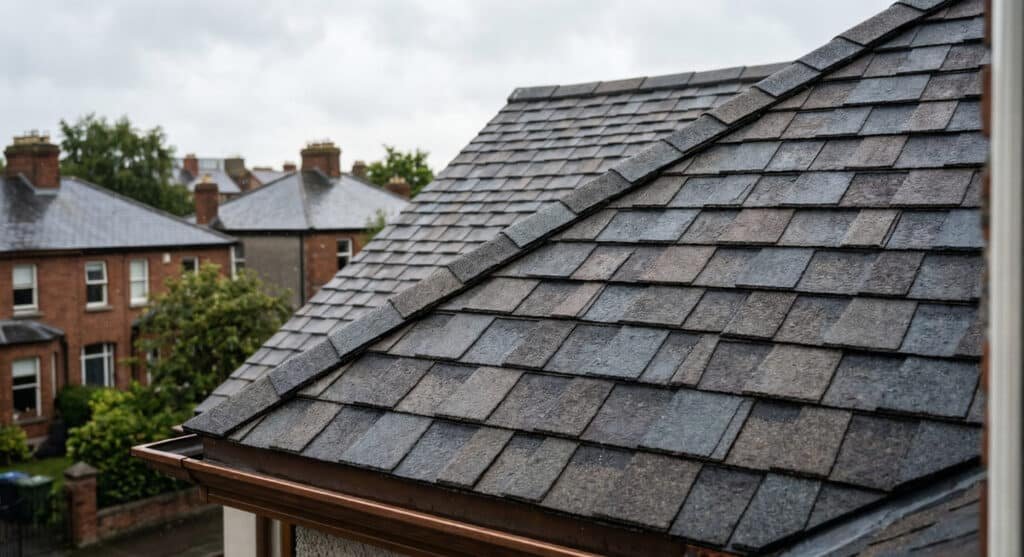
It all starts with a heavy fibreglass mat at the core. This is then coated in a refined, water-resistant asphalt, which is your main waterproofing layer. The top layer is what you see: tiny ceramic-coated mineral granules. These granules do more than just provide the colour; they also shield the shingle from harsh UV rays and offer a tough, physical barrier against the elements. Here’s the clever part: unlike 3-tab shingles, they don’t have cutouts. Instead, extra laminated pieces are bonded onto the main shingle, creating that signature textured shadow look that gives the roof so much depth and character.
Types of Architectural Shingles in Ireland
Dublin homeowners have a fantastic range of styles to choose from, perfect for anything from a classic Georgian terrace to a sleek, modern new-build.
- Standard Architectural Shingles: This is the go-to choice for most homeowners in Dublin. It gives you that classic, beautiful dimensional appearance and all the durability you need for our typical weather. You can expect material prices to be around €65 per square.
- Performance Architectural Shingles: If your home is in a more exposed spot, especially near the coast, where salt spray and high winds are a constant battle, these are for you. They’re engineered with extra-strong adhesive strips and reinforcement to stand up to the toughest conditions.
- Designer/Premium Architectural Shingles: For those who want the absolute best in both looks and protection, these are the top of the line. They are the thickest available, often with three layers, and create a striking high-definition look that’s almost indistinguishable from real slate or wood shakes. Brands like GAF or Owens Corning lead the way here, and these lines often boast that coveted Class 4 impact rating. Material prices for these beauties usually start around €85+ per square.
Analyzing the Cost and Long-Term Value in Dublin
So, what’s the bottom line? For a professional installation by a trusted company like Emergency Roofers Dublin, you can expect the total investment to fall somewhere between €60 and €100 per square. This price typically includes the materials, which account for €40-€70 per square, and the skilled labour needed to install them perfectly, which is about €20-€30 per square.
While the initial cheque you write will be larger than it would be for standard asphalt, when you look at the numbers over the next two decades, the investment truly pays off. Their superior durability and 25-50 year lifespan mean you’ll have far fewer storm-related repair bills. Compared to the constant upkeep some basic roofs require, most homeowners will save an estimated €3,000-€5,000 over the life of the roof.
Your Local Experts for Architectural Shingle Installation in Dublin
Choosing architectural shingles is a smart move to protect your home and your investment. They strike a wonderful balance, offering a high-end look and performance without the astronomical cost and structural strain of natural slate, which can cost over €150 per square and put a massive weight load on your home.
At Emergency Roofers Dublin, we’re specialists in installing these systems exactly as the manufacturer intended. We make sure your roof is buttoned up tight, ready to face 110+ mph winds, and that your warranty is fully intact. After all, the best materials in the world are only as good as the hands that install them, and that’s what makes all the difference when it comes to standing firm against Ireland’s damp, stormy weather.
Get in touch with Emergency Roofers Dublin to plan your architectural shingle upgrade. We also provide expert guttering and chimney services to make sure your entire roofing system is secure from top to bottom.
Frequently Asked Questions
The big difference comes down to how they're built and how thick they are. Architectural shingles are made by fusing two or more layers of asphalt and fibreglass together. This creates a dimensional product that is much heavier, thicker, and more durable. Standard 3-tab shingles are just a single flat layer with cutouts designed to look like separate tiles.
As noted by Werner Roofing, the architectural type is physically thicker, which directly translates to better wind ratings and impact resistance. IKO adds that this multi-layer design gets rid of the weak points found in the tabs of standard shingles, making them far less likely to tear off in a storm.
With proper installation and care, you can genuinely expect your architectural shingle roof to last 40 to 50 years. That’s nearly double the 20 to 25 years you’d get from traditional 3-tab shingles. GAF explains that their multi-layer construction gives them better resistance to UV damage and the constant expansion and contraction from temperature changes. In a climate like Dublin's, where damp and wind are always a factor, this robust build prevents the granules from wearing away prematurely, a common problem with thinner roofing materials, as supported by data from Howe Roofs.
Absolutely. While the initial bill is higher, the long-term savings make it a very smart financial decision for Dublin homeowners. Even though the materials might cost 20-30% more to start, the incredibly long lifespan drastically reduces the cost per year of your roof. According to Roof River City, you avoid the future, inflation-adjusted cost of a whole second roof replacement that you would definitely face with 3-tab shingles. On top of that, GM Exteriors points out that the enhanced curb appeal can actually increase your home's resale value, turning it into a financial asset, not just an expense.
Generally, you can expect the total installed cost in Dublin to be somewhere between €60 and €100 per square (which is 100 sq. ft), but this can change depending on how complex your roof is. The materials alone will usually be between €60 and €90 per square. Owens Corning points out that the price also depends on whether you choose a standard, designer, or performance tier. It's important to see this price in context; Decra notes that while other options like metal or slate are much more expensive, architectural shingles provide a great middle ground of high performance at a price that works for most home renovation budgets.
Yes, that's exactly what they're designed for. Standard architectural shingles are rated for winds of 80-120 mph, and the premium lines can handle gusts all the way up to 130 mph. The Asphalt Roofing Manufacturers Association explains that because they don't have tabs and use heavy-duty sealant strips, the wind can't get underneath to lift them up. GAF data confirms that when they are installed with the right nailing pattern and adhesive, these shingles lock together to form one solid barrier that is far stronger than the 60 mph protection offered by older asphalt roofs.
The two main things to consider are their weight and the initial cost. They are about 50% heavier than standard shingles, weighing in at 340 to 440 lbs per square. Werner Roofing advises that if your home was originally built with very light roofing in mind, the structure might need to be reinforced, which would add to the cost. Additionally, IKO mentions that they aren't a good fit for low-slope or nearly flat roofs (with a pitch below 2:12), because water drains more slowly over the textured surface and could cause problems.
While the basic principles are similar to other asphalt shingles, special isn't the right word; precise is. Because they are so much heavier, they need to be installed on a secure, solid roof deck. Owens Corning stresses that using the correct starter strip along the edges is essential to make sure your wind warranty is valid. Howe Roofs also notes that cutting these thick shingles to fit valleys and ridges requires different techniques, which is why having an experienced roofer is crucial to ensure the finished roof looks great and is completely watertight.
Think of a Class 4 rating as the highest seal of approval for toughness. It's the top rating given out under the UL 2218 test, which is the industry standard. To pass, a shingle must not crack after being hit twice in the same spot by a 2-inch steel ball dropped from 20 feet. Roof River City explains that this test simulates how well a roof will stand up to hail. A Class 4 roof is far less likely to be damaged in a hailstorm. GM Exteriors adds that some insurance companies even offer discounts on your premium if you have a Class 4 roof, because you're statistically less likely to make a claim after a storm.
Technically, you can, but it’s almost never a good idea, especially with the weight of architectural shingles. Adding a second layer (reroofing) puts a huge amount of extra strain on your home's structure. The Asphalt Roofing Manufacturers Association warns that laying new shingles over the uneven surface of an old roof can prevent them from sealing properly. Decra agrees that a full tear-off of the old roof is the best approach. It allows your roofer to inspect the underlying deck for any rot or damage, ensuring your new 50-year roof isn't being put on top of a failing foundation.
You'll be amazed at the variety available. They're specifically designed to mimic the look of natural, high-end roofing materials. You can find everything from deep charcoals that look like slate to beautiful blends that capture the warmth of weathered wood and cedar. Owens Corning offers unique colour blends that use special shadowing granules to create a stunning, high-contrast 3D effect. GAF even produces designer shapes that look just like scalloped slate or rustic wood shakes. This wide selection means you can find the perfect style to match your Dublin home, whether it’s a classic Victorian terrace or a cosy mid-century bungalow.
They offer a fantastic middle ground. Natural slate is the king of durability; it can last for 100 years, but it's also incredibly heavy, brittle, and expensive, often requiring the roof structure to be reinforced. Decra points out that while slate lasts forever, maintaining it can be a costly, specialized job. IKO suggests that architectural shingles give you about 80% of the stunning look of slate for a fraction of the cost and weight. This makes them a much more practical and affordable choice for the average homeowner who loves the slate look but not the structural headaches and massive bill.
Without a doubt. A great-looking, long-lasting roof is a major asset when it comes time to sell your home. A new roof with a transferable 50-year warranty is a huge selling point for potential buyers. Roof River City mentions that curb appeal plays a massive role in how a property is valued; the deep, dimensional look of architectural shingles makes a home look modern and well-cared-for. As GM Exteriors notes, buyers see a high-quality new roof as one less major expense they'll have to worry about, which often justifies a higher offer on the house.