That sharp, sickening crack of a slate tile under your foot is a sound no Dublin homeowner ever wants to hear. It’s the sound of instant financial loss and a warning of potential structural problems to come. Many of us assume that because a roof is built to protect our homes from harsh weather, it can surely handle the weight of a person. With slate, that assumption can be a very expensive mistake. Slate is natural stone, and unlike modern synthetic materials, it has absolutely no give. It doesn’t bend; it shatters.
Key Notes
- Slate is brittle: Natural slate has almost zero flexibility. Walking on it is practically a guarantee you’ll break something.
- It’s a serious safety hazard: A wet or mossy slate roof, a common sight in Dublin, is like trying to walk on a sheet of ice, creating a severe risk of falling.
- How pros do it: Experts use special tools like hook ladders and roof jacks to spread their weight across the roof’s structure, making sure never to step directly on the slate itself.
- The real cost of one broken tile: A single broken slate can let water in, rotting the timber battens beneath. What could have been a €100 repair can quickly spiral into a €1,000 restoration project.
- How you can inspect it safely: The only truly safe way for a homeowner to check on a slate roof is from the safety of the ground, using a pair of binoculars.
Is It Safe to Walk on Your Dublin Slate Roof?
Let’s get straight to it: the short answer is an emphatic no. Slate has very little flex and was never designed to handle foot traffic. The risk of cracking tiles and causing expensive, hard-to-find leaks is just too high. While slate is incredibly tough against Dublin’s rain and wind, it’s also very rigid and brittle. It cracks all too easily under the concentrated pressure from a single footstep. The specialists at Stevens Roofing Corp put it best: slate is a natural stone that simply cannot withstand the focused weight of a human step without a high risk of breaking.
Think of it this way: you have two kinds of risk. On one side, there’s the risk to your property. Broken slates lead to water seeping in, which rots the timber structure holding up your roof. On the other side is the personal risk. A fall from that height can lead to life-altering injuries. A common scenario we see involves a homeowner wanting to climb up and inspect some damage after a storm. They might step on one slate to get a better look at a flashing, only to hear that awful crack, crack, crack as 10–15 surrounding tiles give way. What started as a quick, free check-up has now turned into a job costing over €1,000, especially if the damage is bad enough to need scaffolding for a proper repair.
Why Homeowners Should Never Walk on a Slate Roof
Of all the common roofing materials out there, none has a higher risk of cracking or being dislodged by foot traffic than slate. Homeowners in Dublin should never attempt to walk on their own slate roofs and should always call in professionals like Emergency Roofers Dublin for any inspection or repair needs. The team at Brava Roof Tile emphasizes that slate’s very composition makes it prone to snapping the moment weight is applied incorrectly.
Walking on slate can create a domino effect of hidden damage. You might go up to replace one broken tile, only to crack two more in the process without even knowing it. The pressure from your foot travels down, snapping the top part of the slate underneath, the part you can’t even see. This breakage often goes completely unnoticed until the next heavy downpour, when water suddenly starts pouring into your attic. As Cannock Roofing Repairs wisely warns, the only way to prevent this kind of damage is to avoid walking on the roof entirely.
Personal Safety and Fall Risks on Slate
Slate is surprisingly slick even when it’s bone dry. It becomes extremely slippery when it’s wet, mossy, or covered in algae, which, let’s be honest, is the normal state for most roofs in our damp Dublin climate. A fall from a typical two-storey house in Dublin, even a 10-foot fall, can cause serious, long-term injuries.
On top of that, you have obstacles like electrical cables and satellite dishes that add further trip and shock hazards to the mix. As industry safety experts always point out, a ten-foot drop isn’t something you can just walk away from without injury. The moss that grows so readily here acts like a layer of grease between your boot and the stone. Attempting to walk on a moss-covered slate roof without a proper fall-arrest system is simply reckless.
When to Absolutely Stay Off Your Slate Roof
Certain conditions make your roof a complete no-go zone. If you see any of these signs, stay on the ground and pick up the phone instead.
- Weather conditions: Right after heavy rain, or if there’s any frost, ice, or snow.
- Organic growth: If you can clearly see moss or algae growing on the roof.
- Age and condition: On older roofs where you can already spot missing, cracked, flaking, or powdery-looking slates.
- Structural issues: If there’s any visible sagging in the roofline or signs of old, shoddy patch repairs.
- Lack of preparation: If you are untrained, uninsured, or don’t have the proper fall protection equipment.
If any of these conditions apply, please stay off the roof and call Emergency Roofers Dublin for a safe and professional inspection.
Why Slate Breaks So Easily
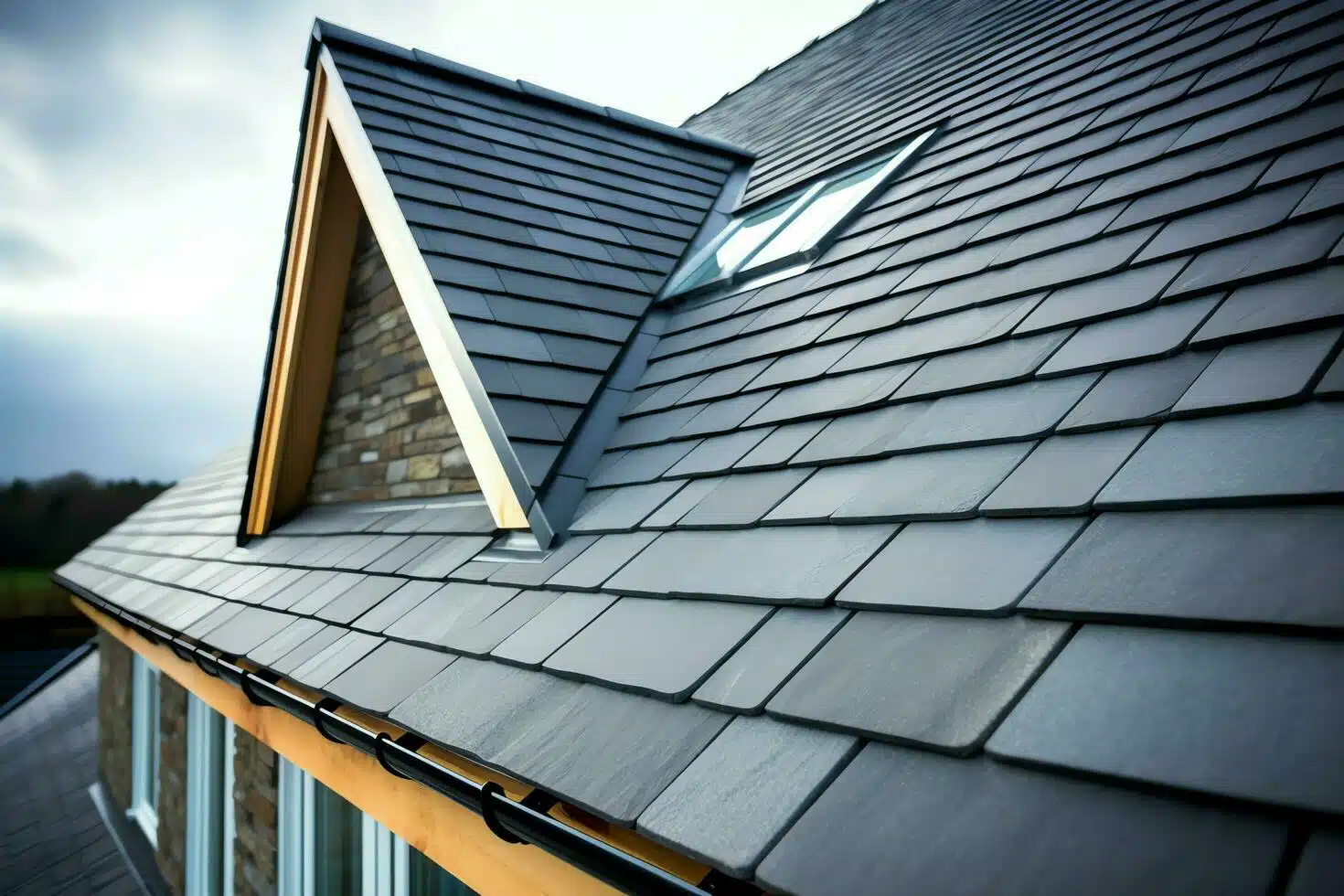
Slate is a natural stone that is split along its grain, which makes it incredibly weak when pressure is applied the wrong way. Unlike flexible asphalt shingles that can bend under your weight, rigid slate cannot. So instead of bending, it cracks or shatters. The Roofing Academy (Ireland) highlights that as slates get older, they can soften, start to delaminate (flake away in layers), or even crumble to the touch.
A single misplaced step can create hidden micro-cracks that get much worse with the freeze-thaw cycles of an Irish winter. Water gets into these tiny cracks, expands as it turns to ice, and splits the tile even further. The best way to think about it is to imagine walking on thin glass tiles rather than rubber ones. Rubber flexes; glass breaks. One wrong step can damage several slates around it, often shearing the slate clean off its nails.
How Our Dublin Professionals Safely Access Your Slate Roof
You’ll never see us scrambling across your roof like a scene from a movie. We use specialist equipment that is specifically designed to keep our weight completely off the stone.
The Specialist Equipment and Techniques We Use
We use tools like hook ladders (often called chicken ladders), roof jacks, and planks to transfer all our weight onto the roof’s sturdy structure, not the fragile slates. This equipment lets us create what is essentially a floating staircase over the surface of your roof.
- Hook ladders: These ladders have a special hook on the end that goes over the ridge of the roof, allowing us to climb the slope without our feet ever touching the tiles.
- Roof jacks and planks: These create a secure, level working platform, spreading our weight across the strong rafters instead of on individual, fragile slates.
- Fall protection: We always use personal fall-arrest systems, which include harnesses, lifelines, and anchors. This is especially crucial on the steep roofs common on many Dublin homes.
Our roofers are trained to avoid putting their full weight on any single slate. We visually scan for cracked or loose slates before making a move and always maintain three points of contact while clipped into our fall protection. We know how to carefully distribute our weight at the slate headlaps, the overlapping sections where the roof is at its strongest. This expertise is what protects your property from the kind of damage that amateur foot traffic almost always causes.
A Homeowner’s Guide to Safely Inspecting Your Slate Roof from the Ground
The good news is, you don’t need to be a daredevil to spot potential problems. A simple inspection from ground level is much safer and often just as effective for an initial check.
- Use binoculars: Stand across the street or in your back garden. Use a pair of binoculars or the zoom lens on your camera to slowly scan the roof for any missing, slipped, or obviously cracked tiles.
- Check from the eaves: If you’re comfortable on a ladder, you can place it at the eaves (gutter level) and take a look from there, without ever stepping foot onto the slate itself.
- Do an internal check: Head up into your attic on a bright day. Turn off the lights and look for any daylight peeking through the roof deck. Also, keep an eye out for damp patches or water stains on the timber.
The experts at Spooner’s Cleaning advise documenting any damage you find with photos. You can then share these with us at Emergency Roofers Dublin for an initial assessment. This gives us the information we need to start planning a repair without putting anyone at risk.
The True Cost of a Cracked Slate in Dublin
When you weigh it all up, walking on a slate roof is simply not worth the financial risk. The natural slate itself is two to three times more expensive than standard shingles. A few cracked slates can quickly lead to rotted timber and ruined insulation, causing the repair costs to escalate dramatically.
In Dublin, if the damage is widespread, you’ll need scaffolding, which adds another major cost to the final bill. Picture this: a storm loosens two slates. You decide to climb up to fix them yourself but end up cracking five more. Before you can get the new breaks fixed, the rain gets in. Now you’re not just paying for slate replacement; you’re also paying for timber treatment and scaffolding. It’s a classic case of a small problem turning into a financial nightmare. The cost of having a professional replace a few slates is a tiny fraction of the cost of repairing the destruction caused by a well-intentioned DIY attempt.
Natural vs. Synthetic Slate on Dublin Homes
You’ll see natural slate on most of the beautiful period homes in Dublin, and for good reason, it can last for 75 to 100 years, or even longer. However, synthetic (fibre-cement) slates are becoming more popular. They’re lighter, cheaper, and more resistant to impact, but they still need to be treated with care.
Some synthetic products even carry limited warranties for up to 50 years. However, if you live in a heritage property, be aware that planning rules may require you to use natural slate to maintain the building’s historic character. While synthetic slate is generally safer to walk on than natural stone, the risk of slipping remains exactly the same.
Your Local Experts for Slate Roofs, Gutters, and Chimneys in Dublin
Here at Emergency Roofers Dublin, we specialise in slate roofing, guttering, and chimney services all across Dublin. We’re proud to offer a 24/7 emergency response for leaks and storm damage. Our roofers are fully trained and insured, and they use non-destructive access methods to protect your property and themselves.
We handle everything from slate roof inspections and emergency leak repairs to slate replacement, re-slating, flashing repairs, and all related gutter and chimney work. We know Dublin’s weather and its historic housing stock inside and out. We treat fragile slate surfaces with the care and respect they demand. Instead of risking a walk on your roof, phone Emergency Roofers Dublin to book a professional, safe slate roof inspection.
Final Word
Walking on a slate roof is a gamble where the odds are stacked against you. The stone is unforgiving, the height is dangerous, and the cost of a simple mistake is far too high. Your roof is the primary protector of your home; protect it in return by staying off it. If you suspect there’s a problem, let the experts who do this every day handle the risk. Contact Emergency Roofers Dublin today; we’ll keep your feet safely on the ground and your roof completely watertight.
Frequently Asked Questions
No, you really shouldn't walk on a slate roof unless you have professional training and the right safety equipment.
Walking on slate tiles puts all your weight on a rigid, brittle material that wasn't designed to support a person. It's almost guaranteed to cause breakage.
As the experts at Stevens Roofing Corp point out, slate is a natural stone that splits easily under focused pressure. Unlike asphalt shingles, it has no flexibility at all.
Avoid all foot traffic. If you absolutely need to access the roof for maintenance, use a proper hook ladder or, better yet, call a professional like Emergency Roofers Dublin to prevent costly structural damage.
Cracking even a single slate tile compromises the watertight barrier of that entire section of your roof.
A crack creates a direct channel for rain to get past the weatherproof layer and soak into the wooden structure underneath.
Cannock Roofing Repairs highlights that even tiny, hairline cracks can let enough water in to rot timber battens and ruin your insulation over time.
Cracked slates need to be replaced right away. Don't try to patch them with silicone, as this just traps moisture and can make things worse. Call a professional to have it replaced properly using a slate ripper and hook.
No, it is extremely dangerous and something you should never, ever attempt.
When slate is wet, its surface becomes as slippery as a sheet of ice, making it one of the most hazardous surfaces in the construction world.
Roofing Repair Collingwood warns that moisture, especially when combined with a thin layer of invisible algae or moss, creates a skating rink effect that makes standard footwear completely useless for grip.
If the roof is wet, postpone any and all work. Professionals will only go up on a wet slate roof in the most dire of emergencies, and only while using full fall-arrest harness systems and roof ladders.
Synthetic slate is tougher and less likely to break, but it remains a significant slip and fall hazard.
Synthetic slates, which are often made of rubber or plastic composites, are far less likely to crack under your foot than natural stone.
According to The Roofing Academy (Ireland), even though these synthetic materials have better impact resistance, they can still be incredibly slippery and just as dangerous when you're working at height.
Treat a synthetic slate roof with the same caution you would a natural one when it comes to fall risks. While you're less likely to damage the roof, your risk of falling and getting hurt remains just as high.
The tell-tale signs are delamination and flaking, which show that the slate is nearing the end of its useful life.
As slate gets older, it starts to lose its internal structure and begins to separate into thin, flaky layers.
Spooner’s Cleaning notes that this delamination, where the surface literally flakes off, is the main sign that the slate has become soft, porous, and extremely fragile.
If you see a white, powdery residue or flaky layers on your tiles, don't even touch them. This roof needs a professional assessment to see if it requires re-slating.
Not always, but ensuring safe access is both a legal and a practical necessity.
For small, quick repairs, professionals can often use roof ladders and harnesses instead of erecting full scaffolding.
However, Irish Health and Safety Authority (HSA) guidelines are very strict. If the work is expected to take a significant amount of time or covers a large area, scaffolding becomes mandatory.
Trust your roofer's professional judgment. If Emergency Roofers Dublin recommends scaffolding, it's to make sure the repair is done legally, safely, and without causing any further damage to your roof or eaves.
You should absolutely never use a high-pressure power washer on a slate roof.
The high-pressure water jet can easily strip the protective surface of the slate and force water up and underneath the tiles, leading to leaks and rot.
Roofmaster Ottawa strongly advises against pressure washing because it can dislodge slates and damage the very nails that hold them in place.
A much safer method is to use manual scraping tools or a specific biocide treatment applied by professionals. This removes the moss without destroying your roof's waterproofing ability.
Soft-soled shoes with excellent grip are essential, though they by no means guarantee your safety on slate.
Hard-soled work boots can crush slate instantly. Soft rubber soles provide better traction and spread your weight a little more evenly.
The Slate Roofing Company suggests wearing footwear that gives you the most surface contact, like soft-soled trainers or special roofing couplers (which are like foam pads for your feet).
Even with the perfect shoes, the risk for a homeowner is simply too great. Professionals always pair their soft-soled shoes with roof jacks and ladders to avoid putting direct pressure on the slate.
They use a special long, flat tool called a slate ripper to remove the nails without disturbing any of the surrounding tiles.
You can't just lift a slate out because it's nailed down under the tile above it. The ripper is designed to slide up under the slate and hook onto the nail to cut it or pull it out.
As described by the pros at Smart Fix Roofing, once the nail is cut, the broken slate can slide out. A new one is then slid into place and secured with a copper strip or hook known as a tingle.
This is a delicate skill that takes practice. DIY attempts usually end up with someone trying to pry up the slates above, which almost always snaps them. Leave this kind of roof surgery to the experts.
It's not strictly illegal to do minor maintenance yourself, but you are personally liable for any accidents or damage caused to other people or property.
Homeowners are allowed to perform minor tasks, but any significant work falls under the Safety, Health and Welfare at Work regulations.
Many home insurance policies have clauses that can void your coverage if an accident happens while work is being done by an untrained person, or if negligence (like walking on a fragile slate roof) is proven to be the cause.
The legal and financial risk you take on far outweighs any potential savings. Hiring a fully insured contractor like Emergency Roofers Dublin transfers all of that liability to the professional.