
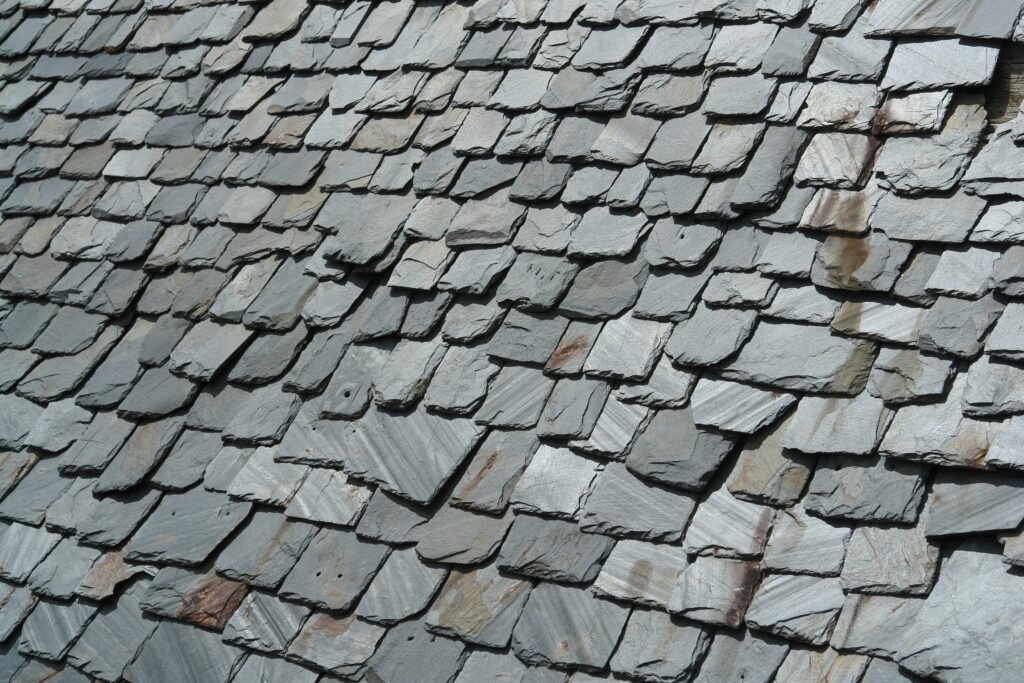
The sound of rain drumming on the roof is a familiar soundtrack to life in Dublin. It’s a comforting rhythm when you know your home is safe and dry, but it can spark a wave of anxiety if you’re not so sure about the integrity of the roof over your head.
You’re likely reading this because your current roof is showing its age, or perhaps you’re building a new home and facing one of its most important decisions. The choice you make between slate and tile will affect not only how much you spend today, but how often you’ll worry about leaks tomorrow. This isn’t just about what looks best; it’s about choosing the right shield against the Irish Sea’s wet and windy personality.
Sum and Substance
- A Lifetime Investment: Natural slate is incredibly durable and can last for over 150 years, often outliving most tile roofs by entire generations.
- Budget Matters: Tiles are the more budget-friendly option upfront, with a typical cost of €10k-€20k, while a slate roof requires a larger initial investment of €15k-€30k.
- Dublin-Proofing Your Home: When it comes to our climate, slate offers superior protection against water and wind, making it a formidable barrier against the elements.
- The Right Look: Slate beautifully complements the character of historic Dublin terraces, whereas tiles offer a world of versatility for modern homes and extensions.
- Weighty Matters: Slate is a heavy material, weighing around 32kg/m², and may require your roof’s structure to be professionally assessed and reinforced, especially in older houses.
The Verdict on Cost and Lifespan for Your Dublin Home
Let’s be honest, for most of us, the budget is where this conversation begins. Natural slate carries a premium price tag because it is, quite literally, a piece of the earth, rock that has been quarried, cut, and carefully shaped by artisans. Man-made tiles, on the other hand, are efficiently produced in factories, which allows for a more accessible price point. For an average semi-detached house here in Dublin, you can expect a natural slate roof to be an upfront investment of between €15,000 and €30,000. For that same home, concrete or clay tiles will typically cost somewhere in the region of €10,000 to €20,000.
But the initial price tells only half the story. The true winner is revealed when you look at value over time. A professionally installed slate roof can easily last from 80 to 150 years. In fact, some of the highest quality slates have been protecting Irish buildings for more than two centuries. It’s the kind of roof you buy once in a lifetime. If you envision your home as a legacy to pass down to your children or grandchildren, slate eventually pays for itself.
Tile roofs have a shorter, though still very respectable, lifespan. Concrete tiles will generally serve you well for 50 years or more, while their clay counterparts can push past the 100-year mark. If you see your current property as a home for the next 20 years rather than a forever home, the lower initial cost of tiles makes perfect financial sense. Insights from Butler’s Roofing Scotland and similar analyses of the Irish market confirm that while slate is a bigger hit to the wallet at first, its incredible longevity often makes the cost-per-year of ownership lower in the long run.
Which Roof Stands Up to Dublin’s Wind and Rain?
In County Dublin, moisture is the constant enemy of our homes. Natural slate is a metamorphic rock forged by immense heat and pressure deep within the earth, which makes it incredibly dense. Its water absorption index is less than 0.4%, meaning water simply glides right off it. This near-impermeability makes slate exceptionally resistant to the kind of frost damage that can plague other materials. When water seeps into a roofing material and freezes, it expands, causing tiny cracks to form. Slate’s density effectively stops this destructive freeze-thaw cycle before it can start.
Tiles behave a bit differently. Both clay and concrete are porous materials, although to varying degrees. While manufacturers apply protective coatings to modern tiles to help them shed water, they can still absorb small amounts of moisture over the decades. This makes them a bit more susceptible to moss and algae, which thrive in our damp Dublin climate. A heavy build-up of moss acts like a sponge, retaining water, keeping the roof constantly damp, and adding extra weight for the timber structure to bear.
Wind resistance is another crucial battleground. The flat, overlapping profile of slate creates a sleek, streamlined surface that wind finds difficult to get a grip on. Interlocking tiles are certainly secure, but a fierce storm can catch the raised edges of profiled tiles more easily than it can lift a flat, heavy slate. That said, as noted by experts at Eurocell, tiles offer excellent fire resistance and are not susceptible to insect damage. The main trade-off is their brittleness; a fallen branch during a storm is far more likely to crack a clay tile than a thick, durable slate.
Matching Your Roof to Your Dublin Property
In architecture, context is everything. Picture a classic red-brick Victorian terrace in Rathmines or Ranelagh; it would look completely out of place with a modern, profiled concrete tile roof. These beautiful old homes were designed for the sleek, dark, and uniform elegance of natural slate. The deep grey, black, and even purple hues of slate provide a rich texture and character that artificial materials find hard to replicate.
According to Eurocell, around 41% of pre-1919 homes in the UK and Ireland still have their original slate roofs. Maintaining this heritage look is often a planning requirement in conservation areas, but it also plays a huge role in preserving the character and resale value of these period properties.
Modern homes and extensions, on the other hand, offer a blank canvas. This is where tiles truly shine, coming in a vast array of colours, from warm terracotta reds and antique browns to sophisticated charcoal greys. They also offer a wide variety of profiles, like the gentle wave shape of pantiles or crisp, flat geometric designs.
If you’re building a contemporary home in Swords or adding a kitchen extension, tiles give you the creative freedom to perfectly match your roof to the render or brickwork. Clay tiles, in particular, can lend a warmth and rustic charm that beautifully softens the lines of a brand-new building.
Weight, Pitch, and Installation in Dublin
Gravity, unlike architects, doesn’t care about aesthetics. Before you fall in love with a roofing material, you have to know if your home’s structure can handle it. Natural slate is heavy, weighing in at approximately 32kg per square metre. The timber frames of older roofs, particularly those that were originally built for lighter materials or have weakened over time, might need structural reinforcement to safely support the weight of a new slate roof. Strengthening a roof frame is a serious job that can add a further €5,000 to €10,000 to your final bill.
Composite or concrete tiles are much lighter, weighing roughly 12kg per square metre. This significantly reduced load often means that no extra structural work is needed, making for a simpler installation. The angle, or pitch, of your roof also plays a key role in your decision. Water runs off steep roofs quickly, but on shallower roofs, it tends to linger. Slate requires a minimum pitch of 25° to ensure that wind-driven rain doesn’t creep up underneath the overlaps. If your new extension has a very low slope, slate is probably not a viable option.
Installation Process and Costs
The cost of labour for these two materials can vary significantly, all down to the complexity of the work involved.
- Slate Installation: Fitting a slate roof is a true craft. Roofers must double-lap the slates, a technique ensuring that every single part of the roof is covered by two layers of stone for complete watertightness. Each slate is then nailed individually. This meticulous process takes time and demands the skills of an experienced tradesperson. You should expect installation rates, including labour and materials, to range from €200 to €350 per square metre.
- Tile Installation: Many modern tiles are designed with clever interlocking systems. They essentially snap together and require fewer fixings per square metre. A skilled crew can often cover a roof with tiles up to 25% faster than they could with slate. This efficiency brings the price down to between €250 and €300 per square metre.
- Low Pitch Options: As pointed out by the specialists at SIG.ie, certain interlocking concrete tiles are engineered to perform on pitches as low as 12.5°, and some clay tiles can work on pitches down to 15°. This flexibility is a real problem-solver for those modern, flat-roofed extensions where slate simply wouldn’t work.
Maintenance and Repair for Dublin Roofs
A little bit of neglect on your roof can lead to a lot of trouble inside your home. The amount of attention your roof will need over the years, however, really depends on the material you choose. For the most part, slate is the install it and forget it option. Its dense chemical composition is naturally resistant to organic growth, which is why you rarely see a slate roof blanketed in thick moss. Repairs are infrequent, but they do require a surgeon’s precision. If a slate cracks in a severe storm, replacing it involves carefully removing the nails hidden beneath the overlapping slates above it. A professional roofer might charge between €50 and €100 to replace a single slate because of the time and skill needed to access and extract it without damaging its neighbours.
Tile roofs, by contrast, benefit from more regular visual check-ups. Because of their interlocking nature, a single tile becoming dislodged can compromise the watertightness of a whole section of the roof. It’s wise to keep an eye on the cement work along the ridge tiles and in the valleys. In Dublin, cleaning moss off concrete tiles is a fairly standard maintenance task to prevent water from damming up and getting underneath them. The good news is that if a tile does break, swapping it out is usually straightforward. A simple repair might only cost €20 to €50 because the individual unit can be lifted out and replaced without disturbing the surrounding tiles as much as with slate.
At Emergency Roofers Dublin, we specialise in these very repairs. Whether it’s re-bedding a loose ridge tile on a modern roof or sourcing a perfectly matching slate for a 100-year-old home, taking prompt action is the key to stopping water damage from spreading to your insulation and ceilings. It’s also worth remembering that insurance companies tend to look favourably on well-maintained roofs; keeping a record of your material choice and any upkeep can sometimes help when it comes to your premiums.
Making a decision this big on your own can feel overwhelming. The wrong choice could lead to future leaks, put a strain on your home’s structure, or result in a roof that just doesn’t suit your home’s character. Emergency Roofers Dublin has the local, hands-on expertise to guide you through the slate versus tile debate, ensuring the investment you make today stands firm against the Irish weather for generations to come. Contact us today for a no-obligation consultation, and let’s secure the best possible protection for your home.
Frequently Asked Questions
For a typical semi-detached house in Dublin, you're generally looking at an investment between €15,000 and €30,000 for a new slate roof. This price range can shift based on the slate’s origin. Spanish slate is a popular and well-regarded mid-range option, while premium Welsh slate commands a higher price due to its exceptional quality and heritage status.
As noted by our colleagues at EB Roofing, the traditional double lap installation method, which is essential for a watertight finish, involves significantly more labour hours than tiling, and this is reflected in the final quote. While the initial cost is higher, you're investing in a 100+ year lifespan, which often means the cost-per-year is actually lower than that of cheaper alternatives.
You can expect to pay somewhere between €10,000 and €20,000 for a new tiled roof on a standard Dublin property. Concrete tiles are at the lower end of this price bracket, making them the most budget-friendly choice. Clay tiles cost a bit more but offer a unique aesthetic and slightly longer lifespan.
The interlocking design of modern tiles allows our teams to cover the roof area very quickly. This reduction in labour time directly translates into a lower overall cost for your project compared to slate. While it’s cheaper today, it’s sensible for homeowners to factor in a potential replacement in 50-60 years, unlike the once-in-a-lifetime nature of a slate roof.
A natural slate roof in Ireland will frequently last between 80 and 150 years, and it's not uncommon for some to last even longer. Slate is a dense, metamorphic rock. It’s naturally resilient and stands up to the chemical pollutants in city air and the salty coastal winds far better than man-made products.
Often, the lifespan of a slate roof is determined by the nails holding it in place, not the slate itself. That's why we always use high-quality copper or stainless steel nails, ensuring the fixings last just as long as the stone. As highlighted by Eurocell, this incredible lifespan makes a slate roof a capital investment that adds to your property's permanence and appeal to future buyers.
Generally, you can expect concrete tiles to last for 50-60 years, while high-quality clay tiles can last for 100 years or even more.
Over time, the protective surface coating on concrete can wear away, making the tile more porous. This can eventually lead to water absorption and cracking during freeze-thaw cycles. The longevity of a tile roof is heavily influenced by regular upkeep, especially keeping it clear of moss, which traps dampness against the tile surface.
For many homeowners, a 50-year lifespan is more than enough. It comfortably covers the duration of a standard mortgage and the time a family might spend in one home.
Yes, for Dublin homes built before the 1940s, slate is almost always the superior choice, both for its appearance and for historical accuracy. Victorian and Edwardian terraces were originally designed to have slate roofs. Installing modern tiles can clash with the building's architectural character and may even breach planning rules in designated conservation areas.
The roof structures of these homes were built specifically to carry the weight of slate. While slate is heavy, the timber spacing and roof pitch were calculated for it from day one.
Older homes were built to breathe. Natural slate allows for a small degree of natural airflow, which helps to manage ventilation in the attic more effectively than some tightly sealed modern tiling systems.
It’s highly likely you’ll need a structural survey first, as slate is considerably heavier than most modern tiling options.
A square metre of slate weighs around 32kg, whereas some modern fibre cement or composite tiles can weigh as little as 12kg/m². If you’re replacing a much lighter roof material (like old asbestos cement sheets or shingles) with natural slate, the existing rafters could bow or even crack under the new, heavy load.
As we mentioned earlier in the article, any necessary reinforcement work could add €5,000-€10,000 to the total project cost. We always recommend getting a structural engineer's professional opinion before you order your materials.
When it comes to low maintenance in Dublin’s damp climate, natural slate is the undisputed winner. Slate's incredibly low porosity means it doesn't provide a welcoming home for the root systems of moss and algae, unlike the rougher surface of a concrete tile.
Because it absorbs virtually no water, slate isn't vulnerable to cracking when the temperature plummets below freezing right after a rain shower. While an individual repair on a slate roof might be more expensive, the need for repairs is generally far less frequent.
Yes, you can, but the range of colours is more subtle and natural compared to the vast, artificial palette available for tiles. Slate comes in beautiful natural variations of grey, charcoal, blue-black, and even a heather purple. These colours are determined by the specific mineral composition of the quarry it came from.
You can choose between a smooth, uniform finish (often seen in Spanish slate) or a rougher, more textured finish (typical of slate from UK and Irish quarries) to perfectly suit your home’s character. These natural variations provide a depth of colour that won't fade over time, unlike the pigments used in some man-made tiles, which can bleach out after decades of UV exposure.
Slate needs a steeper roof pitch to work effectively, typically a minimum of 25° (and ideally 30° or more), while certain tiles can be used on much flatter slopes.
A slate roof relies purely on gravity and the clever overlapping of the slates to keep water out. On a low-pitched roof, strong, wind-driven rain can be forced upwards, underneath the slates. Interlocking tiles are engineered with special channels designed to direct water away, allowing them to function effectively even at very low angles.
As noted by the experts at SIG.ie, specific concrete tiles can be installed on roofs with a pitch as low as 12.5°, making them the only workable option for many modern, low-slope extensions.
Generally speaking, tiles, especially those with a raised profile, can be more vulnerable to wind uplift and impact damage than flat, heavy slate. High winds can get a hold of the curved lip of a profiled tile more easily than they can the flat, streamlined surface of a slate roof.
Clay tiles are quite brittle. Debris from trees during a storm is more likely to shatter a clay tile than it is to damage a dense, robust piece of slate. If tiles are not mechanically fixed to modern standards (using both clips and nails), they can be lifted and displaced by severe gusts more easily than slates, which are secured with double nailing.
Natural slate is widely regarded as the more eco-friendly choice because it requires very little processing. Slate is simply quarried from the ground and split into tiles. This requires a tiny fraction of the energy needed to fire clay tiles in high-heat kilns or to produce the cement for concrete tiles.
While transporting the slate contributes to its carbon footprint (especially if imported), the incredible longevity of the material means that the carbon cost is spread out over 150 years or more.
At the end of its life, slate can be reclaimed and reused on other buildings. Old concrete tiles are typically crushed and used as hardcore fill, which is a form of downcycling.
Absolutely. A new roof is one of the most valuable and impactful renovations you can undertake. A brand-new roof instantly transforms the appearance of a property, sending a clear signal to potential buyers that the home is well-maintained and cared for.
A poor roof survey is one of the top reasons house sales fall through in Dublin. A new roof removes this huge element of risk and uncertainty for a potential buyer. A modern roofing project often includes upgrading the insulation, which can improve your home's BER rating, a major selling point in today's energy-conscious market.
Getting a quote from us is a straightforward process designed to give you complete clarity on the costs and timeline for your project. You can reach out to us easily via the contact form on the Emergency Roofers Dublin website, or simply give our office a call directly to arrange a convenient time for a site visit.
One of our experts will visit your property to carry out a full inspection, checking the structural condition of your roof and taking precise measurements to provide an accurate estimate. You will receive a detailed, easy-to-understand breakdown of the costs for both material options, empowering you to make the best decision for your budget, your home, and your future plans.


