
There’s a special charm to owning an older home in Dublin, but with that character comes the story of its construction history. For decades, from the post-war building boom right up to the turn of the millennium, builders across Ireland often used materials that we now know are hazardous. The very roof keeping the Irish rain out could be harbouring asbestos.
This mineral was once praised for being fire-resistant and tough, but today we understand the serious health risks that come from breathing in its tiny fibres. This isn’t a reason to panic, but it is a reason to be aware. Knowing how to spot these materials early means you can manage your home safely and plan for any necessary work without being caught off guard by unexpected costs or health worries.
Essential Lessons
- Your Home’s Age is a Big Clue: If your home was built or had its roof replaced between the 1950s and the late 1990s, there’s a higher chance it has asbestos roofing materials.
- Telltale Visual Signs: Keep an eye out for colours that have faded unevenly, blotchy grey or white patches, and crater-like dimples on the surface of slates or corrugated sheets.
- You Can’t Be Sure by Eye Alone: What you see are just clues. Only a professional lab test can tell you for sure whether you’re looking at asbestos or a harmless fibre cement lookalike.
- Don’t Disturb It: Never try to scrape, drill, power wash, or break tiles you think might contain asbestos. Any disturbance can release dangerous fibres into the air.
- When in Doubt, Call the Pros: Emergency Roofers Dublin can safely inspect your roof and work with licensed specialists to arrange for testing and, if needed, safe removal.
Is Your Dublin Roof from the Asbestos Era?
The age of your home is your biggest clue when it comes to potential hazards. If it was built or had a major renovation before 2000, the materials used warrant a second look. Asbestos-containing materials (ACMs) were a go-to choice in Irish construction, particularly from the 1950s through the late 1970s. Research by Sean McFadden at the Dundalk Institute of Technology points out just how widespread asbestos cement roofing was in Ireland during this time, and a lot of it is still up there today.
A complete ban on using asbestos in new buildings didn’t come into force until around 1999 or 2000. This means any Dublin property built or re-roofed before the early 2000s could have it. It’s wise to treat any older roofing materials with caution until you know exactly what you’re dealing with.
Check the Age of Your Roof First
You can get a better sense of the risk by figuring out when your roof was installed. This information is often tucked away in planning records, your Building Energy Rating (BER) certificate, or reports from previous surveyors. If you can’t find any paperwork, the safest approach is to assume the material is suspect until it’s been tested.
Generally, the risk breaks down into three periods:
- Post-2000: You’re likely in the clear. Roofs built after the ban are generally free of asbestos.
- 1980–2000: This is a medium-risk window. Asbestos use was declining, but old stock was sometimes used up. It’s smart to get a professional assessment, especially if the roof is original.
- Pre-1980: This is the high-risk era. This was the peak period for asbestos-cement products. If your roof dates from this time, we strongly recommend a professional assessment.
What Asbestos Roof Tiles and Slates Look Like
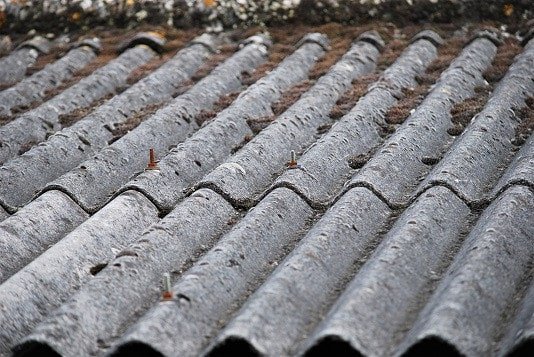
You might be able to spot potential asbestos by looking for certain signs of wear and tear, but remember, these are just clues, not a diagnosis. Asbestos-cement slates often started out black but, after decades of weather, fade to a blotchy, pale grey or blue-white colour with a mottled look. As they get older, you’ll start to see the surface breaking down. You might notice dimpling, small craters, or chipped corners where the cement that binds the fibres has started to fail.
Corrugated asbestos-cement sheets, which you’ll often see on garages and sheds around Dublin, have a very distinct rough, fibrous texture. They are also magnets for moss and lichen. According to industry experts at Roofing Megastore, some artificial slates were made with asbestos cement right up until non-asbestos versions came on the market around 1984. By the late 80s, asbestos slates were rarely being specified for new jobs, but there was some overlap as old stock was used up.
See how your roof compares to these common traits:
- Colour Change: Asbestos-cement tiles often fade from black to a patchy pale grey or blue, while modern tiles tend to fade more evenly.
- Surface Texture: Asbestos materials can become dimpled or cratered over time, with corners that chip easily. Newer materials usually keep their sharp edges and smoother finish for longer.
- Moss Growth: The rough surface of old asbestos cement is a perfect home for moss, so heavy growth is very common compared to the smoother surfaces of modern fibre cement.
How to Confirm Asbestos in Your Roofing
While your eyes can give you a good idea, you can’t rely on a visual check alone. Many perfectly safe fibre-cement and concrete tiles made after the ban were designed to look just like the older asbestos versions. The only way to be 100% sure is to have a professional inspection and a lab analysis. Guessing can lead to two bad outcomes: either you pay for an expensive removal of perfectly safe materials, or worse, you unknowingly expose your family to dangerous asbestos.
Checking for Manufacturer Marks and Batch Codes
Sometimes, manufacturers stamped codes on the underside of their tiles, which can offer a hint about what they’re made of. Tiles marked with AC typically stand for asbestos cement. On the other hand, marks like NT (for non-asbestos technology) or CE/C usually mean you’re looking at a safe, modern fibre cement product.
However, you can’t count on finding these marks. Only about 1 in every 20 tiles was marked with ‘AC’ or ‘NT’ back in the day. More importantly, trying to find these marks is a risky move. You should never break, sand, or drill a tile to look for a code. Doing that can release the very fibres you’re trying to avoid. A professional from Emergency Roofers Dublin can safely lift a tile to look for these marks without damaging the material or risking your health. If there’s no mark, you have to assume the risk is still there.
Professional Asbestos Testing in Dublin
The only way to know for certain is to have a small sample taken by a competent professional and analysed in a lab. At Emergency Roofers Dublin, we can flag suspicious materials during a routine roof inspection. If we think there’s a chance of asbestos, we’ll recommend you bring in a specialist asbestos surveyor to take a sample.
This is a carefully controlled process. The surveyor uses personal protective equipment (PPE) to make sure no fibres get into the air or your home. The sample is then sent to a lab to find out exactly what type of fibre it contains. Most roof tiles used chrysotile (white asbestos). Here in Dublin, having a single sample taken and tested usually starts from around €100 to €200. It’s a small price to pay for the peace of mind you need to make safe decisions about major work on your home.
When Asbestos Roof Tiles Become a Danger
The reason we talk about asbestos is that its fibres are microscopic, and if you breathe them in, they can get stuck in your lungs and lead to serious diseases like asbestosis, lung cancer, and mesothelioma. The tricky thing is that these conditions often don’t show up for decades after you were first exposed. It’s crucial to understand that asbestos roof tiles are generally low risk as long as they are intact and left alone. The fibres are locked tightly inside the hard cement.
The danger level shoots up dramatically when the material gets damaged. Cutting, drilling, breaking, or power-washing these tiles is what releases the fibres into the air. Asbestos-cement products are typically made of about 10–15% asbestos fibres (usually chrysotile), with the rest being cement. When that cement starts to break down from years of weathering or physical damage, the fibres can escape.
Ask yourself these questions about your property:
- Condition: Is the roof flaking, with layers peeling off, or are there bad cracks?
- History: Has anyone sanded, cut, or drilled into the surface recently?
- Debris: Do you find bits of roofing material in your garden or on the driveway after a storm?
If you answered yes to any of these, keep your family and pets away from the area and call a professional for advice right away.
Common Hotspots for Asbestos Roofing on Dublin Properties
Knowing where to look can help you get a full picture of the potential risk around your home. Asbestos was an incredibly versatile material, so if you find it in one place, like an outbuilding, there’s a good chance it was used somewhere else on your property during the same period.
Garages, Sheds, and Outbuildings
Garages and garden sheds are the most common places you’ll find asbestos roofing in Dublin. Corrugated asbestos-cement sheets were the standard, affordable solution for these structures from the 1960s through the 1970s. They were cheap, tough, and easy to put up. If you have a grey, corrugated roof on a shed that’s been there for forty years or more, it’s best to assume it contains asbestos.
Main House Roofs and Extensions
On the main house, pay close attention to extensions, porches, and certain types of homes. Asbestos-cement artificial slates and flat tiles were very common on bungalows built between the wars and in the mid-20th century. They were also a popular choice for re-roofing jobs in the 1960s and 1970s. One specific clue for some older bungalows in Dublin’s outer suburbs is the red diamond-pattern asbestos tile. These very distinctive tiles are a signature of that particular building era.
Roofline Components
It’s not just the roof itself you need to think about. Builders often used asbestos-containing cement fibre boards for soffits and fascia boards, which is the boxing you see under the overhang of your roof. Even your gutters and downpipes could be affected. Some older rainwater systems were made from asbestos cement. These parts are right at the roofline and can release fibres just above head height if they start to crack or crumble.
What to Do (and Not Do) if You Suspect Asbestos on Your Roof
Your safety comes first. If you think your roof might have asbestos, how you act will determine the level of risk. As a homeowner, there are some very important things you must do, and not do, to avoid making the situation worse.
Actions to Avoid at All Costs
First, don’t climb on the roof. Walking on old asbestos cement sheets is incredibly dangerous, not just because of the fibres, but because the material gets very brittle with age and you could fall through. Absolutely never cut, drill, sand, or break any material you suspect contains asbestos. Don’t use any power tools on these surfaces.
And this is a big one: do not jet-wash an asbestos-cement roof. It might seem like a great way to get rid of moss, but the high-pressure water will strip off the surface layer and send a cloud of asbestos fibres into the air and all over your garden. Finally, don’t attempt a DIY removal. Breaking up tiles to fit them into a bin bag is one of the most hazardous things you can do.
Safe First Steps to Take
Keep children, pets, and anyone vulnerable away from the area, especially if you can see debris on the ground. If you have a hatch to your attic, it’s best to stay out of it if you think the underside of the roof is breaking down or if you see dust and debris on the insulation. Your next step should be to call a professional roofing contractor like Emergency Roofers Dublin. We can give you an expert assessment without putting you or your family in any danger.
Your Options for Asbestos Roofs in Dublin
Getting confirmation that you have asbestos doesn’t automatically mean you’re facing a huge and immediate removal bill. What you do next depends on the condition of the roof and your long-term plans for your home.
Management in Place
If your asbestos roof is in good condition, well-sealed, and isn’t being disturbed, the safest option is often just to leave it alone. This approach is called management in place. It involves making a note of where the asbestos is and having it professionally checked every few years to make sure it hasn’t started to deteriorate.
Encapsulation or Over-cladding
For a roof that’s starting to show its age but is still structurally solid, encapsulation is a good middle-ground solution. This involves having a specialist coating painted on that seals the surface and locks in all the fibres. Another option is to have an over-roofing system installed on top of the existing one, which shields the asbestos from the weather. These jobs must be done by professionals, but they can be a great solution if a full removal isn’t practical for you right now.
Full Removal and Replacement
This is the only way to get rid of the problem for good. If your roof is leaking, falling apart, or if you’re planning to install solar panels or convert your attic, the asbestos has to go. Licensed contractors will carefully remove the old roof and dispose of it at a special facility. We can then replace it with modern, safe materials like non-asbestos fibre-cement slates, concrete tiles, or metal roofing.
When you’re getting quotes for this, make sure they break down the costs clearly. You’ll want to see separate prices for the removal, the licensed disposal, and the installation of your brand-new roof.
Why Trust Emergency Roofers Dublin with Your Asbestos Roofing Project
Dealing with an asbestos roof isn’t a job for a general builder. It takes a real understanding of older building materials, safe working methods, and Dublin’s local regulations. Not every builder has the specialised training or insurance to handle these hazardous materials correctly.
At Emergency Roofers Dublin, we have years of experience inspecting older roofs across the county, where asbestos-cement is a common sight. We know how to tell the difference between a harmless mossy slate and an asbestos tile that’s starting to degrade. We can identify materials that need testing, advise you on bringing in licensed asbestos specialists for the removal, and are fully equipped to install a modern, compliant new roof, gutters, and soffits once the hazardous material is safely gone. Contact us for a roof condition survey, help with a leak on your older property, or a comprehensive quote for a full roof replacement.
Frequently Asked Questions
Asbestos roof tiles usually look like flat, artificial slates or corrugated sheets. Over the years, they tend to fade from their original black or dark grey to a blotchy, pale grey or even a blue-white colour. You might notice a mottled pattern where the top layer of cement has worn away.
Experts at Homebuilding & Renovating point out that you'll often see signs of wear and tear, like dimpling, little craters, or chipped corners, which helps set them apart from newer, smooth-edged slates. If you see a lot of moss on a garage roof that looks rough and fibrous underneath, that’s a very strong clue it could be asbestos cement.
If your Dublin home was built or had a major roof renovation between the 1950s and the late 1990s, there's a good chance it contains asbestos roofing. Its use was heaviest from the 1950s through the late 1970s. While the full ban on asbestos in construction materials in Ireland didn't happen until around 2000, its use dropped off quite a bit after 1980. The Health and Safety Authority (HSA) advises that any building constructed before 2000 should be considered suspect until proven otherwise, so homeowners of 20th-century properties should always be cautious.
As long as they are in good condition and left completely alone, intact asbestos roof tiles pose a very low risk. This is because the asbestos fibres are trapped tightly within the cement. The UK's Health and Safety Executive (HSE) confirms that asbestos-cement products are generally safe as long as they aren't damaged or disturbed.
The danger comes when the tiles are broken, drilled, sanded, or become very weathered, as this is what releases the microscopic fibres that can cause lung disease. So, just having an asbestos roof isn't an immediate health crisis, as long as you monitor its condition and don't interfere with it.
Legally, a homeowner in Ireland might be able to remove small amounts of asbestos cement from their own property, but it's strongly advised against because of the serious health risks and strict disposal rules. If you accidentally break a sheet while trying to remove it, you can release a high concentration of fibres.
Plus, you can't just put this material in your regular bin or a standard skip; it has to be taken to a specialist hazardous waste facility. Organisations like Safe Home Ireland warn that DIY removal often leads to accidentally contaminating your garden or even your home. In the long run, it's much safer and often more cost-effective to hire a licensed professional who has the right safety gear and knows how to dispose of it correctly.
In Dublin, the cost for a professional to come out, take a sample, and get it tested in a lab typically ranges from €100 to €200 for a single material type. This price usually includes the surveyor's visit, the safe collection of the sample, and the official lab certificate. The cost might go up if you need multiple samples taken or if the roof is difficult to access. Investing in this test is a smart move before starting any renovation, as accidentally disturbing asbestos can lead to cleanup costs that run into the thousands.
The main difference is the type of fibre used to make them strong. Old asbestos slates used chrysotile (white asbestos) fibres, while modern slates use safe, organic or synthetic fibres. To the naked eye, modern slates made after 2000 usually have a smoother finish, cleaner edges, and tend to fade more evenly over time compared to the blotchy, cratered look of old, weathered asbestos slates. According to suppliers like Cladco Profiles, manufacturers generally stopped using asbestos in slates by the mid-1980s, but because the modern versions were designed to look identical, you can't rely on looks alone to tell them apart.
If you see an AC stamp on the underside of a roof tile, it stands for Asbestos Cement. This is a clear sign from the manufacturer that the product contains asbestos. On the flip side, a stamp that says NT (for Non-asbestos Technology) or C usually means it's a newer, asbestos-free fibre-cement product. However, as noted by Roofing Megastore, only a small number of tiles (about 1 in 20) were ever marked this way. So, if you don't see an AC stamp, it doesn't guarantee the tile is safe; it just means it wasn't one of the marked ones or the stamp has worn off.
You should never, ever power wash an asbestos roof. The force of the water jet will strip the protective outer layer of cement and blast asbestos fibres into the air, spreading them all over your property. This creates a serious contamination risk. Painting is a possibility, but it must be done with great care. You can't scrape or sand the roof to prep the surface. There are special encapsulation paints designed to seal the fibres in, but this is a job best left to a professional to ensure the roof isn't damaged in the process.
Reputable installers will generally refuse to put solar panels directly onto an asbestos roof. The process requires drilling into the roof to secure the panels, which would release dangerous asbestos dust. Additionally, these old roofs can be very brittle, and the weight of the panels could cause them to crack.
Most solar companies in Dublin will tell you that the roof covering needs to be replaced with a modern material before they will begin a solar installation. This protects the safety of the workers and homeowner and ensures the roof is structurally sound.
If you have concerns, your first call should be to a trusted roofing contractor who has experience with older Dublin homes, like Emergency Roofers Dublin. We can carry out a visual inspection and give you a condition report. If we think testing is needed, we can refer you to a specialist asbestos surveyor. For any removal work, it's vital to use a competent contractor. The HSA advises that even though removing asbestos cement sheets isn't in the highest risk category, it still demands proper training and safety measures to prevent exposure.
The key signs that an asbestos roof is breaking down are visible cracks, layers of the slate flaking off (delamination), and a lot of roof debris collecting in your gutters. From inside your attic, you might see dusting on the underside of the roof. This happens as decades of rain and frost cause the cement binder to break down, making the surface powdery. If you start finding broken pieces of slate on the ground around your house, it's a clear sign the roof is becoming brittle and losing its strength, which increases the risk of fibres being released.
When an asbestos roof is replaced, contractors will typically use modern materials like fibre-cement slates, concrete interlocking tiles, or metal roofing sheets. Modern fibre-cement slates are a great option because they look very similar to the original asbestos tiles, which helps preserve the classic look of a Dublin home without the health risks. Metal roofing is a popular choice for replacing corrugated asbestos sheets on garages and sheds. These modern materials are more durable, work better with insulation, and meet all current Irish building regulations.
No, not all corrugated roofing is asbestos. While asbestos cement was the standard for corrugated sheets before the 1980s, today's versions are made from safe materials like asbestos-free fibre cement, metal, or bitumen.
One way to tell the difference is to look at a broken edge; non-asbestos sheets often have visible reinforcing plastic strips or organic fibres. However, because it can be hard to tell old asbestos sheets from newer fibre-cement ones just by looking, experts like EBRoofing advise that you should treat any grey corrugated sheet on an older building as if it contains asbestos until a lab test proves it doesn't.

