That sinking feeling when you spot water dripping into your fireplace or a damp stain spreading across your chimney breast is a uniquely awful one. You know the Irish weather won’t be giving you a break anytime soon, and that dark patch is only going to get bigger. For any Dublin homeowner, dealing with a leaking chimney has to be a top priority. The combination of our famous wind-driven rain and older brickwork can quickly turn a few small cracks into a massive structural headache. We see these problems every single day and know exactly how to solve them, making sure your home stays warm and dry, no matter what the forecast throws at us.
Important Notes
- Those ugly brown ceiling stains and that damp, musty smell are your biggest clues that your chimney has an active leak.
- Dublin’s constant rainfall, averaging 730–800 mm a year, is incredibly hard on porous bricks and mortar, speeding up any damage.
- In our experience, failed or damaged lead flashing is the number one culprit behind water getting into Irish homes.
- A proper diagnosis often means getting up on the roof or using a special CCTV camera to find the precise spot where water is getting in.
- Real, long-term solutions mean properly replacing lead flashing, repointing with the right kind of mortar, or relining the flue from the inside.
Warning Signs Your Chimney is Leaking
The Telltale Signs of a Chimney Leak Inside Your Home
Catching a leak early can save you a world of money and stress. Those brownish or yellow water stains on the ceiling or walls around your chimney breast are the most obvious red flag. You’ll likely notice they get worse after a heavy downpour of Dublin rain. You might also spot damp patches that feel cool to the touch, see paint peeling away, find plaster blistering, or notice mould starting to grow along the chimney, especially in an upstairs bedroom or the attic.
A persistent musty, damp smell, particularly after a storm, is another key symptom you shouldn’t dismiss. While a tiny, stable, coin-sized stain might just be a ghost of an old, fixed problem, a stain that grows by several centimetres every time it rains heavily is a sure sign of an active, worsening leak. That’s a problem that needs urgent attention.
Checking for Chimney Damage from the Outside
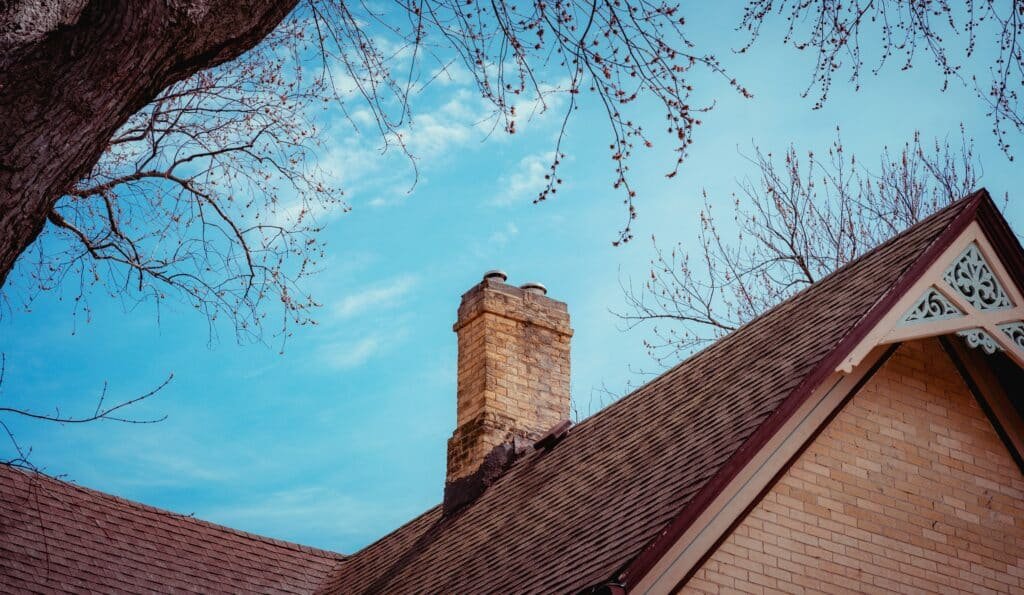
You can often spot serious problems just by doing a visual check from the safety of the ground. It helps to use a pair of binoculars. Look for any obvious damage to the chimney stack itself. The key things to watch out for on the outside are cracked, loose, or missing pieces of lead flashing right where the chimney joins the roof. Scan the brickwork for spalled (flaking or crumbling) brick faces, visible cracks in the cement layer on top (the chimney crown), or mortar joints that look open and sandy.
Even a loose or missing chimney pot or cowl is a problem, as it basically leaves a hole for rain to pour directly down into the flue. This constant stream of water isn’t just a cosmetic issue. It can lead to serious timber rot in your roof structure. Once damp timber has a moisture content that stays above 20%, it becomes a ticking time bomb for rot. Damaged masonry also heightens the risk of flue failure and dangerous carbon monoxide leaks if the chimney is still in use.
Why Dublin’s Weather is Your Chimney’s Worst Enemy
How Constant Rain and Wind Accelerate Chimney Damage
Our local climate puts chimneys through a relentless cycle of moisture. Dublin’s significant annual rainfall, which averages over 730–800 mm per year, creates an incredibly harsh environment for brick and mortar. The combination of frequent wind-driven rain and the rapid freeze-thaw cycles we experience causes masonry to break down much faster than it would in a drier part of the world. A chimney here in Dublin has to endure far more days of driving rain each year than one in the Mediterranean, which is why leaks are so much more common here.
Porous brickwork is a major weak spot. During a bad storm, a standard masonry chimney, if it isn’t properly sealed, can absorb a litre or more of water every single day straight through its bricks and mortar.
The Common Failure Points on Irish Chimneys
From our experience, certain parts of a chimney tend to fail long before others. Poorly installed or simply old lead flashing is one of the most common reasons for roof leaks around chimneys in Irish homes. If you live in one of Dublin’s beautiful older houses, especially properties built before the 1970s with solid masonry chimneys, you’re at a much higher risk of water getting in. Over the decades, the original bricks and mortar become incredibly absorbent. Cracked chimney caps or crowns and worn-out flue liners are the other primary culprits we see all the time.
Your Step-by-Step Guide to Finding the Chimney Leak Source
A Safe Inspection Checklist for Homeowners
You can do a bit of detective work yourself before you pick up the phone to call a professional.
Ground-Level Visual Check
Grab those binoculars again and inspect the chimney stack, flashing, and pots from the safety of your garden or driveway. Look closely for any visible cracks, gaps, or pieces that are missing. Please, do not try to climb onto the roof yourself.
Internal Attic Inspection
The perfect time to check for a leak is during or right after a period of heavy rain. Safely get into your attic and, using a good torch, carefully inspect the wooden timbers right next to the chimney stack. Look for dark, damp patches on the wood, any rusted nails, and, of course, any visible drips. Make a note of exactly where the water seems to be coming from: the front, back, or sides of the chimney. This information is incredibly helpful for pinpointing the source of the problem.
When to Call Emergency Roofers Dublin for a Professional Diagnosis
Any inspection that needs to happen at roof level absolutely must be left to professionals because of the very real safety risks involved. A professional roofer has the training and equipment to get onto your roof safely and inspect all the critical failure points up close. We use more advanced diagnostic methods, like controlled water tests, to accurately figure out if the leak is coming from the flashing, the crown, or just porous brickwork.
For problems hidden inside the chimney, a special CCTV camera inspection can reveal hidden cracks and failures in the flue liner that are impossible to spot from the outside. It’s worth knowing that a huge percentage, somewhere between 50% and 70%, of all those mystery roof leaks that show up near a fireplace are ultimately traced back to a problem with the chimney.
How to Permanently Seal Your Leaking Chimney
Chimney Flashing Repair & Replacement
Lead flashing is the crucial waterproof barrier that seals the join where your chimney pokes through your roof. When that flashing fails, wind-driven rain gets forced underneath your tiles or slates. Small splits can sometimes be sealed up as a short- to medium-term fix, but this kind of patch-up job often only buys you 6 to 24 months of relief before it starts leaking again.
For a permanent, worry-free solution, any flashing that is badly corroded or was poorly installed in the first place must be completely stripped out and replaced. This involves carefully cutting new channels (or chases) into the mortar joints, usually about 25–35 mm deep. We then fit brand new lead, typically a robust Code 4 or 5 lead that’s tough enough for the Irish weather, and make sure it has proper overlaps of at least 75 mm to handle the kind of driving rain we get in Dublin.
Repairing and Waterproofing the Chimney Crown and Cap
The chimney crown is the cement surface right at the very top of the stack, and it takes the full brunt of the weather. When cracks develop in the crown, they act like a funnel, channelling water directly into the core of your chimney. Hairline cracks can sometimes be sealed with specialist waterproof crown coatings. However, severely damaged crowns need to be completely rebuilt with a proper slope so that they actively shed water away from the flue opening.
Any damaged or loose chimney pots should be properly re-bedded in mortar or replaced. Fitting a good quality cowl not only helps to reduce the amount of rain entering the flue but can also prevent birds from nesting and can even improve your chimney’s draught.
Repointing and Sealing Porous Chimney Brickwork
Crumbling mortar joints act just like a sponge, soaking up rainwater and drawing it deep into the chimney’s structure. Repointing is the process of carefully grinding out the old, decayed mortar and replacing it with a fresh, durable mix. For older Dublin properties, we often need to use lime-based mortars to ensure the chimney can still breathe properly. Any bricks that are spalled or fractured also have to be replaced.
Once the repairs are done, we can apply a breathable, vapour-permeable masonry water repellent. This is a clever treatment that stops rain from soaking into the brickwork but still allows the chimney to breathe and release any trapped moisture from within. You must avoid non-breathable paints at all costs, as they trap water inside, leading to even worse damage. An effective repointing and waterproofing job can reduce how much water your chimney masonry absorbs by as much as 80–90%.
Addressing Internal Flue and Condensation Leaks
It’s important to know that not all damp patches are caused by rain. A defective or non-existent flue liner can allow condensation from your stove or open fire to soak through the chimney walls from the inside out. This is a really common issue in older chimneys that have been paired with modern, high-efficiency stoves.
In these cases, relining the chimney with a modern stainless steel flexible liner or a new clay liner is often the only way to solve condensation-related damp for good. It’s also worth noting that after a chimney fire, Irish chimney experts stress that relining is absolutely vital for safety before you even think about using the chimney again.
Chimney Leak Repair Costs in Dublin
Factors That Influence the Final Price
The final cost to get your leaking chimney fixed can vary quite a bit depending on several factors. The main things that affect the price are the height and accessibility of your chimney (does it need scaffolding to be reached safely?), the extent of the work required (is it a simple patch-up or a full rebuild?), and the condition of the roof tiles immediately surrounding it.
Indicative Costs for Chimney Repairs in Dublin
These figures are just ballpark examples to help you get a sense of what to budget for. For a precise and reliable quote, your best bet is to contact Emergency Roofers Dublin for a free, no-obligation inspection.
- Basic leak investigation and minor sealing: Could start from around €150–€300.
- Full lead flashing replacement on a typical semi-detached house: You’d be looking at approximately €400–€800+.
- Repointing a chimney stack: This might start around €350–€700+, depending on the size and ease of access.
- Extensive chimney rebuilding or a combination of major repairs: The cost here can go above €1,000, particularly if scaffolding is required.
Remember, getting a timely chimney repair is far, far cheaper than dealing with the secondary damage a leak causes. The hidden cost of fixing timber rot, replacing ruined ceilings, and replastering walls can easily add hundreds or even thousands of euros to the final bill.
Why Choose Emergency Roofers Dublin for Your Chimney Repairs
Local Experts in Dublin Roofing and Chimney Services
We’re not some faceless national company; we specialise in roofing, guttering, and chimney services right here in our community in Dublin. Our team truly understands the specific challenges our local weather throws at our homes and the common problems we find in Dublin’s housing stock, from period red bricks to more modern builds. We offer a complete, full-service approach, handling everything from emergency leak call-outs to detailed inspections, lead flashing replacement, repointing, and crown repairs.
We only use quality materials that are specifically designed to stand up to our wet and windy conditions, and we always focus on providing long-term solutions that stop leaks from coming back. Get in touch with Emergency Roofers Dublin for a professional assessment before the next bout of heavy rain can cause any more damage.
Commonly Asked Questions
The very first things you're likely to notice are damp stains appearing on the ceiling or walls near your fireplace. Internally, this moisture usually shows up as an ugly brown or yellow patch on the chimney breast, peeling wallpaper, or a very distinct musty smell in the room. These signs almost always get worse right after heavy rain or the prolonged storms that are so common in Ireland.
Ignoring these early visual warnings allows water to seep deeper into your home's structure. This can lead to timber decay and plaster damage, which are always significantly more expensive to fix than the original leak itself.
Minor repairs can often cost between €150 and €300, while more substantial work will naturally run higher. A basic sealing job or an initial investigation will be at the lower end of that price range. However, more comprehensive work like a full lead flashing replacement typically ranges from €400 to €800, and a complete stack repointing or rebuild can go over €1,000, especially if scaffolding is needed for safe access.
It's best for homeowners to think of these costs as a wise investment. Spending €300 to address a leak now can prevent thousands of euros in damage to your roof timbers and internal ceilings down the line.
Generally speaking, trying to seal a chimney leak yourself is unsafe and the results are often ineffective in the long run. Chimney repairs mean working at height, which poses very serious safety risks if you're not trained and properly equipped. What's more, using the wrong type of sealant, like a non-breathable paint, can actually trap moisture inside the bricks, making the decay worse through our winter freeze-thaw cycles.
Professional roofers use the correct breathable water repellents and proper lead-working techniques. Getting professional help ensures the repair will stand up to Dublin’s wind-driven rain without harming your chimney’s structural integrity.
This specific pattern almost always points to a problem with saturation or wind-driven rain getting in. During light rain, the water might just be absorbed by the brickwork and then evaporate without you ever noticing. But heavy or sideways driving rain can completely saturate porous bricks or force water up and under a piece of lifted flashing. It suggests the issue is volume-dependent, like a saturated stack or a gap that only lets water in when there's high wind pressure.
This specific symptom is actually really helpful for us professionals when diagnosing the fault. It helps us differentiate a masonry saturation issue from something like a constant plumbing leak or an internal condensation problem.
Flashing is the metal seal that connects your chimney to the rest of your roof. In Ireland, it's usually made of lead, and its job is to bridge the gap between the brick stack and your roof tiles. Leaks happen when the lead splits due to old age, gets lifted up during high winds, or was badly installed in the first place without enough of an overlap for your roof's pitch.
Failed flashing is, without a doubt, the leading cause of chimney leaks. Replacing it properly with new Code 4 or 5 lead ensures you get a durable, watertight junction that can handle thermal expansion and contraction for decades to come.
A professional, properly done repair should last for decades, not just a few months. Correctly installed lead flashing can last for 50 years or even longer, while high-quality repointing and waterproofing can protect the masonry for 20 to 30 years. Quick fixes using things like silicone sealants might only last 6 to 12 months before they fail and the leak returns.
Investing in high-quality materials and professional workmanship provides the best possible return on your investment. It minimises the stress and expense of having to call someone out for recurring maintenance.
Coverage usually depends on the cause being a specific storm event. Most Irish insurance policies will cover damage that's a direct result of a distinct storm, but they may exclude any damage that they put down to general wear and tear, or a lack of maintenance. So, if the leak is because of old, crumbling mortar, the cost of the repair itself is usually your responsibility, although the resulting internal ceiling damage might be covered.
It’s a good idea to review your policy wording carefully, especially what it says about roof maintenance. Keeping records of regular chimney inspections can really help support a claim if storm damage does happen.
In simple terms, repointing fixes the joints between the bricks, while rebuilding replaces the actual structure. Repointing involves grinding out the old, failed mortar and filling the joints with a fresh, durable mix. This is a suitable repair when the bricks themselves are still in good condition. Rebuilding becomes necessary when the bricks have started to spall (crumble) or if the whole stack is leaning and structurally unstable.
Think of repointing as a maintenance task, whereas rebuilding is a major structural renovation. A professional survey will tell you if the bricks are sound enough to just need a simple repoint.
Yes, a cowl is something we highly recommend for protection against our weather. An open chimney pot essentially acts as a big funnel for rain. A cowl fits over the opening, preventing most of the water from getting in while still allowing smoke to escape freely. It also has the added benefit of stopping birds from nesting in your chimney, which can cause dangerous blockages and lead to carbon monoxide buildup.
Installing a cowl is a very cost-effective upgrade. It immediately reduces the amount of water entering your flue system during Dublin’s many rainy days.
Here’s a simple rule of thumb: condensation happens when the chimney is in use, while rain leaks happen when it's wet outside. If you notice moisture appearing mainly when you have a fire lit or the stove is running, it’s very likely that condensation is forming inside a cold, unlined flue. If the damp patches appear or get bigger during storms, even when the fire is out, the cause is definitely rain getting in from the outside.
Knowing the difference is vital for getting the right fix. Rain leaks need roofing repairs, whereas condensation problems require a flue liner to be installed.
The crown is basically the cement lid that sits on the very top of the chimney stack. Its job is to seal the top of the brickwork, protecting it from the weather and sealing around the flue liner. If the crown cracks or doesn't have a proper overhang (a drip edge), water will flow directly into the chimney cavity or run down the face of the bricks, saturating the masonry below.
Crown repairs are critical. A cracked crown is often the silent source of major leaks that, from the ground, can look just like a flashing failure.
Yes, it poses both serious structural and health risks. Structurally, cracks can weaken the stack to the point where it could collapse during high winds. From a health perspective, cracks in the flue can allow deadly carbon monoxide to leak into your living areas instead of safely venting outside.
Any visible cracks in your chimney require an immediate professional assessment. The risk to your family's safety far outweighs the cost of any repair.
Getting an annual inspection is the industry standard and just plain common sense. Checking your chimney before winter really sets in allows you to catch any minor flashing lifts or small mortar cracks before they have a chance to turn into major leaks. This is especially important here in Dublin because of the aggressive freeze-thaw cycles our masonry has to endure.
Regular maintenance is the best way to extend the lifespan of your roof. It prevents the nasty shock of sudden, expensive emergency repairs right in the middle of a storm.