That sinking feeling you get when you spot a damp patch on your ceiling is a unique kind of financial dread. You’re not just seeing water damage; you’re picturing your hard-earned savings swirling down the drain. The first question that pops into your head isn’t about the technical fix, it’s about the bottom line. For homeowners in Dublin, this is a particularly tough spot. You’re dealing with a unique market where labour shortages and material costs create a pricing landscape unlike anywhere else in the country. To get back in control, you need real numbers, not vague guesses.
Main Points
- In Dublin, you can expect most full roof replacements to fall somewhere in the €5,000 to €15,000 range.
- The final price really comes down to three things: the size of your roof, the materials you choose, and how complex the job is.
- It’s a fact of life that labour rates in Dublin are higher than in most other Irish counties.
- Always give yourself a buffer. A 10-15% contingency fund for any unexpected structural issues is a smart move.
- Think about repairing your roof only if the cost is less than 20-30% of what a full replacement would be.
What a New Roof Really Costs in Dublin
For most Dublin homeowners, a full roof replacement is going to land somewhere between €5,000 and €15,000. Think of this as a starting point. Dublin’s high demand and logistical challenges generally mean you’ll pay more for both labour and materials than in many other Irish counties. As the folks at Selfbuild point out, where you live has a huge impact on the final numbers.
For a smaller slate roof, around 90 m², you’re typically looking at €2,000 to €5,000. A medium-sized roof, spanning 100 to 200 m², will often be in the €5,000 to €10,000 bracket. If you have a larger home with a roof over 200 m², the costs can climb into the €10,000–€30,000 territory. Companies like Emergency Roofers Dublin work out these prices per square metre and then fine-tune them based on the specific challenges of your property.
The Core Factors Driving Your Dublin Roofing Quote
When a roofer prepares your quote, they aren’t just pulling numbers out of thin air. There’s a clear logic behind it, driven by three main factors: the total area of your roof in square metres (m²), your choice of roofing material, and the complexity of its design. A useful formula to keep in your back pocket is: Estimated roof cost = Roof area (m²) x Material cost per m² x Complexity factor (usually between 1.0 and 1.25). As DPC Construction highlights, having a grasp of this formula helps you understand the quotes you receive and spot if anything seems off.
Calculating Your Roof Area
At its heart, a roofing job is priced on the sheer footprint of the work. Without knowing the size, it’s impossible to get an accurate estimate. A typical small house roof in Dublin is about 80–100 m². Medium-sized homes usually have roofs ranging from 100–200 m², and you’ll find that large, executive-style homes have roofs that go well beyond 200 m².
If your roof has a complex shape with features like hips, valleys, or dormers, that can add another 10–25% to the effective area. This isn’t just about covering more space; it’s about the extra time spent cutting tiles and the unavoidable material waste that comes with it. When you get a quote from Emergency Roofers Dublin, always make sure they’ve clearly stated the measured square metreage.
The Impact of Roof Complexity and Your Final Bill
The design of your roof directly translates into labour hours. A simple, straightforward gable roof is relatively quick and easy to cover. A roof with lots of different angles and intersections? That’s a different story. Let’s paint a picture: imagine a simple 80 m² pitched roof using standard concrete tiles at €110 per m². That job would likely cost between €8,800 and €10,400, factoring in Dublin labour rates and a standard complexity rating. Now, contrast that with a tricky 120 m² hip roof that uses natural slate at €150 per m² and has a 1.2 complexity factor. Suddenly, the price jumps to a much higher €21,600–€24,000. It goes to show that the geometry of your home can be just as important as the type of slate you pick.
Roofing Materials
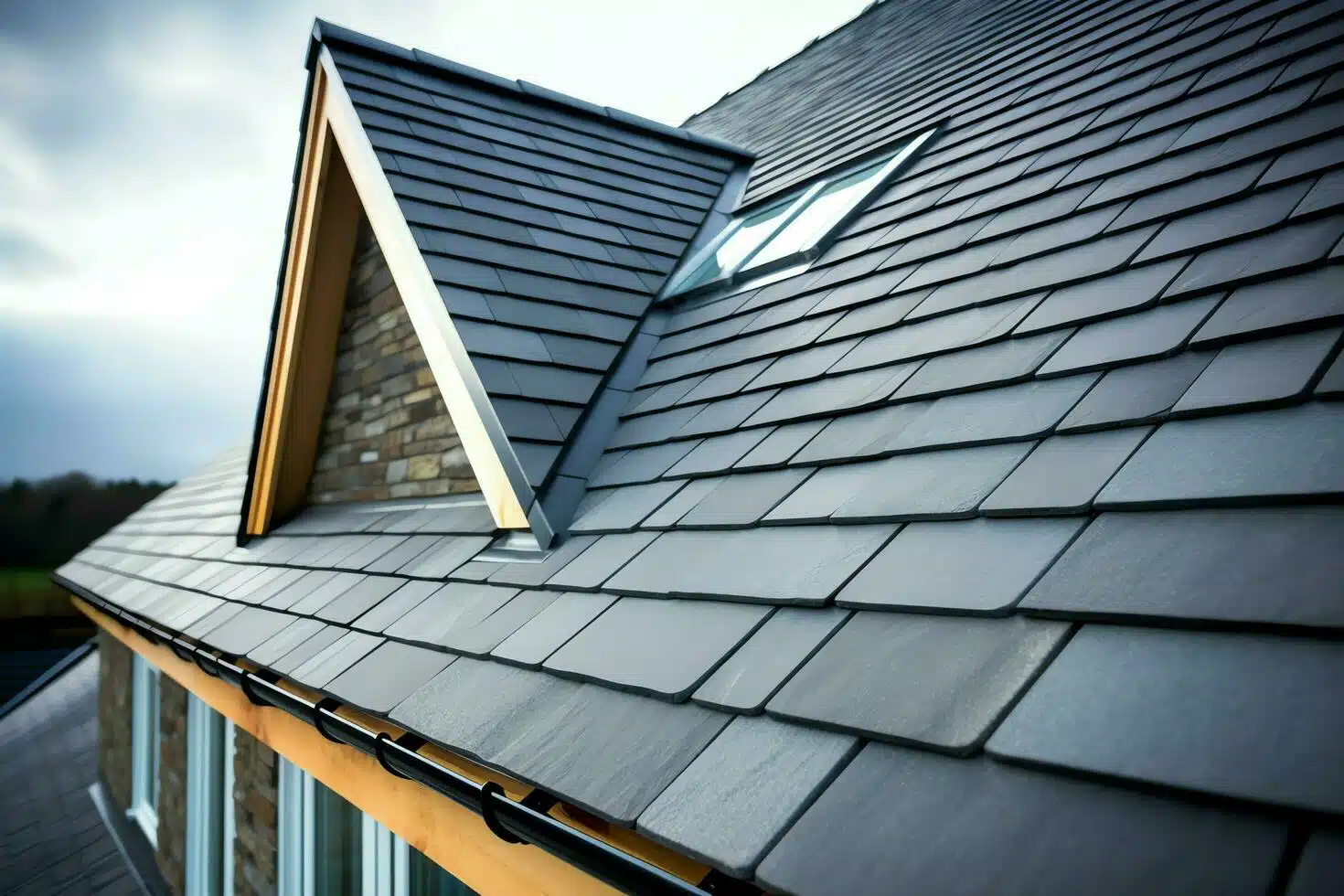
The first big decision you’ll face, and one that heavily influences cost, is the divide between flat and pitched roofs. Pitched roofs generally have a higher upfront cost because they require more timber framework, and tiling is a more labour-intensive process. But the story doesn’t end there. You have to look at longevity to understand the true value.
When you’re comparing materials, you’re really weighing the price against the years of service it will give you. Concrete tiles, for instance, typically last 20–50 years. Zinc, which is significantly more expensive at the outset, can last twice as long. For homeowners who see themselves staying in their property for decades to come, that higher initial price can be more than justified.
Pitched Roof Costs
The material you choose will dramatically change the price per metre. Let’s take a standard 100 m² roof in Dublin as an example. If you opt for concrete tiles, which cost around €100–€130 per m², your total would be in the €10,000–€13,000 range. Choosing natural slate paints a very different financial picture.
According to the experts at D. Hennessy Roofing, natural slate can range from €120 to €180 per m², pushing the total project cost to between €12,000 and €18,000. If you go for premium Welsh Bangor slate, the material alone can often exceed €120 per m². The more commonly used Spanish slate, once installed, usually settles in that €120–€180 per m² bracket.
Flat Roof Costs
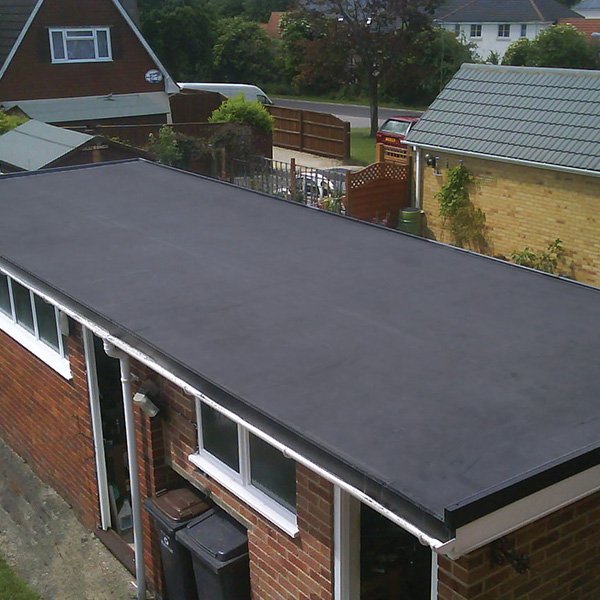
Flat roofs, which you often see on Dublin extensions and garages, tend to have a lower entry price point, but they come with their own maintenance needs. Traditional felt flat roofs are the most budget-friendly option, coming in at €70–€90 per m². Fibreglass systems, which are known for being much more durable, will cost you between €90 and €120 per m². These are all-in prices, meaning they should include everything from the plywood decking and vapour barriers to the insulation and final waterproof layers. As Roof Cost Calculator Ireland rightly points out, trying to save a few quid by skipping any of these essential layers is a false economy that will almost certainly lead to rapid failure.
Cost Comparison for Dublin Roofing Materials Per Square Meter
- Flat Roof (Traditional Felt): €70–€90 per m² (Includes labour, excludes VAT).
- Flat Roof (Durable Fibreglass): €90–€120 per m² (Includes labour, excludes VAT).
- Pitched Roof (Standard Concrete Tiles): €100–€130 per m² (Includes labour, excludes VAT).
- Pitched Roof (Natural Slate): €120–€180 per m² (Includes labour, excludes VAT).
- Pitched Roof (Modern Metal Sheeting): €110–€150 per m² (Includes labour, excludes VAT).
Unpacking Other Costs
Never underestimate the cost of labour; it’s a huge part of the final invoice, often making up 30–40% of the total project cost. While roofers in Ireland might charge €25–€50 per hour for small repairs, that cost is usually bundled into the per-square-metre price for a full re-roof. Access is another one of those easily forgotten costs. The scaffolding needed for a terraced house in Dublin doesn’t come for free. It’s always a good idea to budget an extra 10–20% to cover these kinds of operational add-ons when you’re planning a roof replacement.
The Extra Necessities
When you replace a roof, it often shines a light on other components that are on their last legs. Things like guttering, fascias, and soffits cost around €30–€60 per metre for modern uPVC systems. If you ignore them now, you’ll just end up paying for scaffolding all over again in a few years. Upgrading your insulation can add €500–€2,000 to the bill, but it can make a real difference to your home’s BER rating and energy bills
A good contractor like Emergency Roofers Dublin can bundle roofing, guttering, and chimney work into a single, cohesive quote. This is a smart way to save money, as you won’t have to pay for duplicated scaffolding and site setup fees. So, if your re-roof is quoted at €10,000, it’s wise to allow an extra €1,000–€2,000 for these essential finishing touches.
Should You Repair or Replace Your Roof?
Trying to decide between a simple patch job and a brand-new roof really comes down to a financial calculation. As Weatherpro Roofing Dublin explains, repair costs in Ireland can range from €500 all the way up to €5,000. Minor fixes, like replacing a handful of slipped tiles, might only set you back €200–€500. Medium-sized repairs often fall into the €500 to €1,500 category. Major structural work, however, can easily run from €1,500 to over €5,000.
Here’s a good rule of thumb: if your repair quote is more than 20–30% of the cost of a new roof, replacement is usually the more sensible long-term choice. Shelling out €2,000–€3,000 for repairs every few years will drain your funds much faster than a one-time investment of €7,000–€12,000.
Budgeting for Your New Roof
The world of construction is full of surprises. Once the old roof is stripped away, you might discover that the timber rafters underneath are rotting. That’s why you should always build a 10–15% contingency into your budget for these kinds of unforeseen issues.
If Emergency Roofers Dublin quotes you €10,000, have an extra €1,000–€1,500 ready just in case. It’s also helpful to think of your new roof in terms of cost per year of service. A beautiful slate roof that costs €120–€180+ per m² but lasts for 80 years offers far better long-term value than a cheaper material that you’ll have to replace again in 20 years.
How to Get an Accurate, Transparent Quote from Emergency Roofers Dublin
Vague, verbal estimates are a recipe for disputes down the line. You should always insist on a detailed, written quote. It needs to clearly specify the roof area, the type of material being used, and the price per square metre. It should also break down the costs for extras like scaffolding, skip hire, gutters, and insulation. Ask for line-item pricing so you can see exactly what you’re paying for in materials versus labour. Your quote should also spell out the warranty details and explicitly state whether VAT is included. This level of transparency is what protects you from nasty surprise invoices when the job is done.
The integrity of your home really does depend on the quality of the roof over your head. Cutting corners to save money today often leads to much bigger expenses tomorrow. For a precise assessment and a quote that respects both your budget and your property, get in touch with Emergency Roofers Dublin. We provide the clarity and craftsmanship your home deserves.
Commonly Asked Questions
Most homeowners find that re-roofing a standard 3-bed semi-detached house in Dublin will cost between €10,000 and €15,000. Data from DPC Construction shows that this price range typically covers standard materials like concrete tiles and includes all the necessary labour and scaffolding.
Keep in mind that this price can change quite a bit based on factors like chimneys, skylights, or any deteriorating timber that needs replacing. As Selfbuild points out, it's often these unforeseen structural repairs that push the final bill toward the higher end of that estimate.
To avoid any financial shocks, ask for a quote that clearly separates the base rate from any potential structural repair costs. This way, you'll understand the best-case and worst-case scenarios before any work begins.
In Ireland, a natural slate roof typically costs between €120 and €180 per square metre. According to D. Hennessy Roofing, this price usually includes both the supply of the slate and the installation, although choosing a premium Welsh slate can drive up the material costs on its own.
The price variation often comes down to where the slate is from; Spanish slate is generally more affordable than Welsh or Irish indigenous slate. Roof Cost Calculator Ireland makes a great point that while the initial cost is higher than concrete, the stunning aesthetic and incredible longevity often justify the investment.
If you're thinking of selling your property down the road, investing in natural slate can be a very strategic move. Its superior finish and long lifespan are major selling points that can genuinely increase the market value of a Dublin home.
In the short term, a repair is almost always cheaper, typically costing between €500 and €1,500 for medium-sized problems. The team at Weatherpro Roofing Dublin advises that repairs are a good, cost-effective solution, but only if the roof hasn't reached the end of its natural lifespan.
However, if you're finding that repairs are needed frequently or the damage covers a large portion of the roof, the total cost will quickly add up and surpass the price of a replacement. The rule of thumb from Roof Wise is that if a repair quote comes in at 30% or more of a full replacement price, the new roof is the better long-term value.
Take a look at your repair history over the last five years. If you've been paying for multiple call-outs, it's time to stop putting a plaster on the problem and start saving for a full replacement that comes with a long-term warranty.
For a standard home, a full roof replacement usually takes about 3 to 5 days, as long as the weather plays ball. Complete Roofing & Construction outlines that this timeline typically covers everything from putting up the scaffolding and stripping the old roof to installing the new felt, battens, and tiles.
Of course, this can stretch to over a week for larger roofs or more complex designs with lots of valleys and hips. Selfbuild correctly notes that unpredictable Irish weather is the most common reason for delays, as it's not safe to carry on with roofing work during heavy rain or high winds.
Plan your schedule with a little bit of a buffer. If you're taking time off work or arranging site access, it's smart to assume the project might run a couple of days over schedule just to account for Dublin’s famously fickle weather.
Generally speaking, you do not need planning permission as long as you are replacing your roof with materials that look similar to the existing ones. Selfbuild confirms that re-roofing is usually considered exempted development under Irish planning laws.
However, the moment you decide to raise the roof height, install dormer windows, or change the material drastically (say, from slate to metal), you will need permission. DPC Construction warns that significantly altering the profile of your roof will attract regulatory attention, especially if your home is a protected structure.
Before you order any materials, double-check the status of your building. If your home is a protected structure or located in an Architectural Conservation Area (ACA), it’s best to consult a local architect or the council first, as even like-for-like repairs might require approval.
If you can see daylight coming through your attic boards or notice a visible sag in the roofline, those are critical signs of structural failure. Weatherpro Roofing Dublin identifies these as clear indicators that the timber structure or underlay has been compromised beyond a simple repair.
From the outside, look for buckled, missing, or curling shingles, as well as large patches of moss, which can trap moisture against the tiles. Roof Wise adds that finding a lot of granules from your tiles in the gutters is a sure sign that the material is breaking down with age.
Try to do a quick inspection twice a year, both from the ground outside and from inside the loft. Catching these signs early gives you time to plan a replacement on your own terms, rather than having to deal with a catastrophic leak during a storm.
Replacing a flat roof in Dublin will likely cost you between €70 and €120 per square metre, depending on the material you choose. Roof Cost Calculator Ireland puts traditional felt roofing at the lower end of that scale (€70–€90/m²) and modern fibreglass at the higher end (€90–€120/m²).
The price difference really reflects the lifespan and durability of the materials. Fibreglass and EPDM rubber offer much better resistance to UV rays and pooling water. As Weathersafe Roofing notes, while felt is cheaper upfront, these modern synthetic materials provide better long-term protection against leaks.
For any areas that might get foot traffic, like a balcony, it's worth opting for the more expensive fibreglass or reinforced systems. The extra cost ensures the surface can handle the weight without compromising the waterproof seal.
Yes, fibreglass roofs are typically 30-40% more expensive than the traditional torch-on felt roofs. D. Hennessy Roofing explains that this is due to the higher cost of the materials themselves and the specialised skill set needed to install them correctly.
Despite the higher initial price, fibreglass (GRP) creates a seamless, joint-free surface that is highly resistant to damage, offering a lifespan of 20-30 years compared to felt's 10-15 years. Complete Roofing & Construction argues that because fibreglass requires less maintenance, it often works out to be cheaper over the entire life of the roof.
Choose fibreglass for any roof that is difficult to access for regular maintenance. The "fit and forget" nature of the material makes the premium price worthwhile for homeowners who want to minimise future headaches.
It's a smart and standard practice to set aside a contingency fund of 10-15% of the total quoted price. Selfbuild wisely advises that when you strip back an old roof, you often uncover hidden problems like rot in the fascias, rafters, or sheathing that simply weren't visible during the initial inspection.
These unknowns aren't a sign of a bad quote; they're just an inherent risk in any renovation work. As DPC Construction puts it, a €10,000 project should always be backed by an available budget of €11,500. This ensures you can cover potential structural repairs without having to pause the project.
Keep this contingency fund easily accessible. If it turns out the roof deck is perfectly sound and no extra work is needed, you can always use the surplus for a nice upgrade like new gutters or better insulation. The key is to never start the project without that financial safety net in place.
A truly professional quote should be a detailed breakdown, not just a single figure at the bottom of a page. Roof Cost Calculator Ireland insists that it must include things like waste removal (skip hire), scaffolding, labour costs, a list of materials by type, and its VAT status.
Crucially, it should also detail the scope of the warranty and provide a specific timeline for the work. Emergency Roofers Dublin emphasizes that this kind of line-item transparency is what prevents arguments over what was assumed to be included versus what is considered an extra.
Reject any quote that's scribbled on a piece of paper or given to you verbally. A detailed, professional contract is your primary protection against surprise costs and is essential for safeguarding your rights regarding the quality of the finished job.
For minor roof repairs in Dublin, you can generally expect to pay between €200 and €500. Weatherpro Roofing Dublin describes this kind of work as replacing a small number of slipped tiles or fixing a minor leak in the guttering.
More significant repairs, such as fixing valley flashings or replacing larger sections of felt, will usually range from €500 to €1,500. Roof Wise makes the important point that the need for scaffolding can significantly increase the minimum charge, even for simple repairs on a two-storey home.
Address small leaks the moment you spot them. The cost of a €300 repair is tiny compared to the thousands of Euros in damage that water ingress can cause to your insulation, ceilings, and even your home's electrical wiring.
Absolutely. A new roof can offer a return on investment of 60-70% when you sell your home, and it gives your property's curb appeal a massive boost. As D. Hennessy Roofing suggests, potential buyers see a new roof as a major asset because it means they won't have to worry about near-term maintenance costs.
Beyond just looking good, a modern roof can improve the Building Energy Rating (BER) of your home, especially if you upgrade the insulation at the same time. Selfbuild notes that in the current Dublin market, a better BER rating is a key factor that drives up property value.
If you're getting ready to sell, make sure to document the roof replacement with all the receipts and warranty certificates. Presenting this paperwork to potential buyers validates the quality of the work and gives you solid ground to stand on when supporting a higher asking price.