When Dublin’s winter winds decide to blow, they don’t bother knocking. Anyone who’s taken a stroll down O’Connell Street in November knows our weather has a mind of its own. When those powerful Atlantic gusts make their way to our homes, your roof is the only thing standing between a cosy living room and the wild Irish elements. It’s easy for homeowners to forget about their roof until a drip appears in the ceiling, but its design is truly the most critical factor in how well your home stands the test of time.
Salient Points
- Stands Strong Against Storms: Its self-bracing design provides incredible resistance to the wind speeds that often top 70 km/h in a gale.
- Keeps the Rain Out: With four downward slopes, water has nowhere to pool, a crucial feature for Dublin’s notoriously high rainfall.
- A Classic Dublin Look: It offers a compact, streamlined appearance that fits in beautifully with the city’s suburban architecture.
- A Smart Investment: While it may cost 15-25% more than a standard gable roof, it significantly reduces the risk of costly storm damage in the long run.
Why a Hipped Roof is Your Best Defence Against Dublin's Weather
The wind in Dublin typically breezes along at 50 to 70 km/h, but during a storm, those gusts can feel like a heavyweight boxer. Hipped roofs are designed to roll with the punches rather than take the full force. The clever design features four slopes that slant downwards towards the walls, which means there are no large, flat surfaces to act like a sail and catch the wind. This aerodynamic shape allows gale-force winds to flow over and around your home with barely a whisper, dramatically lowering the risk of damage.
It’s not just a theory; wind tunnel tests have shown that hipped roofs, especially on square-shaped buildings, are the clear winners against gable roofs in high-wind scenarios. The physics behind it is beautifully simple: the roof holds itself together. Each sloped side braces the others, creating a tight, secure cap on your house. This self-supporting nature fights off the lift effect that so often rips tiles from standard gable roofs during our worst storms.
Of course, rain is the other half of the Dublin weather story. With showers being a year-round affair, good drainage is non-negotiable. Because every side of a hipped roof slopes downwards, water runs off immediately and evenly. You won’t find any flat spots where puddles can form or vertical walls where wind-driven rain can soak into the brickwork. This consistent eave line around the entire house also makes installing gutters a breeze. For our team at Emergency Roofers Dublin, it means we can create a continuous gutter system that steers water far away from your foundation, helping you avoid the €5,000+ water damage claims that are all too common with poor roof drainage.
Hipped Roof vs. Gable Roof
Choosing between a hipped roof and a gable roof often comes down to a classic trade-off: ultimate durability versus maximum space. A gable roof is that familiar triangle shape you drew as a child; two slopes meeting at a peak with flat, vertical walls on each end. It’s generally cheaper to build and gives you a wonderfully spacious attic. The catch? Those flat ends can act like a ship’s sail in a storm, catching the full force of the wind.
A hipped roof, on the other hand, sacrifices a bit of that attic volume for incredible toughness on the outside. Its four-sloped structure is naturally braced against the elements, making it the smarter choice for homes in more exposed areas across County Dublin. While a gable roof might save you a little money upfront, a hipped roof pays for itself over the years by simply shrugging off the fierce Atlantic storms that roll in from the coast.
At-a-Glance Comparison
- Slopes
- Hipped Roof: Has four distinct sides, all sloping inwards to meet at the top.
- Gable Roof: Features two large slopes with two flat, vertical walls at either end.
- Wind Resistance
- Hipped Roof: Excellent. Its aerodynamic shape deflects strong winds coming from any direction.
- Gable Roof: More vulnerable. The vertical ends can catch the wind like a sail, creating upward pressure.
- Cost per Square Metre
- Hipped Roof: You can generally expect to pay between €150-€200.
- Gable Roof: A more budget-friendly option, typically costing €120-€160.
- Attic Space
- Hipped Roof: Cosier, as the inward slope on all four sides reduces headroom.
- Gable Roof: Very spacious, with high ceilings that make attic conversions much easier.
- Dublin Suitability
- Hipped Roof: The go-to choice for detached houses that face the full force of Irish weather.
- Gable Roof: A great fit for more sheltered properties or terraced homes with less wind exposure.
What Exactly is a Hipped Roof?
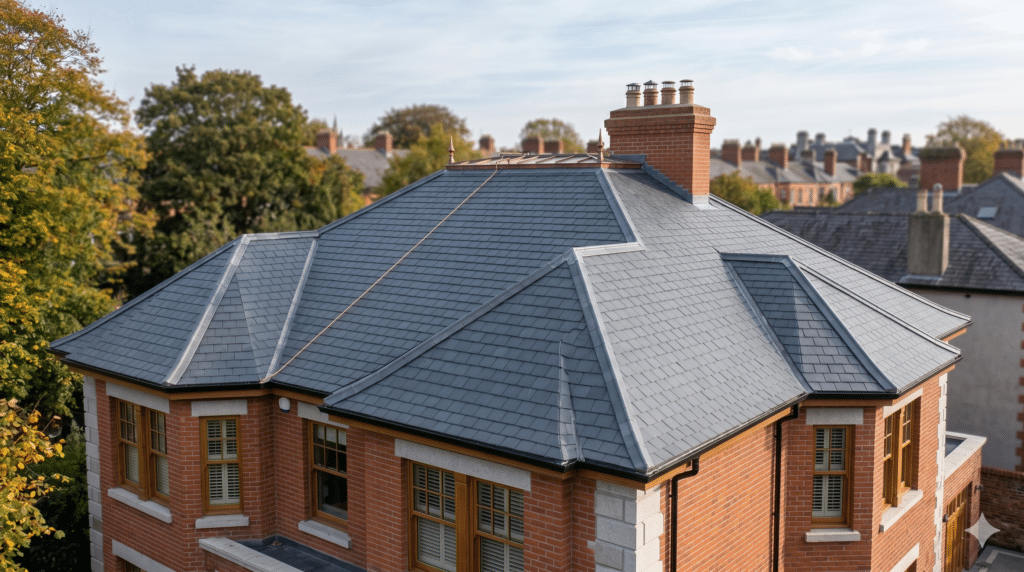
Chances are you’ve seen thousands of hipped roofs without ever knowing what they were called. Simply put, a hipped roof (or hip roof) is a style where all four sides of the roof slope down from a central ridge to meet the walls of the house. There are no flat, vertical ends. If your house is rectangular, this design creates two larger, trapezoid-shaped faces and two smaller, triangular faces on the ends.
The overall effect is a bit like a pyramid, sitting low and snug on top of the building. This structure is incredibly strong because the inward angle of all four sides works to brace the walls, holding them tightly together. For Dublin homes where you need all the stability you can get, this is a huge plus. Roof slopes steeper than 35 degrees are particularly good at resisting wind uplift, a feature common in this design. It looks compact, solid, and timeless, a familiar sight in suburbs like Clontarf and Blackrock, where homes are built to last.
Exploring Hipped Roof Styles Popular in Dublin Homes
Dublin architects have cleverly adapted the hipped roof into several variations to suit a home’s character or the unique shape of a property. The construction is a bit more complex than a standard roof, often needing an intricate system of rafters, but the finished result is a home that looks grounded, solid, and beautifully finished. Here at Emergency Roofers Dublin, we frequently work on these styles for repairs and conversions, which can boost a property’s value by 20-30% thanks to their fantastic curb appeal and proven longevity.
Simple Hip Roof
This is the dependable classic you’ll see on many bungalows and semi-detached houses. Four slopes rise from the walls to meet a single, horizontal ridge line at the top. It’s practical, drains rainwater like a charm, and provides a nice, shaded eave on all sides of the house.
Pyramid Hip Roof
Just as the name suggests, this style features four triangular sides that all rise to meet at a single, sharp point. You’ll often spot this neat design on square buildings, garages, or modern garden rooms. It’s perfectly symmetrical and incredibly rigid.
Crossed Hip Roof
This style is used when two hipped roof sections join together at a right angle, creating an L or T-shaped home. It’s a popular choice for larger, detached houses in Dublin that might have a wing or an attached garage. The valley where the two roofs meet is a critical area that needs expert waterproofing to handle the extra water flow.
Half-Hip Roof (Jerkinhead)
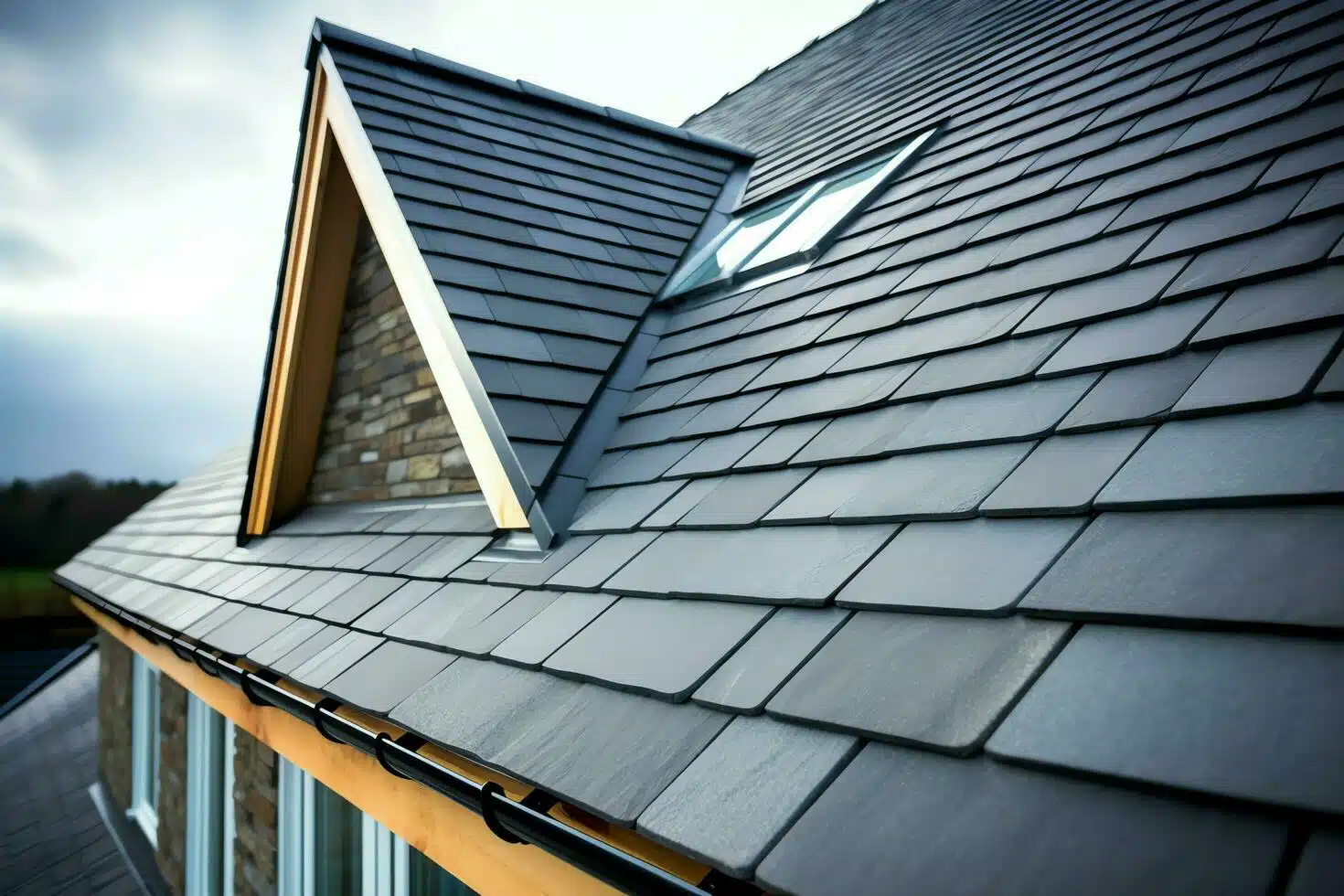
Think of this as a clever compromise. It starts out looking like a gable roof, but the very top of the gable end is clipped off and replaced with a small hip. This smart tweak reduces the roof’s wind profile while still leaving enough room for a small window in the attic.
Dutch Gable Roof
This is the reverse of the half-hip, offering the best of both worlds. It places a small gable wall on top of a hipped roof. This gives you the fantastic structural support of a hip roof on the lower section, combined with the extra attic space and natural light that a gable provides up top.
The Costs and Considerations of Installing a Hipped Roof in Dublin
Excellent quality naturally comes with a higher price tag. The main consideration with a hipped roof is the cost. You can expect the investment to be about 15-25% more than for a comparable gable roof. This price difference, which brings installation costs to around €150-€200 per square metre, comes down to the design’s complexity. A hipped roof simply requires more materials and a more intricate timber structure to build correctly.
Space is the other trade-off. Because all four sides of the roof slope inwards, you lose the high, triangular ends that you get with a gable attic. This typically reduces the total attic volume by about 20-30%, which could limit your storage options or headroom if you’re dreaming of a conversion down the line.
Ventilation and potential leaks are also things to get right. The design has more hips (where the roof planes meet on the outside corners) and valleys, which means more seams. These seams can become weak spots if the flashing isn’t installed to perfection. Additionally, since there are no vertical walls for vents, you need specialised ridge vents to let moisture escape, preventing any dampness from setting in during Dublin’s humid weather.
At Emergency Roofers Dublin, we have specific solutions for these challenges. For homeowners looking to gain more room, we can carry out attic conversions on half-hip or Dutch gable roofs, often costing between €2,000 and €4,000 to create that valuable living space. To eliminate leak risks, we use high-grade lead or modern synthetic flashing on every single seam, ensuring your roof stays completely watertight for decades to come.
Hipped Roof Construction and Essential Maintenance
The framework of a hipped roof is a true work of art in carpentry. It’s built on a complex system of common rafters, hip rafters, and jack rafters that all connect the walls of the house to the central ridge board. These days, most new homes use pre-fabricated trusses made from timber or light-gauge steel, though you might see concrete supports used in some commercial buildings.
The valleys, those internal angles where two roof slopes meet, are the most critical areas to watch. In a city that gets around 1,000mm of rain a year, these valleys act like channels for huge amounts of water. If the flashing in these areas fails, water can get into your roof space almost instantly.
The materials you choose matter immensely. For the Irish climate, we always recommend high-quality slate, durable asphalt shingles, or modern metal roofing. When installed by professionals, these materials can give you a lifespan of up to 50 years. Maintenance is mostly about keeping those important valleys clear of leaves and debris.
After any big storm, it’s always a good idea to do a quick visual check. We at Emergency Roofers Dublin recommend post-storm inspections to spot any tiles that might have shifted or flashing that has lifted. Catching a small crack in the lead work today can save you thousands of euros in rot repair tomorrow.
Your Dublin Hipped Roof Specialists
Your roof is the guardian of your biggest investment: your home. Emergency Roofers Dublin are your local experts in the installation, repair, and maintenance of hipped roofs, as well as guttering and chimneys, right across the county. We understand the specific demands of the Irish weather and only use materials that are proven to withstand our damp, windy climate.
Whether you need a quick fix for a slipped tile or a complete roof replacement, our projects typically range between €1,500 and €10,000, depending on the scale of the job. Don’t leave your home’s first line of defence to chance. Get in touch with us for a free, no-obligation quote and ensure your property stays secure, warm, and dry for years to come.
Frequently Asked Questions
Simply put, its biggest advantage is its incredible stability in high winds. Hipped roofs are naturally self-bracing. The inward slope of all four sides creates a super-strong structure that resists being lifted by the wind far better than a gable roof. Here in Ireland, where Atlantic storms are a fact of life, this aerodynamic shape prevents the sail effect that can cause so much damage to flat gable ends. As a bonus, the continuous eaves protect your walls from being battered by wind-driven rain.
You can generally expect to invest about 15% to 25% more for a hipped roof compared to a gable design. The extra cost comes from the more complex timber framework, which takes more skilled labour to build, and the larger surface area, which requires more tiles or shingles. While a gable roof might cost you €120-€160 per square metre, a hipped roof in Dublin typically falls in the €150-€200 per square metre range. Think of it as an upfront investment that pays you back in lower maintenance and fewer storm damage worries over the roof's lifetime.
Yes, they are worlds apart. Both wind tunnel studies and real-world data confirm that the typical 30-to-35-degree slope of a hipped roof is perfect for letting wind glide over it rather than fighting against it. Because there are no big, flat ends to catch the wind, the air flows over the house smoothly. This drastically reduces the suction force on the other side of the roof,the very thing that often causes tiles to be ripped off during gusts of 70km/h or more.
You certainly can, but it’s a bit more of a challenge than with a gable roof. Because the roof slopes down on all four sides, the amount of usable floor area with decent headroom is reduced by about 20-30%. To make a conversion work well, homeowners often add dormer windows or even convert part of the structure to a Dutch gable to create more volume. It's definitely possible, but it requires careful structural work, and you'll likely need planning permission if you're changing the roof's profile.
The main drawbacks are the higher initial cost, less attic space, and a slightly higher potential for leaks at the seams. Hipped roofs have more ridges and valleys (where different roof sections meet) than a simple gable roof. Each of these seams needs to be sealed with flashing, and if that flashing isn't installed perfectly, it can become a potential weak spot for water to get in. Also, the lack of vertical walls makes ventilation a bit trickier, so you need special ridge vents to stop moisture from building up inside the attic.
With professional installation and a bit of care, a hipped roof in Dublin can easily last for about 50 years. Its lifespan really depends on the materials used. High-quality natural slate or modern metal roofing will outlast standard asphalt shingles every time. The steep slope is a huge help, as it sheds water quickly, which prevents the rot and moss growth that can shorten a roof's life in our damp Irish weather. A regular check of the hip and ridge tiles is the key to reaching that 50-year milestone.
A pyramid roof is actually a special type of hipped roof. A standard hipped roof has a horizontal ridge line at the very top (which creates a trapezoid shape on the longer sides). A pyramid roof, however, has no ridge line at all; all four triangular sides meet at a single point, or apex, right in the centre. You’ll usually see pyramid roofs on square buildings like garages or extensions, while standard hipped roofs are used on rectangular houses. Both give you the same fantastic wind-resistant benefits.
They have a slightly higher risk of leaks at the seams, but not on the main slopes. Because a hipped roof has more valleys and hips than a gable roof, there are simply more joints that need to be protected with flashing. If the lead or synthetic flashing in these areas gets old or wasn't installed properly, leaks can happen. On the bright side, their excellent water runoff means they are far less likely to have problems with pooling water than flatter roofs, which helps to balance out the risk.
A half-hip, often called a jerkinhead roof, is a smart hybrid of a gable and a hipped roof. It starts out as a gable roof from the bottom, but the very peak of the gable is 'clipped' off and replaced with a small hipped section. This design gives you the strength of a hipped roof right where the wind pressure is highest (the peak), while still giving you more attic space and a unique look compared to a full hip roof. It's a popular and practical compromise in Irish architecture.
Absolutely! Adding a dormer is one of the most popular ways to reclaim that attic space you lose with a hipped roof. A dormer is essentially a window structure that projects out from the sloping roof, giving you valuable headroom and flooding the space with natural light. In Dublin, adding dormers to the back of a house is a common way to turn a cramped hipped attic into a bright, functional bedroom or home office. This kind of work involves altering the roof's structure and may require planning permission.
For our climate, natural slate, fibre cement slate, and concrete tiles are the champions. Natural slate is the traditional, top-tier choice; it’s incredibly long-lasting and handles our wet and windy weather without breaking a sweat, though it is quite heavy. Concrete tiles are a fantastic, cost-effective alternative that interlocks tightly to stand up to the wind. We're also seeing metal roofing (like zinc or copper) become more popular for modern hipped roofs because it's lightweight and virtually storm-proof.
Since there are no flat gable ends to pop a vent into, hipped roofs use a clever airflow system involving eaves vents and ridge vents. Cool, fresh air is drawn in through vents in the soffits (under the eaves) at the bottom of the roof. This air warms up inside the attic, rises, and then escapes through a specially designed vented cap that runs along the ridge at the top. This constant cycle of air is essential in Dublin to stop condensation from forming, which could otherwise lead to mould and rot in your roof timbers.