You can almost hear it before you see it. On a quiet evening in Rathmines or Clontarf, the timber above your head gives a little creak. It’s not a ghost; it’s your house breathing, straining under the stress of Dublin’s famously erratic weather. Your roof soaks up the sun all day, heating the slate or asphalt, only for a sudden Atlantic downpour to chill it in a matter of seconds. This silent battle, fought daily on your rooftop, is waging a war on your roof’s integrity, wearing it down faster than any moss or gale-force wind. We call this thermal shock. It causes materials to expand and shrink so violently that seams are pulled apart and shingles can even snap. Most of us tend to ignore these groans from our roof until that first tell-tale drip appears on the landing. By then, the damage is already done.
Main Points
- Thermal shock can make your roof age up to three times faster, causing granules to strip away and seals to fail.
- In Dublin, the cost to fix damage from thermal shock usually falls somewhere between €5,000 and €15,000.
- Keep an eye out for tell-tale signs like curled shingles, cracks, and a build-up of granules in your gutters.
- Making sure your attic is properly ventilated can slash those extreme temperature swings by 30%, adding years to your roof’s life.
- If you’re looking for a long-term solution, materials like metal and TPO roofing are brilliant at standing up to Ireland’s rapid temperature changes.
How Thermal Shock Damages Your Roof
When you budget for home maintenance, you’re probably not thinking about the physics of heat transfer, yet forgetting about it can be an expensive mistake. The damage caused by thermal shock can lead to serious repair bills, often landing between €5,000 and €15,000 for a typical semi-detached home in Dublin. The cost is so high because the damage is rarely just in one spot; it tends to affect the entire roofing system.
The first thing to go is often the granule coating on your shingles. These tiny stones are there to shield the asphalt from harsh UV rays. When thermal shock loosens them, they wash away into your gutters, speeding up the roof’s ageing process by two or even three times. A roof that was designed to last 30 years might start to fail in just 15. Homes with roofs over 15-20 years old are at the highest risk. At this age, the materials have lost much of their flexibility and begin to fail quickly under the constant thermal stress. As the experts at Janney Roofing note, this deterioration weakens the roof’s main water seal, opening the door to extensive structural rot.
Can You Spot the Warning Signs of Thermal Shock on Your Roof?
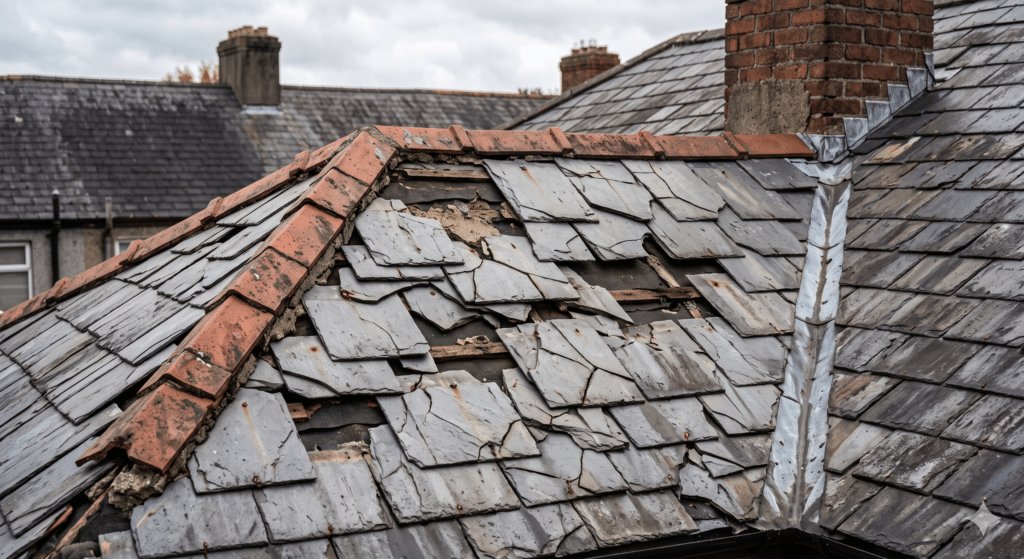
A little bit of vigilance can save you a lot of money. You can often spot the signs of thermal shock long before water starts dripping through your ceiling by looking for a few specific distress signals. Cracks snaking across your shingles are one of the biggest red flags. You might also notice the tabs of your shingles lifting or curling at the edges, almost like they’re trying to peel away from the roof deck. Take a look in your gutters, too. If you find them clogged with a heavy build-up of granules, it’s a clear sign your roof is shedding its protective armour.
Loose flashing around chimneys and vents is often another sign of expansion and contraction problems. You might also see visible damage along the ridge line of your roof. Inside, it’s worth popping your head into the attic to check for cracked felt underlayment or warped decking. In Dublin, a typical damage timeline sees tiny micro-cracks forming around the 10-year mark, which can turn into significant leaks by year 15. If your roof is over a decade old, inspecting it twice a year is absolutely vital. If you suspect any of these issues, give us a call at Emergency Roofers Dublin; catching them early could be the difference between a simple repair and a full replacement.
Why Dublin's Unique Climate is a Threat to Your Roofing System
It’s our unique local weather that’s really driving this problem. Dublin’s climate is shaped by mild Atlantic influences that are frequently interrupted by sudden cold snaps, bursts of rain, and brilliant sunshine. These conditions create the perfect engine for thermal shock. On a lovely 20°C day, direct sunlight can heat a dark roof surface to over 40°C. Then, when the clouds roll in or a shower passes over, that temperature can plummet in an instant.
We’ve actually observed a 20% increase in roofing claims right after Irish summer storms, where these rapid temperature shifts are most common. This constant fluctuation puts immense mechanical stress on every single nail, tile, and sheet of felt on your roof.
The Daily Cycle of Expansion and Contraction
Think of your roofing materials like living things – they move. Asphalt shingles expand in the warmth of the midday sun and contract quickly as the evening temperatures drop. It’s common for Dublin to see daily temperature fluctuations of 10-15°C. On the roof’s surface, the extremes are even wider, potentially heating up to 25°C and then cooling to 10°C or less overnight.
This endless repetition creates stress points. It weakens the adhesive seals that are meant to hold everything together. Over time, the shingles lose their natural elasticity and become brittle. As Tricounty Roofing explains, this cycle is relentless, happening day in and day out, gradually tiring out the material until it finally snaps.
The Dangers of Freeze-Thaw Cycles and Ice Dams
And then winter arrives, bringing an even more aggressive enemy. Moisture finds its way into the tiny micro-cracks created by the summer heat. When temperatures dip below freezing, this trapped water turns to ice. Because water expands by about 9% when it freezes, it acts like a tiny jackhammer, pushing the cracks open even wider. This allows more water to get in during the next thaw, and the cycle repeats.
These repeated freeze-thaw cycles often lead to ice dams forming along the edge of your roof. These ridges of ice block melting snow or rain from draining away properly, forcing water to back up under the shingles and leak directly into your home. We’ve seen a 20% increase in ice dam formation on weakened roofs in Dublin over recent years.
What Exactly is Thermal Shock in Roofing?
So, what exactly is thermal shock? In simple terms, it’s the physical stress put on your roofing materials by rapid, extreme temperature changes. This isn’t about slow, gentle degradation; it’s a violent reaction. The process involves the constant expansion and contraction of the entire system, from the outer shingles and flashing right down to the decking and underlayment.
A sudden thunderstorm after a sunny afternoon in Ireland can cause a roof’s surface temperature to drop by as much as 45-50 degrees almost instantly. This rapid contraction sends a shockwave through the material. According to Bill Ragan Roofing, this shock compromises the roof’s integrity, leading to cracks, brittleness, and eventually, total failure. The material is literally pulling itself apart because it can’t shrink fast enough to keep up with the temperature drop.
Preventing Thermal Shock Damage in Dublin
Taking preventative steps can dramatically extend your roof’s lifespan and protect your wallet. Proper attic ventilation is your best line of defence. It works by regulating the temperature of the roof deck, which reduces heat build-up and can cut those damaging temperature swings by up to 30%. This one adjustment can add an extra 20-30% to your roof’s life.
The quality of your insulation is just as important. High-grade insulation creates a barrier between the warm air in your living space and the air in your attic. Using flexible materials during repairs also helps the roof absorb movement without breaking. For metal roofs, it’s critical to make sure expansion joints are in place. You can even apply solar-reflective coatings, like Super Therm®, to significantly reduce how much heat your roof absorbs. For peace of mind, contact Emergency Roofers Dublin for a €200 ventilation audit to see what your current risk level is.
The Best Roofing Materials for Dublin's Climate
When it comes time for a full replacement, choosing the right materials can almost entirely eliminate the risk of thermal shock. Materials that have high flexibility and don’t conduct heat well are the top performers in our variable weather.
Metal Roofing (Steel, Aluminium, Copper)
Metal is built to handle this kind of stress. It naturally expands and contracts without cracking or getting fatigued. It’s also lightweight, fire-resistant, and stands up to wind effortlessly. With a lifespan of 50 years or more, it offers real long-term security. The cost typically ranges from €50 to €80 per square metre.
TPO Membranes
For flat or low-slope roofs, single-ply TPO membranes are a perfect fit. They reflect sunlight, which keeps the surface cooler and lessens the severity of temperature swings. TPO comes in wide rolls of 10-20 feet, which means fewer seams, and seams are always the weakest point in any roof. It can lead to energy savings of up to 20% and lasts for 20-30 years. You should expect to pay between €30 and €50 per square metre.
Polymer Composite Shingles
Engineered to be tough, these shingles are designed to resist UV rays, wind, and moisture. They can look just like natural slate or wood but have the huge advantage of not cracking under thermal stress. They offer a lifespan of over 40 years, with costs ranging from €40 to €60 per square metre.
A Note on Traditional Asphalt Shingles
Standard asphalt shingles are still very common, but they have a low resistance to thermal shock. They are the most likely to crack and lose their granules in Dublin’s climate. Their lifespan is often cut short to just 15-20 years. While they are cheaper upfront at €20-40 per square metre, the long-term repair costs often make them a more expensive choice.
Final Word
Dublin’s famously unpredictable weather does more than just spoil a picnic; it silently works to compromise the shelter over your head. Thermal shock is a relentless force, but with the right knowledge, materials, and proactive care, you can successfully defend your home against it. Don’t wait for a drip to appear on the ceiling. Secure your property with the expertise of Emergency Roofers Dublin. Whether you need a comprehensive ventilation audit, a timely repair, or a future-proof replacement, we are your local authority on battling the Irish climate.
Commonly Asked Questions
Essentially, thermal shock is the stress and damage that happens when your roofing materials expand in the heat and then shrink too quickly when the temperature plummets.
In Dublin, your roof can get incredibly hot during a sunny spell, and then an unexpected rain shower can cool it down instantly. This forces the material to shrink faster than it can safely handle, leading to stress fractures. As the experts at Janney Roofing point out, this isn't just a surface issue; it affects every layer of your roof.
To combat this, it's best to use materials with a high tolerance for temperature changes or ensure your roof has proper expansion joints.
You can often spot it with a careful look. Watch for obvious cracks appearing on your shingles, see if the edges are starting to curl up, and check your gutters for a build-up of tiny stone granules.
Those granules are what protect the asphalt from the sun. When the material expands and contracts violently, they get shaken loose and wash away. Tricounty Roofing notes that you might also see something called alligatoring, where the surface develops a pattern of cracks that looks like reptile skin.
If you notice any of these signs, it's wise to schedule a professional inspection right away to prevent water from getting in.
The cost for repairs typically falls somewhere between €5,000 and €15,000, though it depends on how bad the damage is and the size of your roof.
This estimate usually includes the labour and materials needed to fix the compromised underlayment, replace damaged shingles, and address any structural weakness. The cost is high because thermal shock rarely affects just one small patch; it tends to degrade the entire system.
Investing in preventative measures, like upgrading your ventilation, costs far less than these kinds of reactive repairs.
It all comes down to our climate. Dublin is known for its frequent, rapid weather changes, which many of us call four seasons in a day.
In a single afternoon, a roof can experience a surface temperature swing of over 40°C. As Parsons Roofing explains, these constant fluctuations put much more stress on roofing materials than you'd find in climates with more stable hot or cold weather.
This is why choosing flexible, durable roofing materials is so critical for Irish homes.
Yes, absolutely. Even a brand-new roof can suffer from thermal shock if it's made from poor-quality materials or wasn't installed correctly.
For instance, if a new roof doesn't have proper ventilation, heat will get trapped in the attic, making the temperature difference between the inner and outer roof surfaces even more extreme. Best Choice Roofing also warns that if expansion joints in metal roofs are installed improperly, you can see thermal shock issues almost immediately.
Always make sure your contractor is installing adequate ventilation and using materials that are well-suited for our climate.
For our climate, Metal roofing and Polymer Composite Shingles are two of the best options for resisting thermal shock.
Metal is designed to expand and contract naturally without breaking down, while polymer shingles are engineered to stay flexible no matter the weather. Data from Greenawalt Roofing shows that these materials significantly outlast traditional asphalt in volatile climates like ours.
While they might cost more upfront, their longevity makes them a much smarter investment for Dublin homeowners.
Ventilation creates a steady flow of air through your attic, which helps to keep the roof deck temperature much closer to the actual temperature outside.
By preventing extreme heat from building up in the attic, you reduce how drastic the temperature drop is during a cold snap or rain shower. Bill Ragan Roofing states that good ventilation can lower roof temperatures by a huge margin, which lessens the severity of the expansion and contraction cycle.
Getting an audit of your intake and exhaust vents is the perfect first step in preventing thermal shock.
This is a damaging cycle that happens when water gets into small cracks in your roof, freezes, and expands, which forces the crack to become wider.
When water freezes, it expands by about 9%. When it thaws again, that water seeps even deeper into the now-larger crack, ready to freeze again later. As SPI Coatings explains, this repetitive process can completely destroy the structural integrity of shingles and even concrete tiles.
It's especially damaging during Ireland's damp, cold winters.
If your roof is over 10 years old, you should have it inspected at least twice a year.
The best times are in the spring and autumn, as this allows you to assess any damage from the previous extreme season (winter or summer). Regular checks mean you can catch tiny micro-cracks before they turn into major leaks.
Here at Emergency Roofers Dublin, we offer specific thermal shock assessments designed for ageing roofs.
Yes, flat roofs are very susceptible to it, especially older ones that use traditional felt or asphalt materials.
Flat roofs get a lot of direct sun exposure and are more prone to pooling water, both of which accelerate temperature changes. CertainTeed points out that modern TPO or EPDM membranes are much better suited for flat roofs because they are specifically designed to handle thermal movement.
It's also crucial to ensure your flat roof has good drainage to minimize the risk of freeze-thaw damage.
Whether or not you're covered really depends on your specific policy. The key is whether the damage is seen as a sudden, one-off event or as gradual wear and tear.
Damage from a specific, documented storm might be covered, but deterioration that happens over time is usually excluded. Progressive Materials advises homeowners to document their roof's condition regularly. This can help you prove that the damage was acute rather than a result of neglected maintenance.
It's always a good idea to review the wear and tear exclusions in your policy's fine print.
Yes, it's one of the leading causes of leaks in older roofs.
Thermal shock breaks down the adhesive seals between your shingles and can crack the underlayment beneath. WPRG confirms that once these protective barriers are breached, rain and melting ice have a clear path into your home.
These leaks often show up suddenly, right after a big temperature drop that follows a warm spell.
The key difference is speed. Thermal shock is accelerated damage caused by rapid temperature swings, whereas normal wear and tear is the slow, gradual ageing you'd expect.
Normal ageing happens over decades; thermal shock can ruin a roof in half that time. Signs like alligatoring and sudden, heavy granule loss are clear indicators of thermal shock, not slow degradation.
Knowing this difference is really important when it comes to making insurance claims and deciding on the right repair strategy.