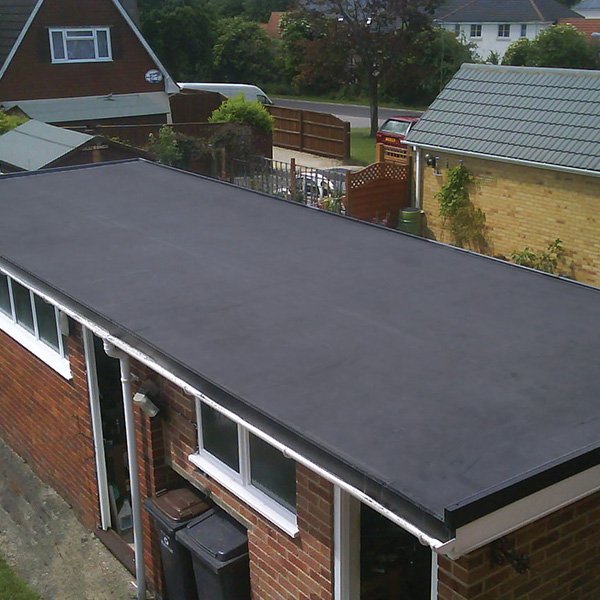
Take a stroll behind any row of semi-detached houses in Glasnevin or Raheny, and look at the garage roofs. Chances are, you’ll see those familiar grey, corrugated sheets. For decades, builders covered Dublin in asbestos cement because it was a dream material: cheap, fireproof, and built to last.
Now, it just sits there, leaving homeowners wondering and worrying about what happens when it eventually cracks. The truth is, the material isn’t inherently evil when it’s left alone, but it absolutely demands our respect. That’s why we’ve put together this guide to help you separate the panic from the practical facts of owning a Dublin property built before the turn of the millennium.
Essential Findings
- An asbestos roof is generally safe, but only as long as it stays in one piece and isn’t disturbed.
- The material becomes a serious cancer risk (a Category 1A carcinogen) only when its tiny fibres get loose and float in the air.
- Irish law is very clear about how it must be thrown away; you can’t just toss these sheets into a standard skip.
- Professionals use careful wet techniques and wear serious respiratory protection to remove it safely.
- The only way to completely and permanently eliminate the risk from your property is to have the roof replaced.
Asbestos Roof Dangers
The danger of an asbestos roof comes down to one simple thing: its condition. An intact roof sitting quietly on your garage isn’t poisoning the air around it. The risk profile changes dramatically, however, the moment that material suffers damage, weathers away, or is removed incorrectly. The second you drill, cut, or snap one of those sheets, you release a cloud of microscopic fibres. The official classification for asbestos is a Category 1A carcinogen, a label reserved for substances that are known, without a doubt, to cause cancer in humans.
This isn’t just a theoretical risk. Across the European Union, asbestos exposure is responsible for over 90,000 deaths every single year, according to the STOP Carcinogens at Work campaign. It’s easy for homeowners to look at these old roofs as harmless relics of a bygone era. The data tells a very different story. Asbestos remains one of the biggest occupational killers in Europe. Here in Dublin, where so much of our housing stock from the 1960s to the 1980s was built with these materials, the threat is dormant but very much present.
When an Asbestos Roof Becomes a Hazard
It’s vital to understand the difference between a roof that simply exists and one that is actively shedding fibres. The level of threat you face depends entirely on its stability.
- An intact, sealed asbestos roof: In this state, the cement matrix holds the asbestos fibres in a tight grip. The immediate risk to your health is quite low.
- A damaged or disturbed asbestos roof: Cracks, heavy moss growth, or outright breakage allow the fibres to escape. Here, the risk of breathing in those airborne particles becomes high.
The Hidden Health Risks Lurking in Asbestos Roofing
When a person breathes in asbestos fibres, their body has no way to break them down. Instead, they embed themselves deep within the body’s tissues. Over time, this can lead to mesothelioma, an aggressive and devastating cancer that affects the lining of the lungs. It also causes asbestos-related lung cancer, asbestosis (a condition where the lungs become stiff and scarred), and pleural thickening. The terrifying part is that these diseases don’t show up right away. The typical latency period, the time between exposure and diagnosis, can be 20 to 30 years, or even longer.
The tragic legacy of asbestos continues to claim lives on this island. Data from the Health and Safety Executive for Northern Ireland shows that between 2009 and 2015, there were about 48 asbestos-related deaths each year in that region alone. Dublin shares the exact same construction history. There is no such thing as a safe level of exposure. The risk simply grows with every dose you take in, and every hour you spend breathing contaminated air.
How Much Asbestos Is in a Typical Roof Sheet?
Those grey corrugated sheets on your shed or garage aren’t pure asbestos. They are what’s known as asbestos cement. Typically, these sheets contain about 10–15% asbestos fibre by weight. The type most commonly used was white asbestos (chrysotile). And while chrysotile is considered less potent than the blue or brown varieties, it is still a powerful carcinogen. Think of the cement as a lock. It does a great job of keeping those fibres trapped, right up until the moment the sheet breaks, someone drills into it, or decades of Irish rain finally wear down the surface.
How Asbestos Fibres Are Released from Dublin Roofs
Asbestos only becomes an active enemy when you disturb it. The most dangerous moments are often during well-intentioned maintenance or clumsy removal attempts. We frequently see homeowners unknowingly create a serious hazard. For instance, pressure-washing a mossy roof is one of the worst things you can possibly do. The high-pressure water jet doesn’t just clean the roof; it strips the surface and blasts millions of invisible fibres into the air, where they can hang suspended for hours.
Grinding or cutting the sheets creates a similar toxic cloud. Even a seemingly small job, like drilling a hole to mount a satellite dish on an old garage, can release a high concentration of fibres directly into your breathing zone. Storm damage is another common trigger. If a tree branch falls and snaps a sheet, the ragged, broken edge exposes raw fibres to the wind. You can’t rely on your eyes to tell you if it’s safe. The fibres that do the killing are far too small to see. You have to assume any work on a pre-2000 Dublin roof involves asbestos until a proper survey proves otherwise.
Is Your Dublin Property at Risk? Identifying Potential Asbestos Roofs
If your home or any of its outbuildings were constructed before the year 2000, there’s a very good chance it contains asbestos-containing materials (ACMs). The use of asbestos-cement roofing was standard practice for everything from agricultural sheds and industrial units to the humble domestic garage all across Dublin, from the 1960s right through to the 1990s.
A visual check can give you a clue, but it’s never proof. The grey, cement-like texture is a classic sign, but modern, perfectly safe fibre-cement sheets can look almost identical to the untrained eye. Only a proper laboratory test can confirm what it’s really made of.
Does My Dublin Roof Likely Contain Asbestos? A Checklist
Take a look at your property and see if it ticks these common boxes.
- Construction Date: The building or extension was put up before the year 2000.
- Visual Appearance: The roof is made of corrugated grey sheets that have a flat, matte, cement-like finish.
- Structure Type: It’s the roof on an old farm shed, a flat-roofed garage, a boiler house, or a utility room extension.
Managing vs. Removing an Asbestos Roof in Dublin
You are not legally required to remove an asbestos roof just because it’s there. Both Irish and EU regulations permit these materials to stay in place, as long as they are in good condition. Safe management is a perfectly valid strategy. This approach can work well if the roof is structurally sound, isn’t friable (meaning it isn’t crumbling or flaky), and you have no plans for any work that would disturb it. If you go this route, you should have a management plan to monitor its condition regularly.
However, managing the problem is often just a temporary fix. If you’re planning to refurbish, install solar panels, or build an extension, you will almost certainly trigger the need for professional removal.
Safe vs. Unsafe Approaches to Asbestos Roofs
The line between a safe job and a criminal offence really comes down to preparation.
- Unsafe Practices: Never, ever try to remove the sheets yourself without proper training. Breaking sheets up to make them fit into your car or a skip is not only incredibly dangerous but also illegal. Using power tools, pressure washers, or trying to dispose of the waste in your general rubbish creates a massive health hazard for you, your family, and your neighbours.
- Safe Practices: Always start with a thorough risk assessment. Use the correct Personal Protective Equipment (PPE), specifically P3-rated respiratory protection. Use wet methods to dampen the sheets, which suppresses the dust. And finally, hire licensed waste carriers to transport the material to an authorised facility.
The Professional Asbestos Roof Removal Process
Removing an asbestos roof is a surgical operation, not a simple demolition job. In Dublin, the entire process must comply with Health and Safety Authority (HSA) exposure regulations and the Environmental Protection Agency (Ireland)’s guidance on hazardous waste. As the homeowner, you have a legal obligation to make sure this happens correctly.
The process begins with a detailed plan of work. The team will establish a controlled work zone to prevent any contamination from spreading to your garden or house. They use wet removal techniques, spraying the sheets with a special solution to bind the dust and stop it from becoming airborne. The sheets are then gently unbolted and lowered whole to the ground; they are never dropped or broken. The material is then carefully wrapped in heavy-gauge plastic and taken away by a licensed carrier. You should always ask your contractor for proof of their training and to see the waste transfer documentation.
Understanding the Cost of Asbestos Roof Removal and Replacement in Dublin
Because asbestos is officially classified as hazardous waste, its removal is significantly more expensive than just ripping off a standard timber or felt roof. The price you pay covers several things: the initial survey, the labour of highly trained personnel wearing full protective gear, specialised equipment, and the steep gate fees charged at authorised landfill sites.
Quotes for a standard single-car garage roof in Dublin typically range from several hundred to a few thousand euros (€), depending on factors like the size and ease of access. While the cost is certainly higher, it’s important to weigh it against the alternatives. Improper disposal can lead to heavy fines. Cleaning up contaminated land can cost a fortune. And, of course, the impact on your health is irreversible. What’s more, insurance companies and mortgage providers tend to look much more favourably on properties where this kind of liability has been professionally and permanently removed.
Irish Law and Your Responsibilities as a Homeowner
The law on this is strict and clear. It is illegal in Ireland to use, re-use, sell, or supply asbestos in any form. The Safety, Health and Welfare at Work (Exposure to Asbestos) Regulations set out exactly how this material must be handled.
While a homeowner can technically remove asbestos from their own private residence, they are still fully bound by waste disposal laws. You cannot just dump it somewhere. If you hire a contractor, the law places a duty of care on you. This means you must ensure they are competent and properly trained. If you hire a general handyman who ends up dumping the sheets in a ditch, you could be held criminally liable. Breaches of these regulations are considered serious offences.
Your Next Steps with Emergency Roofers Dublin
We know the Dublin housing stock inside and out. Here at Emergency Roofers Dublin, we deal with these older roofs every single week. We can help you identify suspect materials, advise on whether a survey is necessary, and arrange for the safe installation of a modern, secure roof once the hazard is gone.
Don’t gamble with your health or your family’s. Contact us for an initial assessment. We will provide a clear, no-nonsense quotation in euros (€) for replacing that old, worrying roof with modern, safe materials that will give you peace of mind for decades to come.
Frequently Asked Questions
Typically, you're looking for corrugated sheets with a grey, cement-like texture, often showing its age with weathering or dark patches. These sheets were mass-produced and used on countless garages and sheds. Over the years, they often get covered in moss and lichen, which can hide their true surface.
According to guidance from the Health and Safety Executive (Ireland), you can't rely on sight alone because modern, non-asbestos fibre cement looks identical. To be 100% certain, you need to have a surveyor take a small sample for laboratory analysis. Never try to break a piece off to test it yourself.
They are extremely common, especially in suburbs that were developed between the 1960s and the late 1990s. Builders used asbestos cement as the go-to material for outbuildings because it was great at resisting fire and didn't cost much.
Kilkenny County Council points out in its hazardous waste guidance that asbestos cement was the most widespread form of asbestos used in Irish homes. The safest approach is to treat any pre-2000 garage roof as if it contains asbestos until a professional survey confirms otherwise.
While it's not explicitly banned for a homeowner to do this on their own property under very specific conditions, it's a path filled with legal and health risks. You are still required to follow the strict waste disposal laws under the Waste Management Act.
So though you technically can, the Environmental Protection Agency (Ireland) strongly advises against it because the risk of releasing fibres is so high. You can't just put the waste in a skip or take it to a normal civic amenity site; it has to go to a designated hazardous waste facility, which usually requires a licensed carrier.
The safest and most legally secure way forward is to hire a competent contractor who has the necessary insurance and waste permits.
The cost is higher than for a standard demolition project because it involves hazardous waste fees and specially trained labour. You should expect to pay anywhere from several hundred to over a thousand euros for a typical garage, though this can vary with size and access.
The price includes the gate fee at the landfill, which is much higher for hazardous materials compared to general waste. RooferCork notes that the cost also covers the need for all the PPE, decontamination units, and safe wrapping materials.
Always ask for a fixed-price quote that clearly states it includes the waste transfer note, so you don't get surprised by hidden disposal fees later on.
Yes, it generally is, as long as the roof is in good shape and is left completely alone. The danger only emerges when the fibres become airborne because of damage, wear, or disturbance. An intact roof poses a very low risk because the asbestos fibres are locked tightly within the cement.
The Health and Safety Executive for Northern Ireland confirms that asbestos is usually safe if it's left undisturbed and managed properly. It's essential to keep an eye on it; if you start seeing cracks, flaking, or debris, you need to act quickly to get it repaired or removed.
Painting or sealing can be a good way to encapsulate the roof, which can extend its life by trapping the fibres. However, you should see this as a temporary management strategy, not a permanent fix.
You have to use a special sealant designed for asbestos; regular masonry paint might just flake and peel off, taking fibres with it. Asbestos-Surveys.org.uk warns that preparing the roof for painting (i.e., cleaning it) is the dangerous part and should never involve sanding or pressure washing.
Encapsulation is just delaying the inevitable. The roof will eventually need to be removed, and the layer of paint can sometimes make disposal more complicated (and expensive).
Storm damage often leads to snapped or broken sheets, which can release raw fibres into the environment. This is an urgent situation that needs professional help right away. Don't head out to sweep up the broken bits; moving the debris around will only release more fibres into the air.
The Safety, Health and Welfare at Work (Exposure to Asbestos) Regulations mean that any damaged material must be treated as hazardous waste immediately. Cordon off the area to keep children and pets safely away, and call a professional roofer or an asbestos specialist for emergency containment.
You'll need to hire a qualified asbestos surveyor. They will come and take a few small, controlled samples of the material and send them to an accredited laboratory for analysis. While you can buy DIY testing kits, having a professional take the sample ensures it's done safely, without accidentally contaminating the area.
A formal report, like the Hayestown, Rush - Asbestos Survey Report, shows the level of detail a professional survey provides, including the location, type, and condition of the material. Use the survey results to get accurate quotes for removal, as contractors will need to know the specific type of asbestos (usually chrysotile) they're dealing with.
Standard home insurance policies usually do not cover the cost of removing asbestos if it's just due to old age or general wear and tear. However, they might cover it if the damage was caused by a specific insured event, like a fallen tree or a fire. Read the wording in your policy very carefully, looking for exclusions related to gradual deterioration or hazardous materials.
Resources from the Irish Legal Guide suggest that liability coverage is vital, especially if your asbestos roof contaminates a neighbour's property. It’s always best to contact your insurer before you start any work to clarify whether removal following storm damage would be a claimable expense.
It is carefully wrapped in heavy-duty, sealed plastic sheeting and then transported directly to a licensed hazardous waste facility. It can't be recycled or incinerated. It must be disposed of in a specially engineered landfill designed to safely contain hazardous waste.
As Asbestos Removal Ireland confirms, official documentation called waste transfer notes tracks the material's journey from your home to its final disposal site. You should keep this paperwork forever. It's your proof that you disposed of the material legally, which can be very important when you eventually sell your house.
Generally speaking, there are no specific government grants for private homeowners just for the purpose of removing an asbestos roof. The Better Energy Warmer Homes Scheme is for energy upgrades and typically excludes asbestos removal, unless it's a minor part of other works, and even then, it can be complicated.
The Home Renovation Incentive (HRI) scheme is no longer active, which limits the options for financial help. It's better to focus on the long-term value increase for your property; a modern, safe roof adds more to your home's market value than the cost of the removal.
The symptoms of asbestos-related diseases often don't appear for many decades after the initial exposure took place. Early signs can include things like shortness of breath, a nagging cough, or chest pain, but these can also be symptoms of many other conditions.
Worthingtons Solicitors notes that diseases like mesothelioma have a very long latency period, often showing up 20–40 years after the fibres were inhaled. If you have any reason to suspect you've been exposed in the past, it's a good idea to tell your GP so they can note it in your medical history and monitor your lung health more closely over time.